
In the past, as March came to an end, the main concern was the harmless pranks friends might pull on the first day of April. In the twenty-first century, I would argue it has become the one day, perhaps more than any other, when every piece of information demands to be checked carefully and more than once. If fake news is already a fact of life, on April 1st, it becomes even more dangerous.
Few dates are as curious as April 1st, a day when lying ceases to be a moral failing and becomes a social game, a kind of silent agreement in which everyone accepts, if only for a few hours, to test the limits of trust. Known as April Fools’ Day and celebrated across many countries, it does not stem from a single defining event, but from a combination of cultural practices, historical adjustments, and small misalignments that, over time, took shape and solidified into tradition.
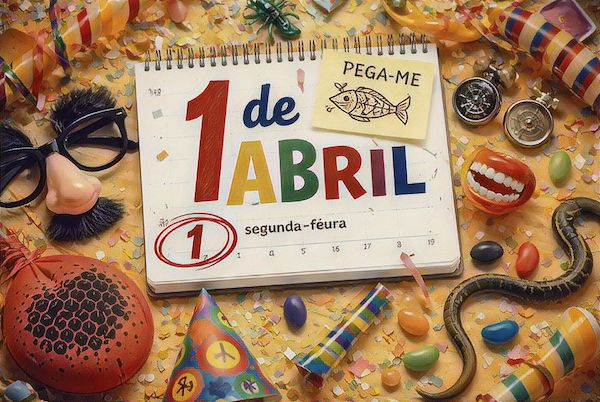
The most widely accepted explanation traces back to sixteenth-century France, during the reign of Charles IX. Until then, the New Year was celebrated at the end of March, with festivities extending into early April. With the adoption of the Gregorian calendar, the official date shifted to January 1st, a change that, like many others throughout history, was not immediately absorbed. Between resistance, lack of information, and simple cultural inertia, part of the population continued to follow the old cycle. These individuals became targets of jokes, invited to nonexistent parties, and subjected to small deceptions, earning the label of “April fools.” What might have remained a minor episode gradually turned into a repeated gesture, and, as often happens with social rituals, repetition itself granted it legitimacy.
This is not, however, the only layer of the story. Long before the reorganization of European calendars, there were already celebrations devoted to laughter, inversion, and the temporary suspension of norms. In Ancient Rome, festivals such as Hilaria allowed people to disguise themselves and imitate figures of authority, while in medieval Europe, events like the so-called Feast of Fools created spaces where social order was deliberately unsettled. What these manifestations share is a common logic: at certain moments, society permits itself to play with what usually sustains its stability, whether hierarchy or truth.
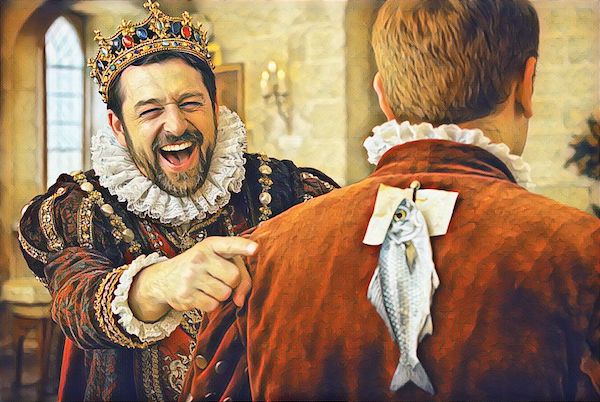
In France, this symbolic legacy took on a particularly visual form through the “poisson d’avril,” a tradition that involves discreetly attaching a paper fish to someone’s back. The gesture may seem childish, but it carries a precise metaphor. The fish represents someone easily “caught,” a person who takes the bait without realizing the game they have entered. The humor lies not in the object itself, but in the delayed recognition of the trick, which is, ultimately, what produces laughter.
With the rise of mass communication, April Fools’ Day found new ways to reinvent itself. In the twentieth century, newspapers began publishing fabricated stories, often crafted with the same rigor as real reporting, creating a short circuit between credibility and fiction. In the digital environment, this logic has intensified, with companies, platforms, and media outlets competing for attention through fictional announcements, nonexistent trailers, and carefully constructed hoaxes designed to appear plausible. What once depended on word of mouth or small-scale staging has now gained global reach and instantaneous speed.
Perhaps it is precisely this capacity for reinvention that explains the endurance of April 1st. Rather than celebrating deception itself, the date exposes something essential about contemporary experience: the fragility of what we take to be true. In a world saturated with information, where constant verification has become almost a daily requirement, April Fools’ Day functions as an ironic mirror. It reminds us that belief has always involved risk and that, between naivety and absolute skepticism, there is an ambiguous space where social life effectively unfolds.

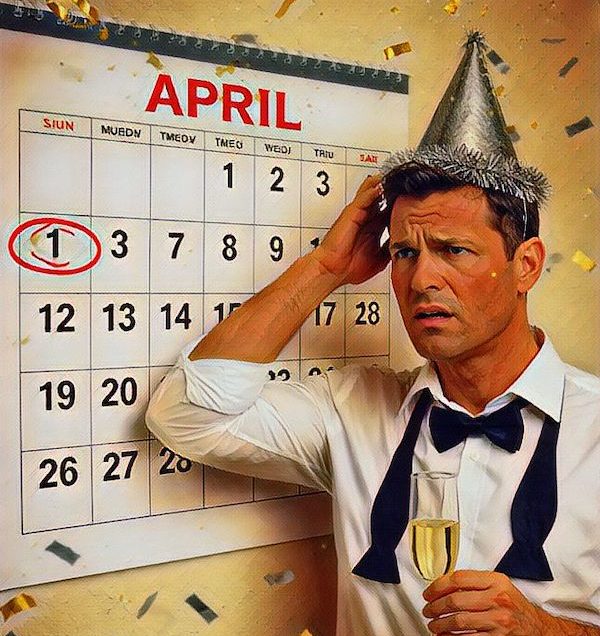
In the end, what began as a mismatch of calendars has evolved into an annual ritual that spans centuries and technologies. A day when laughing at someone else’s mistake, or at one’s own, reveals less about lying and more about the ways we choose to believe. Either way, be careful.
Descubra mais sobre
Assine para receber nossas notícias mais recentes por e-mail.
 miscelana.com