
There is something undeniably ironic about the fact that the very song left out of one of the most iconic and influential albums ever made, Rumours, ended up being the one that most clearly captures the sadness and frustration of a relationship falling apart.
When Stevie Nicks wrote Silver Springs, she was not trying to turn the end of a relationship into something palatable, elegant or distant. That impulse appears in Dreams, which I have already written about, but here what emerges is more direct, more exposed and, for that very reason, much harder to fit into any comfortable narrative. And I will admit, the one that moves me the most is still Storms, which only made it onto Tusk, but that is a conversation for another time.
Stevie has always treated Silver Springs as the most personal song she wrote about Lindsey Buckingham, which makes its exclusion from Rumours all the more significant, especially considering that the album helped cement the public perception of their story as a great romance shaped by conflict.
This was never just a technical decision lost to time. It was a choice that reshaped how their relationship would be understood for decades, because it removed from the center of the narrative the very song that leaves the least room for idealization.
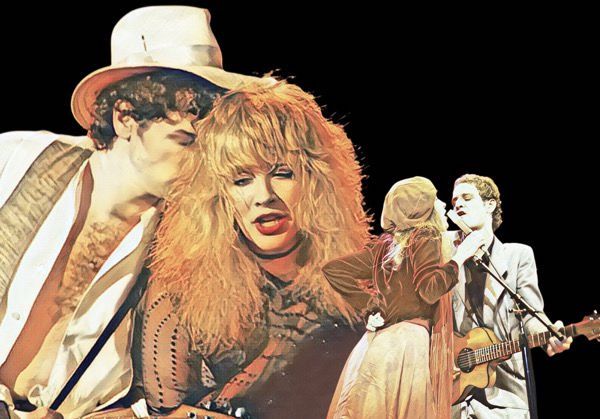
Silver Springs as metaphor, place and memory
The title works on more than one level at once. Silver Spring is a real place in Maryland, where Stevie and Lindsey lived when they were still together, but the expression also suggests something elusive, something that keeps moving, something that cannot be contained. It is not a fixed point, but a flow that insists.
Within the song, that image becomes something else entirely.
It is not about a love that continues. It is about something that does not fully disappear after it ends, something that becomes imprint, memory, an uncomfortable presence that lingers.
This is where the line that has travelled across decades appears, now circulating through memes, captions and reinterpretations: “You’ll never get away from the sound of the woman that loves you.” And, in the way the internet has reshaped it, in a form that feels even sharper: “the voice of the woman who loved you will haunt you.”
There is no reconciliation here, no softening, no attempt to reorganize the past. What exists is a clear assertion that what was lived leaves a trace, not as a romantic promise, but as something that remains active even when the relationship itself no longer exists.

The moment the song was written
When Silver Springs was written, the relationship between Stevie and Lindsey had already ended, but it had not been processed. Both were drinking heavily, using drugs and involved with other people, yet what makes the song resonate is that Stevie is singing about a concrete replacement unfolding in front of her, turning the experience into something at once deeply personal and universally recognizable.
Within Fleetwood Mac, everyone was going through personal breakups at the time, but the way Stevie writes here does not attempt to organize what happened or transform the pain into something more distant, as she does elsewhere. What emerges instead is a feeling still in motion, still unresolved, still without mediation.
Why it was left out of Rumours
The most common explanation involves the limitations of vinyl length and the need to balance the tracklist, but that has never fully explained what was lost with that decision, especially since Stevie was deeply upset about it at the time.
Because Rumours came to be remembered as the definitive breakup album, one where Go Your Own Way and Dreams seem to form a dialogue, creating the impression of an emotional exchange between two sides of the same story.
That reading only holds because Silver Springs is not there.
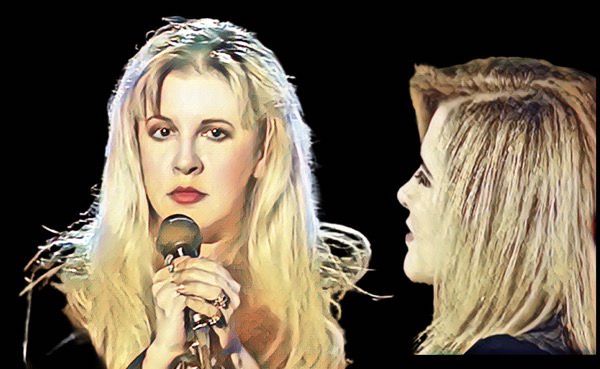
It was moved to the B-side of Go Your Own Way, which, symbolically, says a great deal. His most aggressive, exposed track remains at the center of the album, while the song she considers most personal about him is pushed outside the main narrative. In a way, it creates an even sharper dialogue than the one that exists with Dreams.
If, in his version, Lindsey hints at Stevie’s emotional instability — “If I could, baby, I’d give you my world, how can I when you won’t take it from me?” — she responds with equal clarity: “I know I could have loved you, but you would not let me.” That is where the idea takes root that they loved each other but could not communicate, at least not outside of music.
Years later, Stevie would openly describe the exclusion of Silver Springs as one of her greatest frustrations within the band, not simply for artistic reasons, but because it altered how her version of that story was heard.
What was lost when the song was overlooked
For years, anyone who knew Rumours without going beyond the album itself did not have access to Silver Springs, and that absence shaped how their relationship was interpreted.
Without it, it becomes easier to see balance, exchange and even a kind of symmetry between the songs that remained. It becomes easier to sustain the idea of a love story, complicated but still recognizable within familiar terms.
Silver Springs disrupts that entirely.
It does not organize, it does not respond proportionally, it does not soften the ending into something more digestible. Perhaps that is why it remained in the background for so long, precisely when the public was embracing Stevie and Lindsey as a couple that could still be read through a romantic lens.
When the song finally finds its place
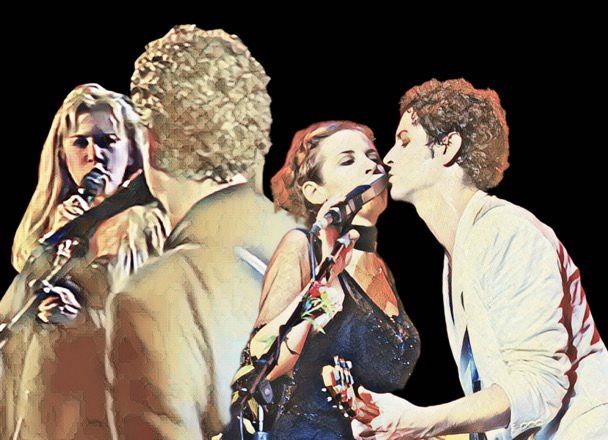
It is only years later, particularly in live performances, that Silver Springs begins to occupy the space it always had the potential to claim.
And this is where the song takes on another dimension.
That moment gains even more weight when we remember what happened in 1997, during The Dance, when Silver Springs finally returns to the center of a narrative it had been denied in Rumours. This is not simply the late reintroduction of a song, but something closer to a public reckoning, in which Stevie Nicks does not just sing her version of the story, but brings Lindsey Buckingham into it, on stage, playing and participating in it.

At one point in the performance, there is a moment that has become as iconic as the song itself. Stevie turns toward Lindsey and holds a gaze that cuts through any attempt at a comfortable interpretation, especially as she sings, “Time cast a spell on you, but you won’t forget me / I know I could have loved you, but you would not let me,” before moving into the line that would later be reclaimed by digital culture: “You’ll never get away from the sound of the woman that loves you.”
What unfolds there is not performance in the conventional sense, nor a calculated gesture meant to sustain a myth. It is raw intensity, difficult to sustain, including for him, who looks back but appears visibly uncomfortable in the face of how that memory is being brought into the present.
Perhaps that is precisely why this moment has travelled across decades and returned with such force now. Because it does not confirm the idea of romance. It exposes what was never resolved.
The present: between memes, rumors and projections
This story continues to be rewritten in the present, and that became particularly clear when Lindsey Buckingham was recently attacked by a fan and, almost immediately, the internet reframed the episode as yet another chapter in his history with Stevie Nicks, with memes quoting Silver Springs and jokingly suggesting she was somehow behind it.

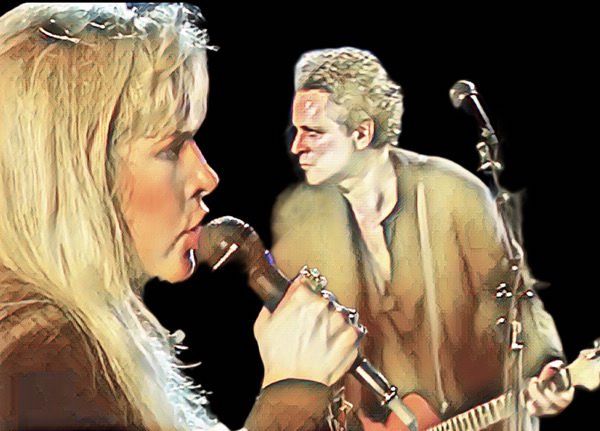
The humor may seem harmless, but it reveals something deeper: their relationship has been absorbed into pop culture to such an extent that any event involving one of them is quickly reinterpreted through that lens.
At the same time, the reissue of Buckingham Nicks, the ongoing discussions about how the loss of Christine McVie makes a return of the classic Fleetwood Mac lineup unlikely, and the possibility of the two of them sharing a stage again as a duo rather than as part of the band all feed a new cycle of speculation.
This movement connects directly to the renewed interest fueled by narratives like Daisy Jones & The Six, which blur the line between fiction and reality and bring this story back into circulation as if there were still something left to be resumed, even as conversations emerge about it becoming a future Love Story.
What Silver Springs reveals about all of this
This is precisely where Silver Springs becomes even more relevant.
Because, unlike other songs from that period, it does not sustain the idea of reconciliation, does not suggest closure and does not offer a clear path forward. What it captures is something more uncomfortable, more ambiguous and, at the same time, more honest.

If this story continues to be revisited as a potential “next great love story”, as a reunion or as a return to the stage, it has far more to do with how it has been performed and consumed over time than with what is actually present in the music itself.
And that is why Silver Springs stands apart within this narrative.
Not because it was forgotten.
But because, when it is finally heard with attention, it does not confirm the myth.
It dismantles it.
Descubra mais sobre
Assine para receber nossas notícias mais recentes por e-mail.
 miscelana.com
2 comentários Adicione o seu