
The arrival of James Marsden in Your Friends and Neighbors is not just another casting announcement. It subtly shifts the show’s center of gravity. Jon Hamm remains at the core, but no longer alone. There is now company, and that company is far from neutral. Marsden carries with him a very specific history, that of an actor who consistently appears in projects already positioned for success, shows that arrive with built-in attention, structure, and expectation. He steps in after the game has begun, but his presence reshapes the dynamics.
Describing his character as a “Great Gatsby” to Hamm’s “Thomas Crown” is less about plot and more about function. Gatsby is construction, seduction, projection. Thomas Crown is control, calculation, mastery. Placing Marsden in that space activates a persona he has refined for years, a man who seems to offer everything while concealing something essential. The question is not simply what he will do in the series, but which version of himself he will embody. The trustworthy ally or the elegant antagonist. His career suggests the answer is never that simple.
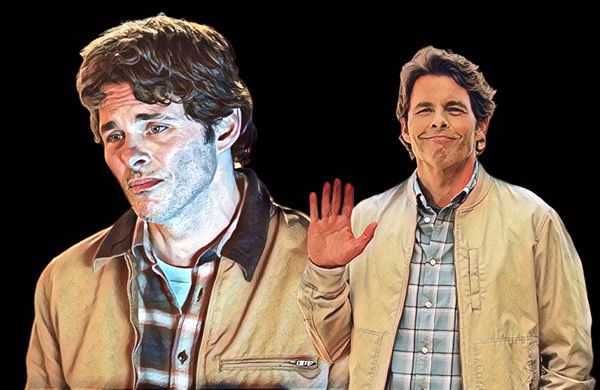
This recent transition, from Paradise to Your Friends and Neighbors, reinforces a pattern. In Paradise, even after his character’s death, he remains through flashbacks, as if the narrative still depends on him to sustain its emotional core. There is no disappearance, only reconfiguration. That ability to remain, even when seemingly gone, reveals the kind of presence he has built.
Some describe this as a television renaissance, and the data supports that idea. Marsden has re-emerged in high-profile, critically recognized projects, earning attention and major nominations in recent years . Yet what stands out is not transformation, but consistency.
In Westworld, he already occupied that space of essential but non-dominant presence. Teddy is the man programmed to love, to return, to emotionally sustain a story that does not belong to him. In Dead to Me, his dual role as Steve and Ben suggests range, but ultimately remains within a familiar spectrum of masculinity shaped by charm and fracture. In Jury Duty, perhaps his most revealing work, he plays an exaggerated version of himself, exposing just how constructed that persona already is, while carefully pushing against it .
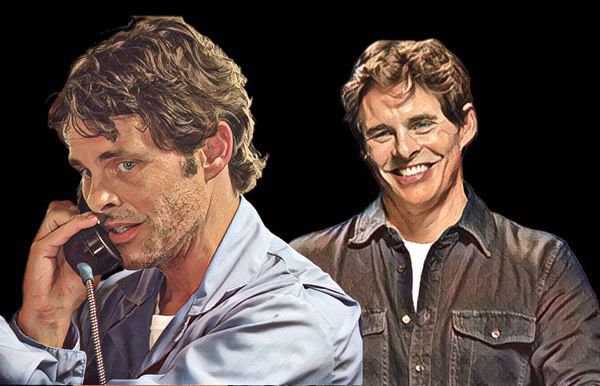
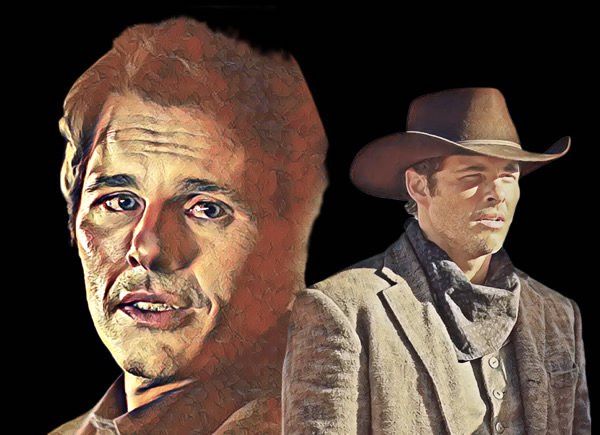
Looking further back, before this streaming-driven phase, his film career follows the same logic. In X-Men, he is the morally upright hero overshadowed by more compelling figures. In The Notebook, the perfect man who must be rejected. In Enchanted, the parody of that ideal. In Sonic the Hedgehog, the stabilizing human anchor.
And before all that, there is Ally McBeal. When Marsden joined as Glenn Foy in its fifth season, the show was already a cultural phenomenon, blending legal drama, romantic comedy, and surreal emotional expression. He brought charm, musicality, and presence, fitting seamlessly into its tone. But he also arrived at a moment of decline. The show ended shortly after, in 2002. There is something telling in that timing. Marsden enters when a project still matters, still resonates, but is no longer at its origin point.
This pattern repeats across his career. He does not create phenomena, he moves through them. He does not redefine narratives, he sustains them.

Which is precisely why his presence in Your Friends and Neighbors matters. Not because it signals change, but because it confirms a model that works. Jon Hamm’s lead gains company, and that company complicates rather than dilutes. Marsden steps in as someone who can shift emotional balances, create tension, and reorganize relationships without ever needing to dominate the center.
His career, in the end, is built on precision. He is always exactly where the story needs him to be.
And that may be why he keeps being called back.
Descubra mais sobre
Assine para receber nossas notícias mais recentes por e-mail.
 miscelana.com