
I didn’t grow up with Janis Joplin alive. I grew up with the idea of her. And for a long time, that idea felt simple—almost too simplified. The unmistakable voice, the screams that seemed to tear through silence, the intensity pushed to its limits, and, inevitably, the narrative of self-destruction. Janis was, to me, a tragic figure. Fascinating, but distant. A story that already came pre-packaged: talent, excess, downfall.
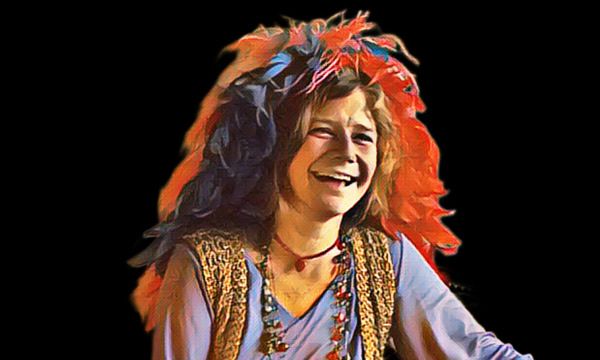
That changed when I saw Janis: Little Girl Blue—the 2015 documentary directed by Amy Berg—in theaters. I left with that rare feeling of having encountered someone I didn’t actually know, despite thinking I did. Not because the film hides what’s difficult. The drugs, the alcohol, the loneliness—it’s all there. But there is another layer, more delicate, that reshapes her trajectory. A woman who endured bullying, who never quite fit in, who spent 27 years trying to be accepted, loved, and respected—and who found in music the only possible way to exist fully.
Janis’s family has always played a decisive role in shaping that narrative. Unlike many other icons, her story was never entirely handed over to the industry. No official biopic was ever made. The Rose (1979), starring Bette Midler, came close but was prevented from using her name and ultimately became only an inspired version. That matters. Because it means the story that reaches us is, to a large extent, filtered by those who remained. And supported by something even more intimate: the letters.

It is through these letters—many written to her family—that a version of Janis emerges that resists cliché. And, interestingly, it works. Not by denying what happened, but by shifting the focus. The intensity doesn’t disappear, but it stops being the only lens. What emerges instead is a Janis who wanted to belong—and rarely managed to.
This is where Brazil enters the story in a way that feels almost unexpected.
For her family, it was here, in 1970, in the final year of her life, that Janis found something close to peace. In Rio de Janeiro, during Carnival, she moved through Ipanema without needing to be the star. She met David Niehaus, fell in love, and rode to Bahia on the back of a motorcycle. For a brief moment, she was simply herself. No audience, no expectations, no judgment.
The image is powerful precisely because of what came next.
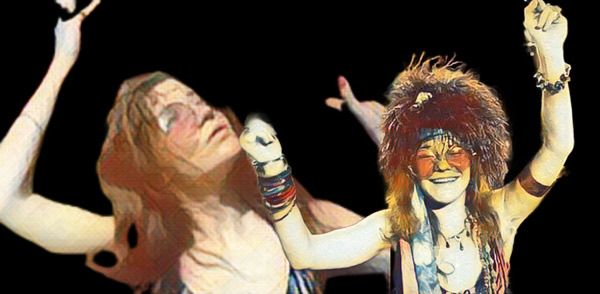
When she returned to the United States, Janis encountered a past that had never fully embraced her. Old school acquaintances, lingering rejections, the difficulty of sustaining that sense of freedom outside that specific context. The relationship ended. And months later, after a period of being clean, came the overdose. Unexpected, abrupt—as if something still in motion had been suddenly cut off.
It’s impossible not to reread her story in light of that.
And perhaps that is why the exhibition “Janis,” now on view at MIS in São Paulo, carries a different weight. Curated by André Sturm, the show brings together more than 300 items from the family’s archive, many of them never before seen in Brazil. Costumes, photographs, manuscripts, personal objects. But more than that, fragments of a carefully preserved narrative.
Divided into more than ten rooms, the exhibition does not simply present a chronology. It creates atmospheres shaped by emotions such as love, passion, and sadness, underscored by songs like Mercedes Benz and Me and Bobby McGee. There is a Nudie Cohn vest—worn by artists like John Lennon and Bob Dylan—and the round glasses that became part of her visual identity. But there is also something less tangible running through it all.
A sense of proximity.
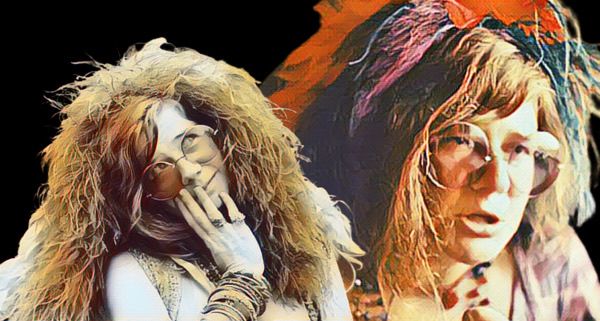
Janis’s disruptive force existed before the music. Born in Port Arthur, Texas, she grew up in a conservative environment that never seemed able to contain her. The move to San Francisco, the immersion in the counterculture, the descent into excess. And then the breakthrough at the Monterey Pop Festival, which launched her onto the world stage. In just a few years: four albums, an unmistakable presence, a voice deeply rooted in the blues and shaped by artists like Bessie Smith.
But none of that fully explains who she was.
And perhaps that is the exhibition’s greatest strength.
It doesn’t try to resolve Janis. It doesn’t package her life into a neat narrative. Instead, it allows the contradictions to remain. The artist who commanded the stage and the woman who wrote letters. The public figure and the private self. The freedom—and its cost.
For me, personally, there is another layer.
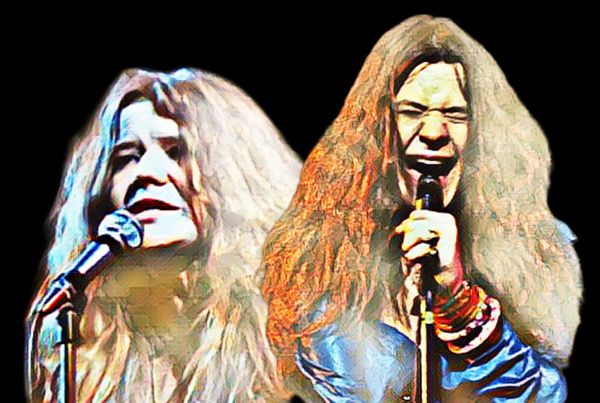
Seeing this story told here, in Brazil, carries something deeply symbolic. Because part of that story belongs to us—or at least passes through us. Knowing that it was on the streets of Ipanema, in the nights of Rio, and on the road to Bahia that Janis found a kind of happiness she had been searching for changes the way we look at her.
That’s why having this exhibition at MIS feels especially moving.
It might feel even more so if it were at MIS in Rio, just a few steps away from where it all happened—where, for a brief moment, Janis Joplin didn’t have to be anyone but herself.
Descubra mais sobre
Assine para receber nossas notícias mais recentes por e-mail.
 miscelana.com