
As published in Bravo Magazine
Since emerging on the music scene, Anitta has built her career with a mix of strategy, talent, and a personality that defies labels. In the Netflix documentary Larissa: The Other Side of Anitta, the artist sheds her pop persona to revisit her trajectory through a more personal lens, revealing the behind-the-scenes of her life and career.
Scripted by actress and writer Maria Ribeiro, the film seeks to go beyond the singer’s public image, exploring the layers of the young Larissa de Macedo Machado before she became the phenomenon Anitta. With testimonies from friends, family, and the artist, the documentary alternates moments of vulnerability and strength, showing the complexity of someone who always knew where she wanted to go — and how to get there.
Bravo! Magazine spoke with Maria, one of the singer’s great friends, who explains the process of creating this intimate portrait and the challenges of transforming a star’s life into a documentary narrative, the choices that guided the film, and what we can learn from this rawer and more truthful version of Anitta, or rather, Larissa.
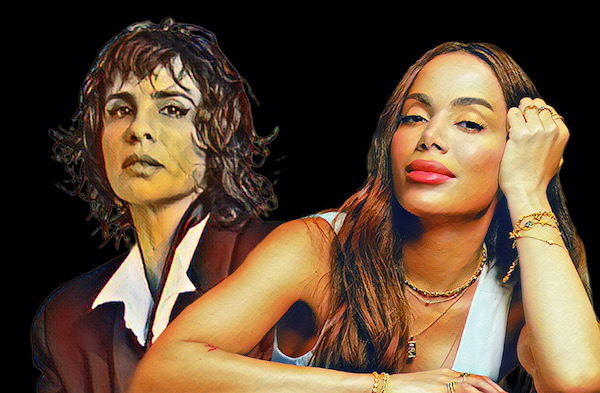
BRAVO! What was it like to write the script for a film that was already being filmed when you became a part of it?
MARIA: Anitta knew exactly what she wanted, as always, right? She has a frightening, impressive intelligence. So, when she approached me, the film had already been through a few directors, but she wasn’t completely satisfied. I think she wanted a feminine perspective because it’s Anitta’s search for Larissa. Who she was, who she became. How can we rescue something that was left behind, but based on who we are today? These are subtle changes that everyone goes through. I’m no longer who I was 10 years ago, 20 years ago, 30 years ago. But in her case, this is very obvious. She literally changed her name! When we do our nails, we put on some red and say, I’m going to go here, I’m going to put on this red here to believe in this red, from the red I’m going to put on some clothes, from this clothes I’m going to act like this, I’m going to have self-esteem. I think that in the series Anitta [from whom Larissa adopted the stage name], the character Mel [Lisbon], was very strong. She played with men, she seduced them, there was a thing of “today I’m going to be one way, tomorrow I’m going to be another way”.
BRAVO! Was that missing from the film?
MARIA: So, Anitta came to me and said “Look, I’m making this film, it’s a very important film for me, because it’s the search for who I was, but also for who I am today”. Since I had done a profile of her for Bazaar a few months earlier, where she felt seen – we had a very strong and unusual match – she said “I need a look at the past”, which in this case was Pedro [Cantelmo], one of her first boyfriends, who directed the film with João Wainer, but that was it, there were two men. She thought I would have the sensitivity to give names to things that she felt, but perhaps she couldn’t name or perhaps she didn’t name them poetically.
BRAVO! And did it work?
MARIA: What I think I did was really manage to listen to her. Translate what I imagined she was feeling, what she wanted to say. And then I think the fact that she was a woman really made a big difference. [PAUSE] But I also stuck with her! [laughs] I wrote the script as we spent a month together.
BRAVO! How has the reaction to the documentary been?
MARIA: I joke that some people have criticized me by saying, “Oh, how is it that such a powerful woman is presenting herself through the eyes of a man?” And I say, no, it’s not through. First of all, I think that’s nonsense because it’s a work that has a perspective, it’s always a perspective, it’s not life, and it’s not a reality show: it’s a documentary. And people really wanted it to be a love story, which it is. Pedro is me, in a way. There’s Pedro’s enchantment for her and there’s also my enchantment for her.
BRAVO! Was it intense?
MARIA: I traveled with her, we shared a room, I really went deep. My children couldn’t handle it, no one else could handle it, they only talked about her, even today. [Laughs] A lot of people said, “She’s obsessed, she only talks about Anitta,” but for me, it was a really powerful encounter.
BRAVO! This detail of having your voice in Pedro’s voice is noticeable in the documentary, even though he speaks in the first person, but you mentioned an important point, which is that people forget, or get confused, that a documentary is not a reality show. The format is different, although it is very real.
MARIA: Yes, but every time we edit, when the camera is on, you are already acting in some way. I am here talking to you and even if the camera was not on, I am no longer who I would be if I were alone in my living room. I am here giving an interview. With the camera on, I am different, a third way. So, there is always a cut and good documentaries should seem like fiction, in the sense of moving us. And good fiction should seem like a documentary. This was very beautiful in the film Larissa: The Other Side of Anitta: you have a romantic story, a childhood love, and in this conflict, which in the end ceases to exist because Anitta sort of comes to an understanding between who she was and who she is, there is also her love story with her, which I think is also very strong. They don’t end up together [Pedro and Anitta break up during the filming of the documentary], but Anitta ends up with herself, which I think is a happy ending.
BRAVO! Yes, the final scene of her on the beach watching the sun rise is very cool
MARIA: Perfect. And it’s really cool because the last images were taken by Ju Amaral and it was a really cool idea from João, the director, for Anitta to be captured not by a team, not by a director who isn’t close to her, but by a friend, by a woman, by someone with whom she really shared a night on the beach. So I think this feminine perspective also comes from me and from Ju.
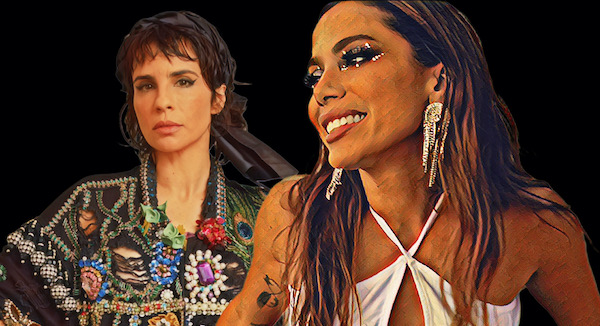
BRAVO! Today we talk so much about authenticity and Anitta has a lot of courage to always have a camera on and open up her intimacy, where we see who she is off stage…
MARIA: Very courageous, right, Ana? If there’s one person who is synonymous with the word courage, it’s her. She’s a real trailblazer. We’re talking about the day Luísa Borges de Holanda died and I put on this red lipstick in homage to Helô. Because that’s it, some women change structures. And how Helô changed and how Anitta changed. Anitta is certainly someone who is before and after her.
BRAVO! And I can’t help it, you even vented on social media when people found your friendship with Anitta strange. How did this connection come about? You said he was a match.
MARIA: I was asked to do a profile of her and I’ve always admired her a lot, but we didn’t know each other. I work a lot, but I’m very homely. I was asked to write Anitta’s profile and I was in the middle of a film, which was just me and Caco Ciocler, we filmed all day, but I took the day off, which was like once a week because I knew I couldn’t give up portraying, profiling the most important woman of today, even without knowing much about her work. So I got there to interview her and I was very enchanted because although I usually think that these people in the pop star world get a little lazy in the interview with half-prepared answers, she was there, very present, you know? I was very impressed. And we hit it off. I left that meeting, like, in love, enchanted. It was nothing like I imagined. I imagined that she would be someone who would put up millions of barriers, but no, she saw me. She was really there, all of her. Vulnerable. Vulnerable…
BRAVO! It’s interesting because I want to talk about this vulnerability, but I’ll let you finish telling me… [laughs]
MARIA: We got along really well and right after that, her father’s 60th birthday party was coming up and she invited me. When I arrived, she was singing Djavan, Lecy Brandão, and I said, “Man, she wants to destroy me!” Singing old sambas, with a beautiful, wonderful voice and a repertoire that I never imagined. That’s when I started getting to know her family, everyone was great, and then we started talking on WhatsApp, she invited me to go to the show’s blocks, I never went to anything, because I don’t go to anything. And then she invited me to make the film. But when the film came out, she said, “Now you can’t write without seeing one of my shows, right? You have to go now” [laughs]. It was an immersion, I went to college with Anitta, because I not only spent a lot of time with her, but I also talked to her whole family. I was waiting for the moment when I would be disenchanted, but that moment hasn’t happened yet. We really are very good friends.
BRAVO! The impression, which became even stronger when I saw her, is that Anitta is a strong person, but we also see some vulnerable moments, but it is exactly this vulnerability that appears, she talks a little about it. Did that surprise you?
MARIA: She really is very strong. Because she started working so much at such a young age, Anitta managed to balance her internship with her shows, which is like she lost a part of her life, from her 20s to her 30s. Professionally, she went to heaven, but when it comes to relationships, maybe she doesn’t have much experience. She was married once, but it’s hard to balance a relationship with that life, so much so that she wants to slow down. But if I were to talk about a weak point in her, I think it’s a romantic idealization. Anitta has a thing about what is right and what is wrong and there is no game playing in it. For some things this is really cool, she is very correct, I have never seen a person so honest, so fair, she stops at everything to help you, to help you, but at the same time, she has very strict rules.
Who still hasn’t fully understood that in life we sometimes have to find a middle path. She sometimes has difficulty in forgiving a mistake, because she also thinks with her own head and she’s very quick. This tolerance for others, for those who aren’t so quick, is perhaps something she’s looking for now. [pauses] Maybe she hasn’t discovered her vulnerability yet. I don’t know. You got me. [laughs] She’s going to find that flexibility.
There’s a scene I really like, which is a scene where she’s in the car, where she’s just returned from a retreat, where she says “I’m crazy, I’m over the top, I like to dance, I’m lively, I’m happy and I’m happy being the way I am” and I love that scene, because I identify with it.
BRAVO! What were your references for making this documentary?
MARIA: I’ve seen My Week With Marilyn a few times, because she’s a pop star and this relationship between a pop star and the average guy, how do you get to know a star from a romantic point of view, from a guy who isn’t a famous artist and so on. Another reference I used a lot was Amelie Poulain to tell a story and take the viewer by the hand and say, look, “On March 30th, she was born.” It has a fable-like, dream-like quality to it, and I think that’s what she called me to. In fact, Anitta even teases me sometimes and says, “Maria is going to drink water and the water is poetry. She’s going to invent that the water is the glass” [laughs] Once she said to me: “It’s like you’re living in a movie, you romanticize everything.” I’m really a dreamer.
BRAVO! And did Anitta participate in the editing?
MARIA: Great! I’m telling you, it’s scary. [laughs] Sometimes she would say something like this… “This text here, I think this sentence should be shorter because if this sentence is shorter, we’ll laugh here”. She actively participated. It was a job for both of us, really. She writes well too.
BRAVO! What does she do wrong, right? She does everything wonderfully well! [laughs]
MARIA: Wow, doesn’t it make you angry? It’s not possible, guys! She really is incredible, but she’s also very controlling. She delegates, but she wants things her way and she knows what she wants.
BRAVO! And how did you reach an agreement? When you also wanted something?
MARIA: Do you know what happens in all instances of power? People, around the powerful person, end up being afraid of displeasing them or of not saying what they think. I’m not like that. And she wanted someone who wasn’t afraid of her, who wasn’t embarrassed to say things to her. And she found that person in me. So much so that there was a scene where she had questions and I said, “No, this scene needs to be there. Let me tell you why it needs to be there, because of this, this, and this, it will be good.” We started negotiating.
BRAVO! I found your parallel between My Week With Marilyn interesting, because Marilyn wasn’t called Marilyn either, just as Larissa isn’t called Anitta, they are both sex symbols and there is a moment when we see two authentic women – Larissa and Anitta – becoming one. But Marilyn, unlike Larissa, became very isolated because she didn’t have that family unit that is also very present in the film.
MARIA: Exactly. We follow this mystery publicly, but Marilyn falls apart and becomes a hostage to the character and Anitta doesn’t. In fact, her family is incredible. Her brother is incredible, her mother is incredible, her father, her aunts. And Anitta didn’t give up on that, because it’s also her choice, right? Many people go abroad and never return to their family, their country, or their childhood references. With her, it’s the opposite; she’s constantly reaffirming the place she came from. She started out singing funk, then she worked hard to avoid being seen as a funk singer, to be accepted with less prejudice by a part of Brazil, and then, after reaching a higher level, she said, “Well, now that I’m here, that everyone likes me, that everyone has accepted me, I’m going to go back to funk.” That’s beautiful.
BRAVO! She has this restlessness of always challenging herself. Where do you see Anitta going?
MARIA: Musically, I’ve never talked to her about this, but what I feel is that she’s currently searching for herself, to discover something beyond her professional career. She used to throw parties for people to hook up, but now she does retreats. This week was her birthday [March 30] and she had a day of spiritual focus, then she had a party day, then she had a family day. She can celebrate life and change the lives of the people around her. I can tell you that she changed mine, because I really got in touch with a very different mindset, with the ability to put things into practice and think that she can do anything. She decides something and she says, I’ll go after it.
BRAVO! Many people didn’t understand what happened to the breakup between Anitta and Pedro…
MARIA: I think that’s beautiful in the film too. They miss each other. There’s something that happens there, which is obviously I won’t say because it’s intimate with them, but sometimes you’re in a story that seems like it’s going to work out and sometimes it doesn’t. This is very real life. It doesn’t need to be said, the important thing is that they didn’t stay together. They had a beautiful, real romance. You see very intimate moments in the movie and that’s why it hurts when they break up. A lot of people complain to me, “What do you mean they didn’t get together?” I say, “Guys, this isn’t a fictional movie, right? They didn’t get together. It wasn’t even planned that they would get together, it wasn’t in the script, it was really life. They just happened to get together and they just didn’t get together.
BRAVO! And are you going to celebrate Anitta’s birthday this weekend?
MARIA: [laughing] I’m not going… I won’t be able to go because she has the same birthday as my son. I’m in love with her, but it’s not like that, right? My son is here… [laughs]
Descubra mais sobre
Assine para receber nossas notícias mais recentes por e-mail.

