
The Stranger Things series finale opens as if someone hit “resume” on the exact second the Christmas chaos stopped. There’s no real breath, only that particular sensation of a goodbye that’s being stretched thin, like the show wants to hold our hand until the last frame and, at the same time, prove it can still startle us. Stranger Things has always believed more in feeling than in logic.
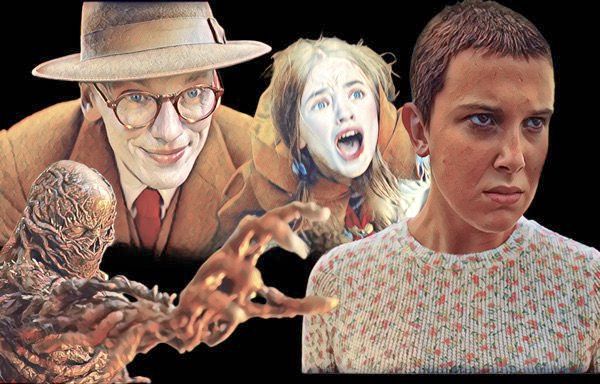
The mission is layered, each layer with its own clock ticking down. On one side, part of the group is already in the Upside Down and has to reach the heart of the problem, where Vecna is staging his final “ritual.” On the other hand, in the “right” world, a smaller team holds the line in an unlikely place—a radio station turned bunker—because communication is the last thread tying the living to those who could vanish. And threaded through it all, government and militarized science remain the uncomfortable reminder that even if the monster falls, someone will still try to convert trauma into an experiment.
On paper, the plan sounds simple, the way all suicidal ideas do when you’re not inside them. The group splits: one team climbs the radio tower in the Upside Down, attempting a very Steve Harrington solutio; the kind that reads as insanity until it works through sheer stubbornness and courage; another team gets Eleven back to the sensory deprivation tank, because if there’s one place where this story began, it’s there: in that liquid darkness that has always been doorway and prison at once. It’s impossible not to feel the echo: the series ties origin and farewell together as if to say the end isn’t a straight line; it’s a loop.
Meanwhile, on the “right side up,” the station becomes a nervous hideout. Max is there, vulnerable and strategic, someone who understands her presence is both bait and key. Vickie, who could have remained a pleasant seasonal detail, steps into the role of improvised guardian, trying to keep her head steady as the town slips. When outside forces storm the space, the feeling is familiar: Hawkins never truly belongs to its people once fear turns political.
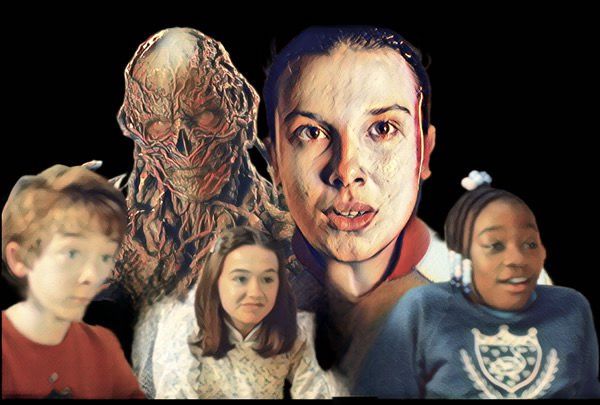
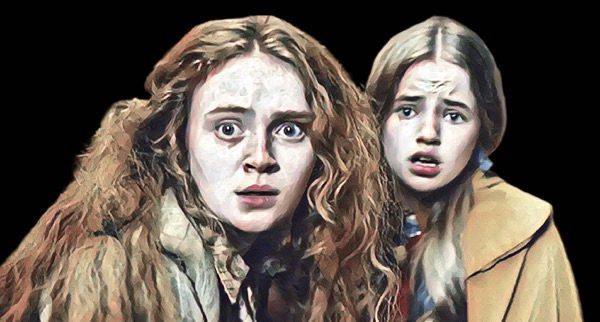
In the Upside Down, the tower climb carries the weight of memory. The show repeats gestures, positions, pairings, building symmetry as if to convince us there’s design in the chaos. Halfway up, Mike and Will finally reach the emotional point of no return, the conversation postponed for seasons, now happening at the worst possible time, because the world is ending, and they still need to say what never fit into words. Mike responds with the tenderness the series has always wanted from him, and Will, for the first time, feels less like a haunting and more like a person. It’s gentle. It’s human. And it’s very Stranger Things to believe the apocalypse pauses long enough for someone to be truly seen.
Of course, the plan starts to break. The tower doesn’t “line up” the way it should. Instead of slicing through, it’s crushed by a descending mass—like a ceiling—threatening to silence everyone. Tension spikes through rapid cross-cutting between the physical and the psychic: what’s happening outside has to land at the exact instant Eleven can reach Vecna, where he actually is. The series returns to memory-space, and for a moment everything becomes theater: masks, rehearsal, a scene that feels like a fever dream—and precisely because of that, it works as a doorway into Henry’s oldest fear.
In that mental dive, Max and Kali join Eleven inside a darkness that resembles a stage with no audience. Here, the story turns cruel in its purest form: the mind as maze and trap. Holly, the younger sister who has become far too central for someone so young, appears as an improbable leader. And the finale reminds us—quietly, insistently—that Stranger Things has always been about children forced to act like adults before they’re ready, and paying for it.
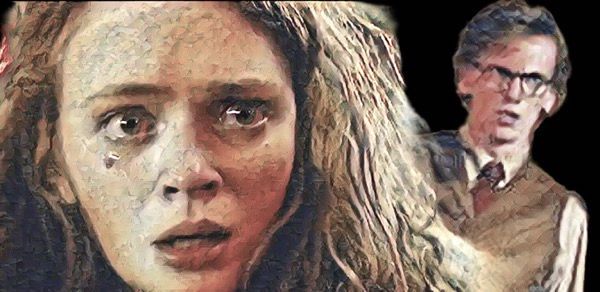
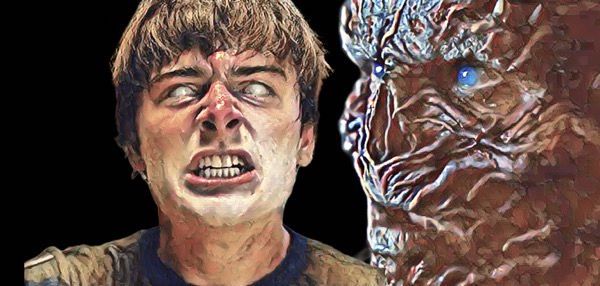
The first major emotional ambush arrives as an illusion. Hopper, alone in the lab, is hit with visions tailored to dismantle him: his dead daughter, old guilt, and the fear that he fails at the last second every time. Vecna plays those pressure points with surgical precision. And Hopper, for one raw moment, reacts like any terrified parent; he breaks the rule, makes the wrong move, interrupts the process. The show uses it to underline something essential: it isn’t only the supernatural that destroys; panic does, too.
When the “mistake” reveals itself, it’s relief and humiliation at once: it was a trick, a string-pull, Vecna doing what he does. But the practical damage is done. The plan must be rebuilt on the run. And Stranger Things chooses the most cinematic option: if Vecna can’t be reached safely from the inside, someone will go to him from the outside: with flesh, with risk, with that courage that’s half heroism and half exhaustion.
The military threat swells in parallel, because the series can’t resist its own subtext: monsters may come from another dimension, but uniforms can be terror to a family, too. The “kryptonite” tech arrives, the shrieking weapon that shuts down powers and sounds like torture. The lab becomes a siege. In a choice that stings, Hopper leaves Kali behind for a moment to get Eleven out, then turns back because conscience is also a form of love. The problem is that some returns come too late.
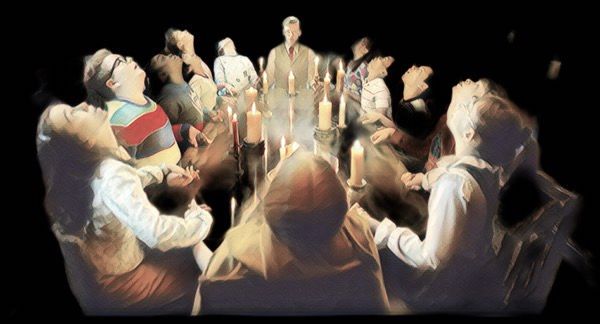
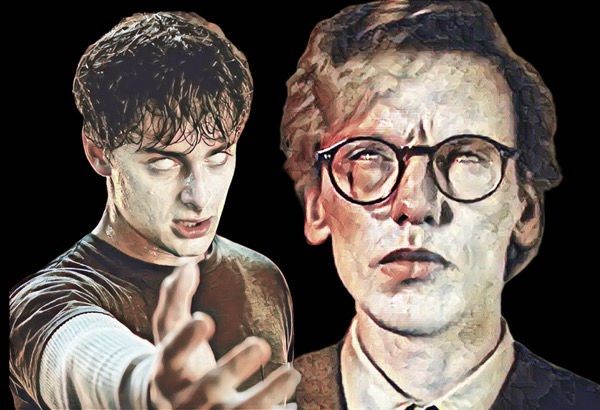
Kali—brought back as if the show wants to correct what she could have been—becomes the finale’s concrete loss. Her death isn’t just a shock; it’s a door closing so the last battle can feel truly final. And it hurts, because Kali always carried narrative potential big enough to expand the world without inflating the spectacle.
In the strangest, most revealing thread, Henry’s past finally gives up what was inside the briefcase: something impossible, matter that isn’t just an object but a connection. Before Vecna, there was something larger. And that “something” isn’t a villain with a face; it’s an older force, a hunger, a shadow-body. The Mind Flayer stops being cloud and becomes flesh. The show literally materializes its ancient threat to justify the scale. It works as imagery, even if it can feel, to some, like a late pivot: turning an abstract menace into a tangible creature so the final confrontation can match the show’s cultural weight.
Then comes the battle built for the big screen: fire, bullets, explosions, cliffside sprints, a colossal monster reacting to tiny attacks because everything is wired together by an invisible nervous system. The hive-mind logic returns: hurt the creature and Vecna weakens; strike Vecna and the creature shudders. Nancy becomes bait with that cold competence that has always been her superpower. Steve, Dustin, Robin, Lucas—the rest of them—turn into gears in a machine that only works because everyone does their piece, no matter how ridiculous it is. Mike, who spent seasons as “the boy of love,” finally fires a weapon—even if it’s a silly one—and the show seems to say: okay, you were here, too.
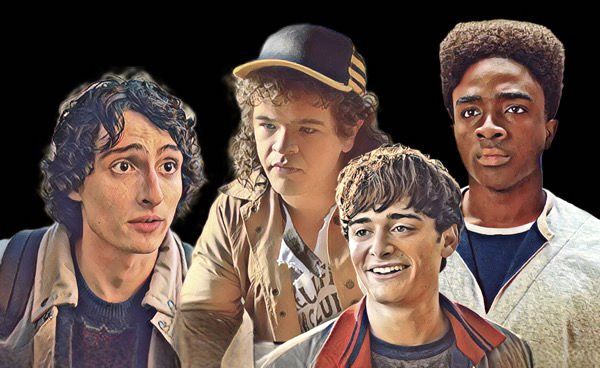

At the peak, Will stops being merely a receiver for horror and becomes an active hand in the fight. He finds a kind of control inside his own trauma, grips Vecna from within, blocks the killing blow—a rewrite of his role at the very last moment. Eleven, at the core of the core, does what she has always done: turns feeling into force. The combat seems to end with the image the show loves most: evil collapsing, the heart stopping, family reuniting in the middle of filth. Joyce—who has carried the most honest panic since season one—gets the catharsis of finishing the violence with her own hands. It’s brutal, ugly, human. And somewhere underneath it, it’s the series reminding us that mothers deserve the final strike, too.
You think: it’s over. But it isn’, because there’s still too much runtime left, and Stranger Things has always treated epilogues the way it treats dessert.
The escape from the Upside Down is all adrenaline and relief, as if everyone is letting themselves believe. Then the “right side up” becomes a threat again: soldiers waiting, a blockade, capture—the return of control at the precise moment these characters want to be only survivors. Eleven understands before anyone what it means. If she’s taken, the cycle restarts. So she chooses the crueler option: she stays behind.
Her farewell to Mike happens where the show’s emotional power lives—inside the mind. They meet in a private room made of memory, a goodbye that blends love and guilt until romance becomes an epitaph. The explosion comes. The Upside Down collapses. Eleven disappears with it.
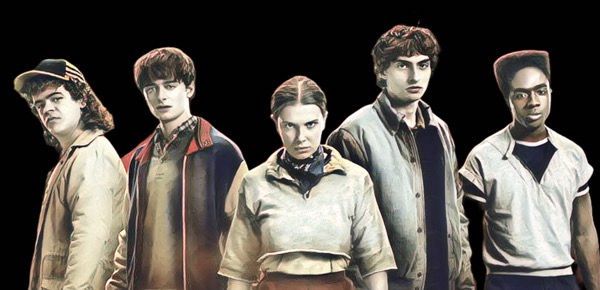
Eighteen months later, the episode shifts genre. It becomes an “after.” Hawkins relearns how to be a town. Life attempts to continue, scars included. We glimpse who becomes what: Steve in responsible-adult mode, Nancy following something that fits her instincts, Jonathan moving toward making art, Robin still voicing the world. Max is back inside her body, back in motion, as if the show is granting a small victory it withheld for too long. Dustin is valedictorian because, deep down, Stranger Things loves the idea that intelligence and friendship can also save the world.
Mike, though, is fractured. And Hopper is the one who pulls him out, not with a ready-made speech, but with the authority of someone who has lost and survived anyway. The finale understands that grief is the last monster: the one you can’t kill with fire.
The closure returns to the place where this story has always made sense: the basement and Dungeons & Dragons. They play one last time, not as cheap nostalgia but as ritual, as if fantasy is the tool they invented to endure reality. And then Mike offers a theory, almost a story: what if Eleven didn’t die? What if Kali left an illusion at the threshold? What if the figure in the doorway was only an image meant to fool the world?
The episode doesn’t confirm it. It offers a choice. The possibility of believing.
Stranger Things ends not with an answer, but with a pact. A pact that, after years living beside the impossible, you learn to live with what you can’t prove, and you call it hope.
In the last gesture, Holly and the kids rush downstairs, claiming the table and starting their own campaign. It’s the most literal torch pass imaginable, not subtle at all, yet perfectly in character for a series that has never been shy about its symbols. The basement door closes. The story, officially, does too.
And what remains isn’t a monster question. It’s a human one: what do we do when the adventure ends, and real life keeps going? In Stranger Things, the answer is simple and cruel: you grow up. Even when you’re not ready. Even with longing. Even with ghosts. And sometimes, you choose the version of the story that lets you breathe.
Descubra mais sobre
Assine para receber nossas notícias mais recentes por e-mail.

