
Resisti a assistir Sinners por um motivo simples e, confesso agora, equivocado: não gosto de filmes de terror, monstros ou vampiros. Cresci associando o gênero a sustos mecânicos, regras rígidas e pouca margem para emoção que não fosse o medo. Sinners desmonta essa resistência com uma elegância rara. E talvez por isso não seja surpresa que o filme tenha se tornado um fenômeno da crítica, lidere as indicações da temporada de prêmios e tenha conquistado um desempenho comercial muito acima do que se esperava de um “filme de gênero”. Porque Sinners não é sobre vampiros. Vampiros são apenas a forma que o horror assume para falar de outra coisa.
Dirigido por Ryan Coogler, o filme retorna a temas que atravessam toda a sua obra — identidade, pertencimento, exploração, memória histórica — mas agora embalados em uma narrativa que mistura blues, tragédia grega e horror sobrenatural. O resultado é um filme que dialoga com o público amplo sem jamais simplificar o que está dizendo. E a essa altura nem é spoiler: a virada só acontece a mais de um hora de ação, apenas depois de nos envolver. Bem vampiresco.
O gênero como disfarce político
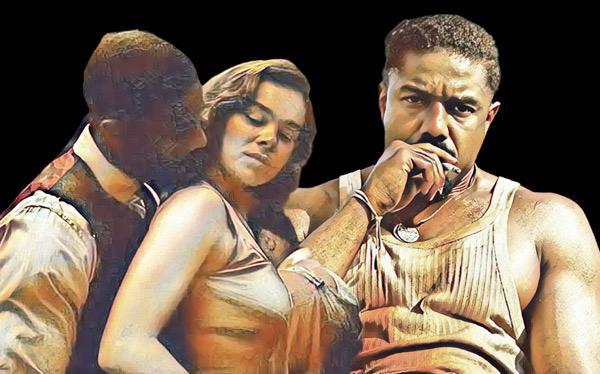
Ambientado no Mississippi dos anos 1930, Sinners acompanha irmãos gêmeos vividos por Michael B. Jordan, que retornam do Norte com dinheiro do crime e um sonho perigoso: abrir um juke joint para a comunidade negra local. O espaço não é apenas um negócio. É um território de liberdade em um mundo estruturado para negá-la.
O horror surge quando figuras brancas, aparentemente sofisticadas e “civilizadas”, começam a orbitar esse espaço. São vampiros, sim, mas vampiros que não precisam de capas ou presas exageradas. Eles se alimentam de cultura, trabalho, corpos e silêncio. Não invadem: são convidados. Não gritam: negociam.
Coogler usa o terror exatamente como Jordan Peele fez antes, mas com uma diferença crucial: Sinners não está interessado apenas no choque contemporâneo. Ele olha para trás. Para a origem. Para o pecado estrutural que nunca foi resolvido.
Michael B. Jordan em seu trabalho mais ambicioso
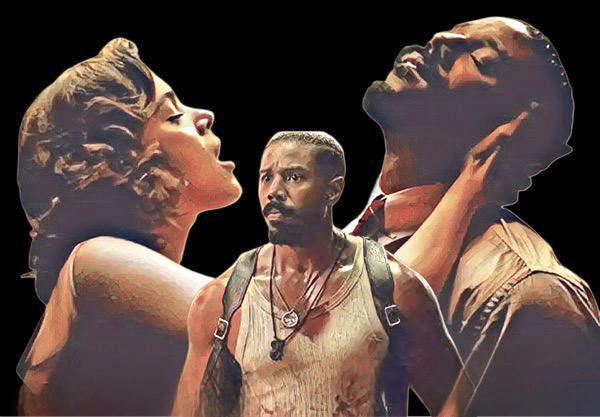
Grande parte da força do filme repousa na atuação dupla de Michael B. Jordan. Interpretar gêmeos já é um desafio técnico; aqui, o desafio é moral e emocional. Um irmão acredita na negociação como forma de sobrevivência. O outro entende que todo acordo cobra um preço alto demais.
Jordan constrói essa diferença com precisão de gestos, ritmo de fala e presença física. Não há caricatura. Há duas respostas legítimas ao mesmo trauma histórico. É uma atuação que sustenta o filme inteiro e explica por que seu nome aparece com tanta frequência nas listas de favoritos da temporada: não é um desempenho chamativo, é um trabalho de composição profunda, que cresce cena a cena.

Bilheteria, público e alcance
Mesmo com classificação restritiva e temática densa, Sinners encontrou público. A bilheteria confirmou algo que Hollywood frequentemente subestima: quando o cinema de gênero é tratado com inteligência e ambição artística, ele ultrapassa bolhas. O filme não apenas se pagou rapidamente como se manteve em cartaz por semanas, impulsionado pelo boca a boca e pela curiosidade de quem, como eu, achava que “não era para si”.
Esse desempenho ajudou a consolidar Sinners como um raro ponto de convergência entre crítica, prêmios e mercado: um feito cada vez mais incomum.
O final e o que ele recusa
Sem entrar novamente em todos os detalhes do desfecho, vale reforçar: Sinners não oferece redenção fácil. O juke joint cai. A cultura resiste, mas sangra. Os vampiros não desaparecem, apenas se adaptam. O filme se recusa a fingir que a vitória é limpa ou completa.
E é exatamente essa recusa que o torna tão poderoso. Coogler não quer confortar. Quer lembrar.
Por que Sinners lidera a temporada
Sinners lidera as indicações porque não ensina lições óbvias, não subestima o espectador e não usa o gênero como muleta, mas como linguagem. É um filme que entende que o terror mais duradouro não está nos monstros, e sim nos sistemas que continuam funcionando perfeitamente.
Para quem, como eu, sempre evitou vampiros, Sinners funciona quase como uma armadilha, no melhor sentido possível. Você entra achando que sabe o que vai encontrar. Sai entendendo que o gênero era apenas a porta de entrada.
Descubra mais sobre
Assine para receber nossas notícias mais recentes por e-mail.
 miscelana.com
The Spectacle of Forgetting: Why Sinners is a Masterpiece of Style Over Substance and The Secret Agent is a True Work of Art
The upcoming 2026 Oscars present a fascinating philosophical duel disguised as a competition for Best Picture. Sinners, Ryan Coogler’s ambitious, genre-blending horror film that has captivated audiences and critics alike with its stunning visuals, powerful performances, and a 97% Rotten Tomatoes score. On the other, we have The Secret Agent, Kleber Mendonça Filho’s quiet, devastating drama about a man haunted by Brazil’s military dictatorship, which has been hailed as a “real masterpiece” by those who value cinema as a tool for humanist inquiry.
At first glance, Sinners appears to be the more groundbreaking achievement: a big-budget, R-rated horror film that unapologetically centers the Black experience in the Jim Crow South, using the vampire genre as an allegory for colonialism and systemic racism. It is a feast for the senses, a cultural touchstone, and a commercial triumph. However, to confuse its technical proficiency and cultural signifiers with artistic greatness is to fall into a “prestige trap.” A deeper sociological and philosophical examination reveals that Sinners is not a masterpiece but a work of profound ideological regression. It is a film that, in its attempt to subvert historical racism, resurrects its most dangerous foundations, ultimately trading genuine humanist critique for a form of neo-ethnocentric extremism wrapped in high-budget grandeur. In stark contrast, The Secret Agent achieves true mastery by refusing such spectacle, instead holding a mirror to the “blunt indifference” of the modern world and forcing us to confront our own complicity in the erasure of historical atrocity.
The acclaim for Sinners is built on a foundation of undeniable technical competence. Michael B. Jordan’s dual performance is a virtuoso display of acting. Ludwig Göransson’s score is a masterful blend of blues and horror. The cinematography immerses us in a richly textured 1930s Mississippi. The film is, on a purely sensory level, a triumph. This “technical competence” becomes a shield, blinding many critics to a “toxic subtext.” The film drapes itself in the “Ode to Blackness”—using Fulani-inspired choreography and a “greatest hits” of Black musical heritage—to create an aesthetic that feels sacred and beyond reproach. This feat is refraining critics to address the “toxic subtext”, as they might fear it would sound like as an attack to the culture it celebrates, rather than to the flawed logic of its script.
This is the heart of the “prestige trap.” The film uses the beauty of its craft to smuggle in a message that, if spoken plainly, would be recognized as a form of racial essentialism. It creates a “fantasy of perfection”—a holy Black space—so that the intrusion of the “white, vampire, villains” feels like a violation of a sacred border, rather than a historically complex interaction. The audience is manipulated into a purely emotional, tribally-affirming response, mistaking the intensity of that feeling for profound artistic insight.
The film’s central allegory—that white people are literally bloodsucking parasites—is where its philosophical shallowness becomes most apparent. While many have lauded this as a powerful metaphor for colonialism and cultural extraction, a closer look reveals a narrative that doesn’t dismantle racist logic but simply flips its polarity. By portraying “whiteness” as an inherently predatory and vampiric trait, the film engages in the same biological essentialism that has historically been used to justify oppression.
This creates a “mirror image of sovereignty” based on skin color. It relies on the same “us vs. them” tribalism, the same dehumanization of an entire group, that fueled the very Jim Crow laws it uses as its backdrop. The film reframes prejudice as a survival instinct, suggesting that exclusion based on race is not only justified but spiritually necessary. This is not a critique of racism; it is its inverse. It replaces the old “white supremacist” narrative not with a humanist one, but with an inverted ethnocentrism, keeping the “hateful framework intact” while simply swapping the labels of “monster” and “hero.”
This logic leads to a deeply troubling “segregationist subtext.” The film’s narrative punishes any character who attempts interracial unity. Mary, the mixed-race character, is one of the first to be corrupted, implying that integration is a deadly trap. The unspoken message is a chilling validation of racial separation as a necessary tactic for survival. By using the 1930s South—a time of horrific, real-world racial exclusion—to tell a story where excluding people based on race is framed as a virtuous act of “cultural preservation,” the film commits a profound historical and moral irony. It rebrands the central logic of segregation as a form of resistance.
Nowhere is this moral inconsistency more evident than in the casting of an Irish actor as the lead vampire. The choice is defended by some as a “nuanced exploration of racial assimilation,” showing how an oppressed group can gain access to white privilege and then become oppressors themselves. While historically accurate in a broad sense, within the film’s Manichaean universe, it functions as a tone-deaf demonization of another group with its own history of colonization and struggle. It feels “historically nonsense” and “gross” to use one historically oppressed group as the face of pure evil in a story ostensibly about the evils of oppression. It reveals the film’s framework as fundamentally tribalist, incapable of seeing the world through anything but a rigid hierarchy of victims and victimizers, where membership is determined solely by immutable characteristics.
Where Sinners uses the past to fuel a tribal spectacle, The Secret Agent uses it to demand a moral accounting. Kleber Mendonça Filho’s film is not concerned with creating a cathartic “us vs. them” fantasy. Instead, it is a quiet, devastating exploration of what happens when history is forgotten. It focuses on Marcelo (Armando), a man whose life was shattered by the brutality of the 1970s military regime, and his relationship with his son, Fernando, a young man who embodies the “global consumer.”
Fernando is the film’s true masterpiece of characterization. He is not a villain. He is a physician working long hours in a hospital that stands on the exact terrain where his grandfather once worked as a projectionist during the darkest years of the dictatorship. Every day, he walks the grounds where his family’s history—and his country’s trauma—was staged. And yet, he simply does not care. He shows that, convincing, through his silence and reticence. This scene is the film’s most devastating critique: the son occupies the sacred ground of memory, literally built atop it, and feels nothing. He performs the most humane of professions while remaining utterly indifferent to the human history beneath his feet. The hospital, a place of healing in the present, is built on a cinema, a place of dreaming and escape in the past—but for Fernando, it is just a location, stripped of its layering, its ghosts, its claim upon him.
This is a far more sophisticated and damning critique of modern society than anything in Sinners. It exposes the “connivance through apathy” that allows historical atrocities to fade not through active malice, but through the passive, self-interested forgetting of the next generation. The film argues that the greatest horror is not a mythical monster, but the modern descendant who looks at the scars of his father and his country and simply does not care.
Wagner Moura’s performances as Armando/Marcelo/Fernando are the anchor of this masterpiece. His geniality flows in depicting active resistance, reactive silence and subtle indifference. He does not play heroes, but men witnessing their own erasures.
The difference between these two Best Picture nominees could not be starker. Sinners operates like a modern-day Colosseum. It takes the trauma of the past and mines it for raw material to create a cathartic spectacle for a modern, tribal audience. It offers the comfort of a binary world, the thrill of seeing the “enemy” vanquished, and the aesthetic pleasure of high art, all while peddling an ideological framework that is a regression to pre-Enlightenment tribalism. It is a product of an “anarcho-capitalist” entertainment industry that has learned that disguised ethno-centrism as social commentary could serve as a profitable commoditiy. Its acclaim is not because it achieves true artistic complexity, but because it satisfies a contemporary appetite for identity-based catharsis—and critics have confused that emotional intensity with substantive artistic merit.
The Secret Agent, in contrast, functions as a living archive of resistance. It refuses to let the audience be a frivolous consumer. It forces us to sit with discomfort, to acknowledge that the luxury and stability of the present are built on a foundation of historical crime scenes. It critiques the “politics of forgetting” by showing us its human cost: a father made a ghost in his own home, and a son who is the perfect avatar for a global generation that has traded historical consciousness for the anesthesia of consumerism.
To acclaim Sinners as a masterpiece is to be seduced by the glitter of the spectacle and to ignore the dangerous logic that fuels it. A true masterpiece, like The Secret Agent, does not comfort us with easy binaries; it complicates our worldview and expands our empathy. It reminds us that the real atrocity is not just the crime of the past, but our own “blunt indifference” to it in the present. It forces us to look into the face of the “ghost” and recognize that our silence makes us not innocent bystanders, but conniving heirs to the horrors we refuse to discuss. For this reason, The Secret Agent is not just the better film; it is the only one that can rightfully be called a masterpiece.
CurtirCurtir