
There is something profoundly risky about placing a fantasy story in the hands of a child, especially when that child is not merely a functional supporting character but carries the moral, symbolic, and emotional axis of the entire narrative. A Knight of the Seven Kingdoms takes that risk with rare confidence and succeeds because it found in Dexter Sol Ansell a young actor capable of sustaining complexities that many adult performers would struggle to articulate with the same precision.
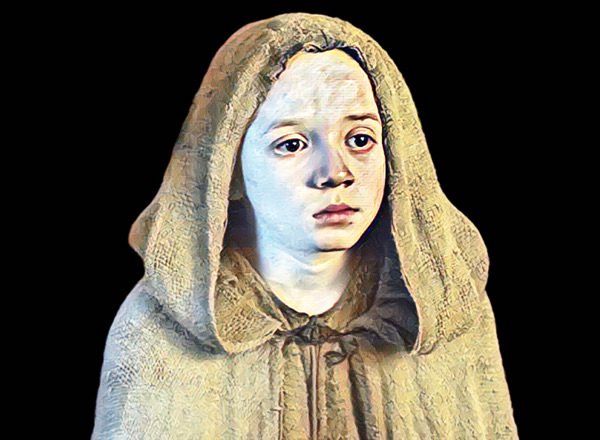
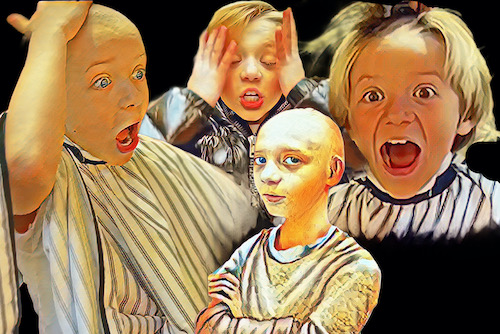
Dexter was born in Leeds, in the county of Yorkshire, in September 2014, and was just nine years old during the filming of the first season. The son of former television presenter Debbie King and Jonathan Ansell, a singer from the pop-opera group G4, he grew up in an artistic environment, but his path as an actor began early and in a very practical way, far from any notion of precocious glamour. At just two years old, he made his television debut in Emmerdale, one of Britain’s most traditional soap operas, to which he later returned in another role, remaining on the show for nearly two years. It was not a fleeting curiosity. It was training.
Before arriving in Westeros, Dexter had already moved confidently across very different genres and tones. He played the young Coriolanus Snow in The Hunger Games: The Ballad of Songbirds and Snakes, perhaps one of the most demanding roles imaginable for a child, requiring moral ambiguity, emotional restraint, and the construction of a character the audience knows will one day become a villain. He also appeared in series such as The Midwich Cuckoos, in the comedy Hullraisers, in family films like Christmas on Mistletoe Farm and Robin and the Hoods, as well as in the British horror film The Moor and Robert Zemeckis’s Here. That varied trajectory helps explain why his performance in A Knight of the Seven Kingdoms is built less on display and more on control, listening, and constant attention to what exists beyond the frame.

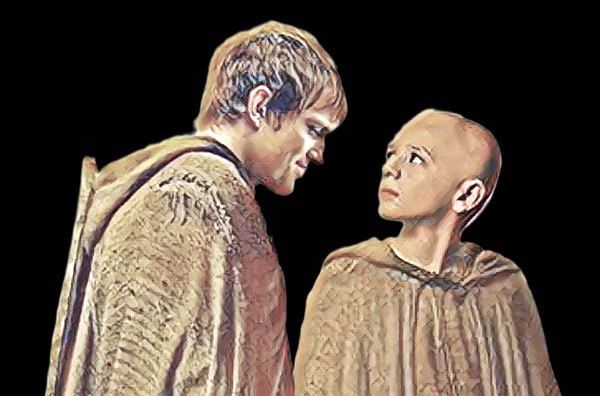
The casting of the series as a whole is precise, but the engine only truly works because the relationship between Egg and Duncan is completely believable. The chemistry between Dexter and Peter Claffey is neither decorative nor accidentally charming. It is structural. Duncan offers physical strength, impulsiveness, and a moral compass still being shaped. Egg offers worldliness, historical awareness, and a premature maturity that asserts itself without ever feeling artificial. Even at such a young age, he carries more internal information than almost everyone else in the cast.
At that point in the history of Westeros, Aegon was as far from the Iron Throne as possible. The fourth son of the fourth son of a king, politically irrelevant, almost a footnote in the Targaryen genealogy. The expected path was clear and limited: marry, maintain the bloodline, exist as a symbolic figure. His brothers had already taken paths that served as warnings. Daeron disappeared into drink. Aerion into violence and madness. Aemon chose knowledge, faith, and medicine as a way out of the power game. Aegon wanted to be a knight, a childlike desire that was structurally impossible for someone too small, too noble, and too closely watched.
Dexter understands this conflict from the very first frame. Egg is not merely curious or mischievous. He is a boy who knows too much for his age, who has already survived King’s Landing and intuitively understands the dangers of the elite and of proximity to power. The performance is built on a difficult balance between youthful energy and forced maturity, never slipping into caricature or the stereotype of the precocious child.
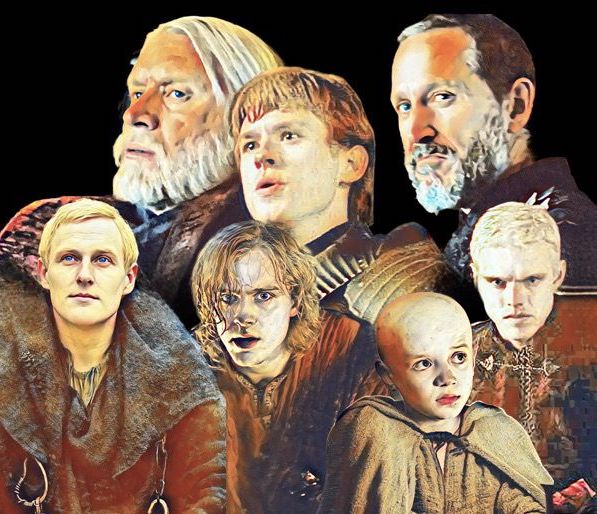
That is why the news of the princes’ disappearance does not function merely as a narrative trigger. There is a decisive subtext at work. Egg does not attach himself to Duncan by chance. He already knew that this knight would matter to him. Daeron dreamed, and his prophetic dreams, always treated as weakness or nuisance by the family, foretold the figure of a simple knight as central to Aegon’s destiny. Not a legendary hero, not a king, but a moral guide, someone capable of pulling him out of the court’s bubble and placing him in contact with the real world. Egg believed in those dreams. And Dexter never verbalizes this. He lets it surface in the gaze, in the constant attention with which Egg observes Duncan from their first meeting, a curiosity charged with recognition, as if he were following something that had already been announced to him.
That silent awareness returns with force in the scene of the witch’s prophecy. When she describes his future with brutal accuracy, saying that he will be king and will die burned alongside those he loves most, the reaction is neither panic nor disbelief. Dexter chooses the most unsettling path. Contained acceptance. A boy who understands too early that the Targaryen destiny is costly and offers no easy escape. The scene links Egg to the cyclical tragedy of the house, not as an exception but as a continuation, and it is sustained entirely through pause, gaze, and the weight of what remains unspoken.
Nothing, however, prepares the viewer for the reunion with Aerion Targaryen at the end of the third episode. It is one of the most iconic moments in the entire Targaryen saga. Egg does not shrink back, does not fear, does not seek approval. The contempt is clear, the authority firm, the strength internal. He sees his brother for what he is: arrogant, cowardly, and violent, and rejects him morally. It is not an emotional outburst but a cold, lucid gesture, far too adult for a boy, which definitively establishes the difference between Aegon and the Targaryens who came before him.
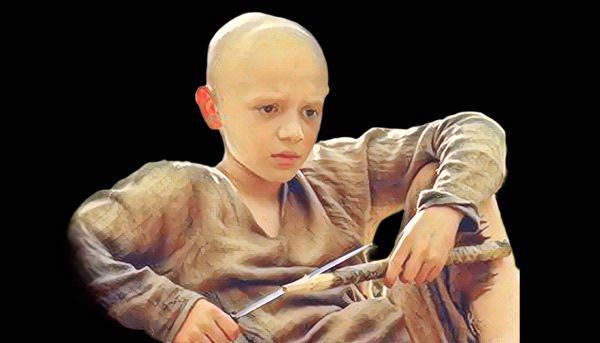
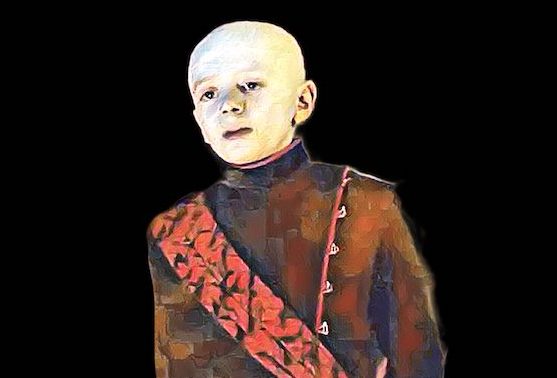
Every story depends on its actors to work, but in fantasy, that dependence is absolute. If heroes and villains are not convincing, everything collapses into caricature, and the world falls apart. A Knight of the Seven Kingdoms avoids that trap because it trusts Egg and because it trusts Dexter Sol Ansell, a young actor who arrives in Westeros already equipped with experience, technique, and an emotional intelligence rare for his age.
He is not merely a good child actor. He is tseries’s greatest success. Its emotional center. And the proof that, in Westeros, sometimes the smallest character is the one carrying the entire realm on his shoulders.
Descubra mais sobre
Assine para receber nossas notícias mais recentes por e-mail.

