
Forty years after becoming a popular phenomenon, Dona Beja once again circulates powerfully in the Brazilian imagination, now with a new cast and a different historical sensibility. The character who set television ablaze in the 1980s is revisited in a completely different industrial and cultural context, with a promise of greater inclusion and on a platform that reaches beyond Brazil. This distance does more than update the narrative; it opens space for a question the original 1986 version was not obliged to sustain in depth, because the country as a whole was occupied with other debates. Who, after all, was Dona Beja before she became legend, scandal, collective fantasy, and, later, an audiovisual product?
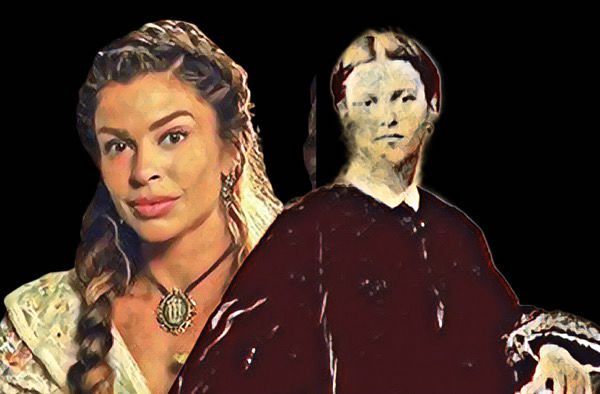
Ana Jacinta de São José was born in 1800 and arrived in Araxá as a child, at a time when the town was a small mining settlement marked by rigid social structures in which female reputation and morality defined destinies. The early beauty that earned her the nickname Beja, associated with the “beijinho” flower, quickly became an element of exposure and risk. In a deeply hierarchical colonial society, female appearance was not capital; it was vulnerability.
The central episode of her life occurs around the age of fifteen, when she is abducted by Joaquim Inácio Silveira da Mota, a direct representative of imperial power in the region. Throughout the nineteenth century and even into the twentieth, this kidnapping was often softened by romanticized narratives, as if it were a wayward love affair. Today,y there is no room for such comfortable ambiguity. It was an abuse of power typical of colonial logic, in which female bodies, especially young ones, were treated as extensions of male authority. The death of her grandfather during the attempted rescue, although surrounded by differing accounts, also reveals the degree of violence that marked this rupture in the life of an adolescent girl.
During the period she lives in Paracatu, Beja occupies an ambiguous position. She is not a wife, she is not free, and, at the same time, she is not completely invisible. When Silveira da Mota is called back to Rio de Janeiro by order of Dom João VI, she returns to Araxá carrying the stigma that would follow her for the rest of her life. The city she encounters no longer recognizes her as an admired girl, but as a marked woman, judged for an experience she had not chosen.
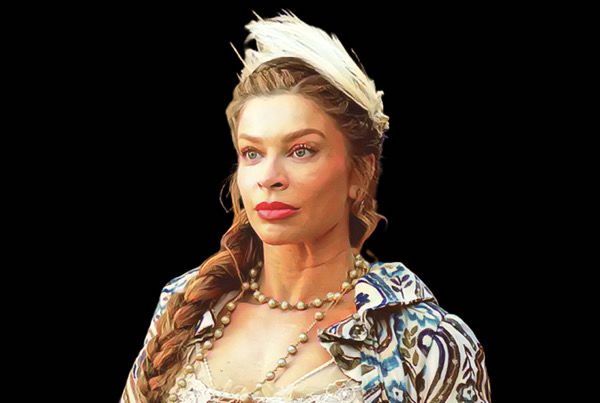
It is from this rejection that Dona Beja constructs the trajectory for which she would become known. With no possible place within local morality, she creates an alternative outside it. The Chácara do Jatobá, built with resources obtained during her time away, becomes the symbol of this rupture. More than a brothel, as popular tradition later fixed it, the space functioned as a center of male sociability, political negotiation, and the circulation of power. Beja did not merely receive influential men; she set rules, selected companions,s and controlled her own economic dynamics in a context in which few women had any financial autonomy.
This dimension is often reduced to exoticism or scandal, but it is central to understanding why Dona Beja became so unsettling. She did not represent only sexual freedom; she represented something even harder to tolerate in nineteenth-century Minas Gerais, a woman who managed money, imposed limits, ts and occupied an informal public space without the legitimizing mediation of marriage.
The affective relationships that resulted in the birth of her daughters, Tereza Tomázia de Jesus and Joana de Deus de São José, restore flesh and time to a trajectory often turned into caricature. When she decides to leave Araxá, Beja does not flee; she reorganizes her survival. In Bagagem, now Estrela do Sul, she finds in diamond mining a new form of economic insertion at a moment when mineral wealth was circulating intensely in Minas Gerais. Investing in the bed of the Bagagem River was not a romantic gesture; it was a strategy.
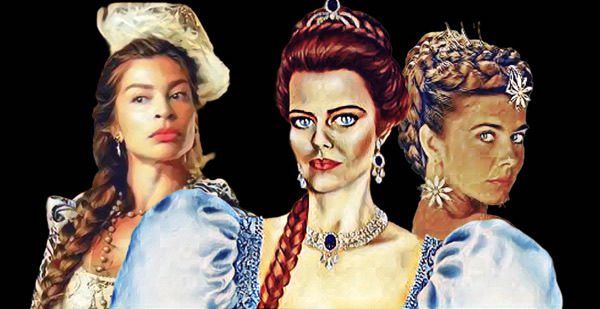
Her final years, although surrounded by rumors, seem to have been marked by relative material comfort and growing isolation. Dona Beja died in 1873 at the age of seventy-three, possibly as a result of nephritis, far from the mythical aura that would later be built around her name. There was no consecration in life, nor institutional recognition, and oblivion came quickly.
The recovery of Dona Beja’s memory begins in the twentieth century, first through oral tradition, then through literature, and finally through television. The consolidation of the myth passes through the novel by Agripa Vasconcelos, which mixes research and dramatization and offers the sentimental and eroticized matrix that pop culture would embrace as if it were the definitive story. In Araxá, this recovery also materializes as heritage and tourism, because the Chácara do Jatobá ceases to be merely a symbolic setting and becomes a physical space of memory, with all the disputes this implies, as the city is forced to coexist with a female figure who escapes traditional edifying narratives.
It is here that the 1986 soap opera enters as a cultural event, not merely as an adaptation. Dona Beja was produced and broadcast by TV Manchete between March and July 1986 and became one of the network’s greatest successes. Written by Wilson Aguiar Filho, the soap opera consolidated Maitê Proença as the definitive image of the character and helped turn Beja into an erotic symbol of Brazil emerging from dictatorship and testing its limits of freedom and exposure. Public debate focused above all on scenes of nudity and the frontal eroticization of the protagonist, which explains both the scale of the phenomenon and the simplifications the work helped to cement. The original violence of the real story was pushed into the background while fantasy occupied the foreground.
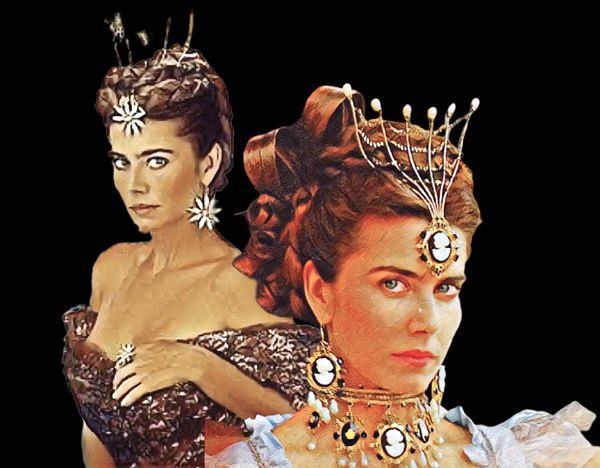
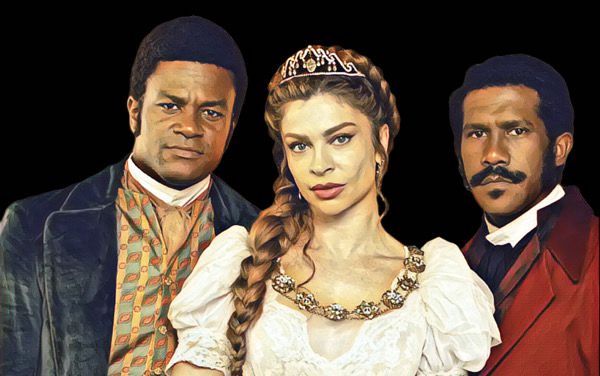
Forty years later, the reinterpretation scheduled for 2026, produced for HBO Max and starring Grazi Massafera, is born in another Brazil and under a different industrial logic. The new Dona Beja already presents itself with a distinct grammar, less interested in shock for its own sake and more committed to historical context, inclusion, and a reorganization of point of view. The presence of a diverse cast and the emphasis on political, social,l and racial conflicts indicate an attempt to shift the narrative away from eroticism as the sole axis and toward a reading in which violence, survival, al and power structure the character.
What changes is not only the aesthetic, but the responsibility of the gaze. The 1986 version responded to a country eager to provoke and break limits. The 2026 version responds to an audience that asks who profited from Dona Beja’s reputation, who violated her, who expelled her, and why this woman needed to become a myth to continue existing in collective memory. Revisiting Dona Beja today is not about correcting the past; it is about understanding the present and recognizing that, behind the character who marked Brazilian television, there was a real woman, shaped by a system that offered women very few legitimate paths.
Descubra mais sobre
Assine para receber nossas notícias mais recentes por e-mail.

