
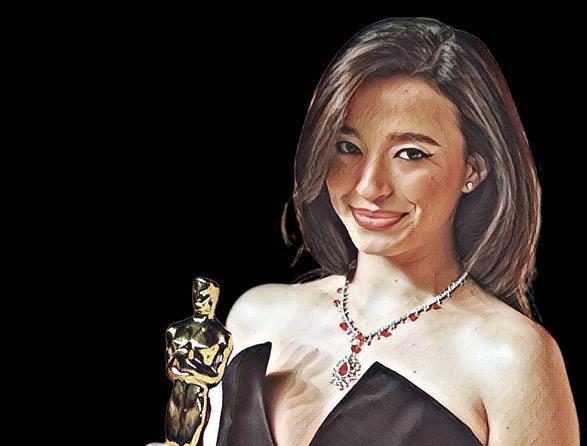
There is something curious and revealing about the silence surrounding the 2026 Oscars. It is not that the season does not exist. It does. It is happening, the films are there, campaigns are underway, and the votes are practically locked. What is missing is that constant noise, that sense of inevitability that usually dominates cultural debate in the months leading up to the ceremony. That does not mean surprises are impossible. We count on them, in fact. We do not need to look far. Last year, there was a loud sense of predictability, especially in the category that mattered most to us, Best Actress, where Fernanda Torres was either the underdog or the frontrunner, depending on who you asked. The conversation revolved around consensus, around well-rehearsed narratives, around winners seemingly announced months in advance. Although most people assumed Demi Moore would take it, it was Maddy Madison who went home with the statuette.
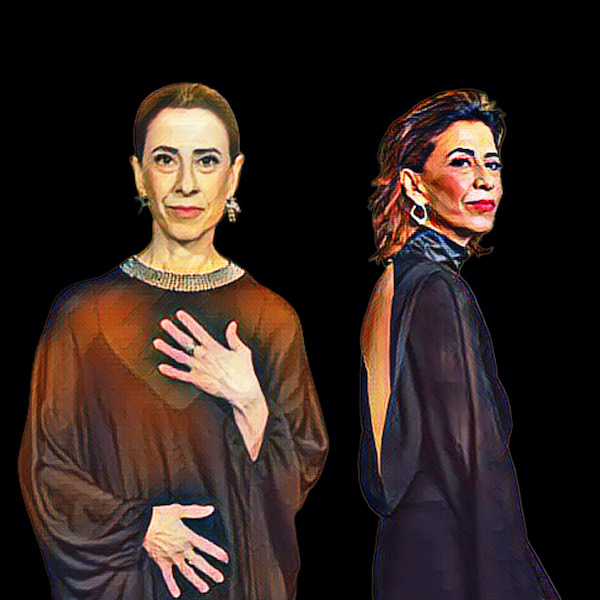
In 2026, the landscape is different. Wagner Moura has already made history as the first Brazilian nominated for Best Actor, but his presence has not sparked the same global fever that surrounded Fernanda. Not because the race is necessarily more open, but because it is less spectacularized.
This year’s Oscars feel more decided inside the bubble than outside of it.
There are favorites, yes. There are dominant readings. Some films appear consistently in betting markets and precursor awards. But none of this has spilled over into the collective imagination the way it has in other years. Perhaps because the titles are denser, less of an “event.” Perhaps because cinema, as a central cultural topic, is competing with many other narrative urgencies. Perhaps because the Oscars themselves have lost some of their ability to create mythology in real time. Or perhaps, yes, it is possible that political polarization has made people more hesitant to voice strong opinions.
In the end, what we have is a technical season, almost administrative. One followed far more closely by those who cover cinema professionally than by the general public.
That does not mean uncertainty. Quite the opposite.
In many ways, 2026 is a more closed year than it appears. The odds are relatively stable, voting blocs seem clearer, and the Academy signals that it will continue rewarding a cinema that presents itself as serious, political, international, yet still comfortably framed within certain formulas. The suspense is less about who will win and more about how those victories will be read afterward.
And that is precisely where Brazil enters the picture.


Wagner Moura’s presence in this race shifts the axis of the conversation, even when that conversation is not happening out loud. His nomination for The Secret Agent is not treated as exoticism, nor as an isolated symbolic gesture. It is a solid nomination, the result of a film that traveled well, was taken seriously, and sustained itself critically.
Wagner does not arrive as the absolute favorite. That matters. In the main readings of the American press, he appears more as a strong outsider than as a safe bet for the win. There are performances more aligned with the Academy’s historical taste, names with more aggressive campaigns, and narratives that are easier to consume.
But the mere fact that this dispute exists on these terms is already historic.
Wagner is in the real game, not in the “representation” category. He is competing as an actor, full stop. And that says a great deal about the kind of cinema the Academy wants to legitimize right now. One less centered on Hollywood as the moral center of the world, more open to stories shaped by politics, memory, and ethical tension.
Curiously, that relevance has not translated into noise.
Perhaps because the 2026 Oscars are less interested in spectacle and more invested in image management. The ceremony takes place in just a few weeks at the Dolby Theatre, with Conan O’Brien once again as host, and it promises smoothness, controlled humor, and no major ruptures. An Oscars ceremony that does not want to make mistakes.

And perhaps that is what we are feeling. Not the absence of subject matter, but the absence of conflict.
There is no dominant scandal. No film is unanimously loved or hated. No major moral controversy mobilizing debate. The 2026 Oscars seem comfortable being correct, elegant, and predictable in form, even as they attempt to appear diverse in content.
That is why we talk about them less. Because they provoke us less.
Still, when the ceremony happens, it will say a great deal. It will say what kind of international cinema the Academy is willing to reward. It will say whether Brazil’s presence will be celebrated merely as a symbolic milestone or as a concrete victory. It will say whether the Oscars want to be a mirror of the world or simply a well-lit showcase of it.
Perhaps we are not talking about the 2026 Oscars because, deep down, they are already speaking for themselves. And they are speaking quietly.
Descubra mais sobre
Assine para receber nossas notícias mais recentes por e-mail.
 miscelana.com