
July 16, 1999.
A young girl stares into a mirror in a beauty salon while, in the background, photographers shout a name like a hysterical chorus: Carolyn! Carolyn!
Cut to that girl as an adult. Carolyn Bessette-Kennedy, silent and introspective, paints her nails red at the coveted J Sisters salon, run by Brazilian sisters in New York. She studies the color for a moment, changes her mind, and asks for something else. She says she needs something that “will work for where I’m going.” Red will not do. She chooses a nude shade, a safe tone. Even surrounded by luxury, her gaze is distant, sad, almost resigned.
On the other side of Manhattan, John F. Kennedy Jr., forever “John John,” is writing a letter. He is interrupted by the arrival of his sister-in-law and needs to change clothes. We discover his foot is broken. He leaves the George Magazine offices dressed in athletic wear, visibly exhausted.
Carolyn, surrounded by paparazzi, gets into a car filled with silence. The music is melancholic. Stuck in traffic, John is recognized by children on the street. He complains to his sister-in-law because Carolyn did not want to accompany him to a cousin’s wedding. “She’s trying, go easy on her,” she says. We learn he has been sleeping in a hotel. The marriage is in crisis.
At the airport, Carolyn arrives an hour late. The tension between them is palpable. He knows the family will complain. She replies that they always do. His sister tries to defuse the argument. The trip will be made without John’s flight instructor. Before boarding, he apologizes and tells her he loves her. They reconcile.
They depart on what we know will be the final journey of their lives.
This is how Ryan Murphy’s version of this American love story begins. Narratively traditional, deeply moving for those who know that after takeoff, none of the three will ever be seen alive again.

Seven years earlier.
Carolyn wakes up in a small, cluttered apartment in Manhattan. Dressed entirely in black, smoking, she heads to work. The minimalist, elegant aesthetic is already there, though without the latter glamour. On newsstands, John’s face dominates magazine covers.
At Calvin Klein, her friend Grace complains about Carolyn’s mysterious air — she never reveals what she does at parties or whom she dates. Grace is obsessed with an ex-boyfriend, and Carolyn gives cold, strategic advice: exploit his insecurities until you grow tired of him.
They are interrupted to prepare looks for Demi Moore and Diane Sawyer. Carolyn is frustrated to still be confined to the showroom. She dreams of moving into public relations, but Calvin Klein has just returned from rehab and resumed work — not the right moment to ask for a promotion.
Meanwhile, John rides his bicycle across the city, reading articles about himself, especially the news that he failed the bar exam. Accompanied by a montage of him working out, he vents to his cousin about the pressure and constant scrutiny. He does not trust himself.
Within fifteen minutes, the soundtrack makes it clear we are immersed in the early 1990s.
An important client, apparently Annette Bening, dislikes the outfits selected for her. Carolyn suggests an alternative piece. Calvin Klein begins to choose a dress, but she boldly selects a new suit more aligned with the theme of the Bugsy premiere. The choice is perfect. Carolyn begins to be noticed by celebrities and by Klein himself.
At the New York District Attorney’s office, where he works as an assistant, John is discouraged by his second failure on the bar exam. Even so, surrounded by photographers, he plays soccer with friends in Central Park and greets paparazzi by name.
His lateness makes him late for lunch with his mother, Jackie Kennedy, and his sister Caroline. The subject is Ted Kennedy’s wedding. Jackie controls everything: what her son eats, whether he will attend with a date, and whether he is still with Daryl Hannah. She criticizes the actress in meticulous detail. John resents the interference, but Jackie maintains absolute authority.
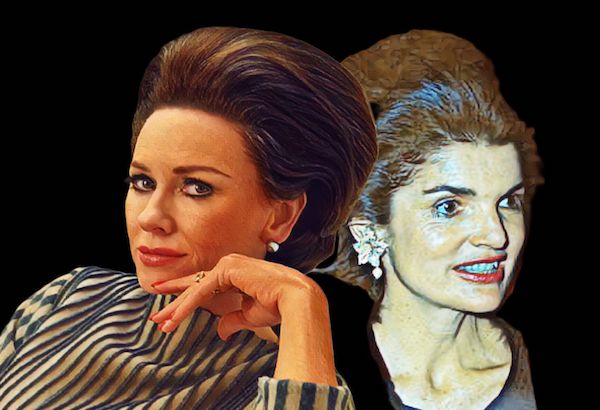
Naomi Watts portrays Jackie without much physical resemblance, yet reproduces the former First Lady’s vocal tone and cadence with precision.
Carolyn wants to attend an extremely exclusive gala. After being dismissed by her boss, she decides she will go anyway. She arrives at the same time as John. He comes in a limousine via the red carpet. She arrives by taxi through the back entrance. They glimpse each other only briefly.
Once again, Carolyn saves the day. Calvin Klein calls her over for a toast and uses the opportunity to introduce her to John John. The impact between them is immediate. Love at first sight, though she keeps her distance. When he tries to learn more about her, she replies simply, “You know where I work,” and leaves.
At a nightclub, we see another side of Carolyn: cocaine, alcohol, flirting with multiple men, and loud music. An independent, intense woman fully immersed in New York nightlife.
The next day, John shows up at Calvin Klein under the pretext of buying a suit. The entire store is stunned. Carolyn remains impassive. He flirts openly and invites her to dinner. This time, she does not refuse.
Rumors of a possible romance spread through the company. Calvin Klein is annoyed that he was not informed of the visit.
At their first dinner, John arrives more than twenty minutes late, infuriating Carolyn. He begs her to wait. The restaurant is simple and discreet. She suspects he chose it to hide her from the media.
The conversation quickly becomes intimate. John speaks about the pressure of being a Kennedy, the relentless exposure, and the feeling that he has no personal childhood memories — only the ones the world witnessed. He says the only job he ever truly enjoyed was acting. Gradually, Carolyn opens up about her family and her life before New York. Her simplicity fascinates him.
When they leave, John discovers his bicycle has been stolen. He walks Carolyn home. They kiss, though she still maintains emotional distance.

The next day, he is euphoric but hears nothing from her. Upon arriving home, he finds Daryl Hannah waiting for him.
On the way to Ted Kennedy’s wedding, Jackie is anxious. When she learns her son will bring Daryl as his companion, she decides not to attend. Later, when John mentions the possibility of marrying the actress, Jackie panics. She argues that life as a Kennedy requires someone strong, authentic, capable of enduring the pressure, someone who has not yet appeared.
Meanwhile, Carolyn continues to rise professionally. In a decisive moment at Calvin Klein, she suggests an unknown model, Kate Moss, as the face of the brand’s campaign. Klein immediately agrees. The professional triumph, however, is short-lived. Soon, she sees headlines announcing that John is back with Daryl Hannah. Apparently, their encounter was not as definitive as it seemed.
Descubra mais sobre
Assine para receber nossas notícias mais recentes por e-mail.
 miscelana.com