
There is a very specific moment in any love story involving power, fame, and symbolic inequality when romance stops being private and becomes a public event. Episode 4 of Love Story is precisely that breaking point. Until now, John F. Kennedy Jr. and Carolyn Bessette existed inside a carefully constructed bubble of desire, hesitation, and emotional push and pull. Now reality intrudes — and it arrives with paparazzi, gossip, and a sense of danger Carolyn never imagined she would inherit so voraciously.
The episode opens with the dynamic that defines the couple: he wants normality without relinquishing privilege, she wants love without surrendering her autonomy. Their relationship unfolds through clandestine meetings, hidden kisses, and an almost adolescent tension of “what if we get caught.” Something is intoxicating about it, but also deeply unsustainable. Carolyn knows this. John pretends not to.
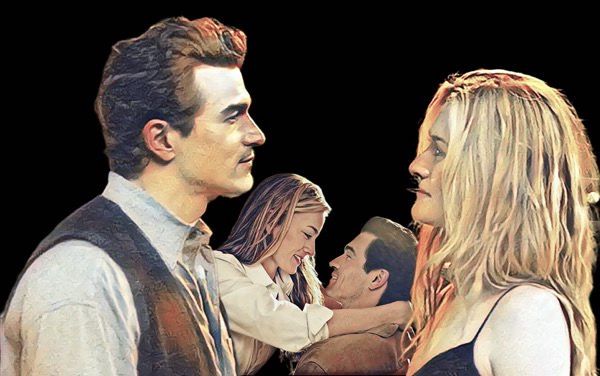
Jackie’s death still hangs over everything, yet John already seems to be redirecting his grief into a new obsession: Carolyn. For the first time in his life, he can choose what he wants and pursue it, but Carolyn observes his world with a mix of fascination and caution. Her reaction to Kate Moss’s sudden fame is not incidental; it mirrors what she fears for herself. This is the narrative the series has insisted on despite years of doubt: Carolyn does not want to be seen — she wants to choose when and how she appears. The problem is that loving a Kennedy eliminates that choice.
One of the episode’s most revealing moments is the dinner with John’s sister, Caroline Kennedy, arranged with the typical carelessness of someone the world has always forgiven. He doesn’t tell his sister he is bringing Carolyn. He doesn’t tell Carolyn that it is a formal birthday dinner. The embarrassment is devastating because it exposes something essential: John may love Carolyn, but he still does not understand the consequences of his own actions. He lives in a universe where everything works out. She does not.
Meanwhile, the first real shadows of sabotage emerge. The anonymous letter detailing accusations about Carolyn’s past functions less as a factual revelation and more as a dramatic device exposing the fragility of their trust. The most painful part is not the content, but the fact that John considers it might be true. For someone like Carolyn, whose identity is built on control and discretion, that doubt is a profound betrayal.

Their reconciliation comes wrapped in grand declarations — “This is where I begin” — that sound romantic but also naïve. John sees the relationship as personal redemption. Carolyn sees it as a calculated risk. They are not living the same story, even if they claim they are.
The episode reaches its cruelest point at the end. After finally admitting their love, after allowing the relationship to exist less secretly, Carolyn arrives at work to find her image splashed across the front page of the New York Post. The intimate, invasive photograph, paired with a humiliating headline, instantly shatters any illusion of privacy. This is not merely exposure. It is the appropriation of her body and identity by the machinery of media spectacle.
That moment changes everything. Until then, the romance felt turbulent but possible. Now we understand that this is not simply about two people trying to love each other, but about a woman trying to survive a system that turns women connected to powerful men into public characters against their will.

The episode also clarifies why Carolyn would later appear distant and “icy” to the world. It is not innate coldness. It is self-protection. When your life no longer belongs to you, the only thing left is to build walls.
Ultimately, Love Story is not just telling a famous love story. It depicts the birth of an inevitable tragedy, one in which the feeling is real, but the context makes it unsustainable. John believes love can normalize his extraordinary life. Carolyn senses that this extraordinary life may destroy any ordinary love.
And for the first time, she is not wrong.
Descubra mais sobre
Assine para receber nossas notícias mais recentes por e-mail.
 miscelana.com