
Roberto Bolle belongs to a rare lineage of artists whose presence surpasses their field and becomes a national symbol. Formally, he is a classical dancer trained in Europe’s most rigorous tradition, yet culturally he has become a kind of ambassador of Italian beauty, a synthesis of technical discipline, Renaissance heritage, and modern sophistication. For the global public, especially those who may never have attended a ballet performance, Bolle is the man who transformed Winter Olympic ceremonies into moments of collective suspension, when technological grandeur gives way to the impact of a human body trained to the limits of perfection.
Born in 1975 in Piedmont in northern Italy, Bolle entered the school of Teatro alla Scala in Milan as a child, an institution that functions almost as an elite conservatory of world ballet. Training there is known for extreme physical and psychological demands, shaping dancers capable of executing the classical repertoire with absolute precision. His rise was rapid and unusual. At twenty-one, he became an étoile of the company, a title reserved for very few, and soon afterward, he began receiving invitations from international companies, including the American Ballet Theatre in New York, consolidating a career that has always moved between European tradition and global recognition.
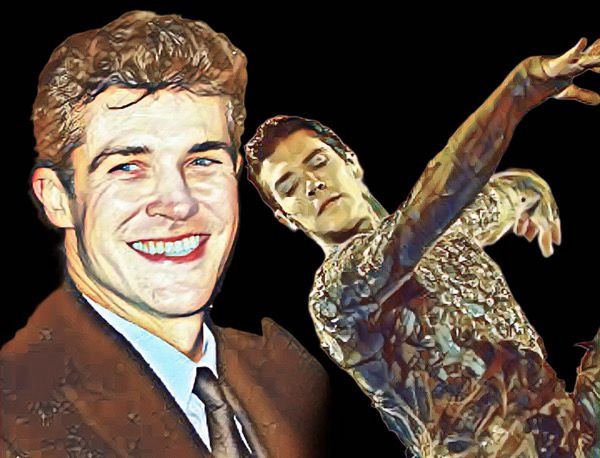
On stage, Bolle distinguished himself above all as an interpreter of the great classical and Romantic repertoire, assuming central roles traditionally associated with the prince or tragic hero. He danced Siegfried in Swan Lake, Prince Desiré in The Sleeping Beauty, Albrecht in Giselle, and, perhaps most notably, Romeo in Romeo and Juliet, a role in which his ability to combine physical vigor and emotional vulnerability became especially evident. He also excelled in darker or more psychologically complex works such as Onegin, Manon, and neoclassical ballets by George Balanchine and other twentieth-century choreographers, demonstrating versatility beyond purely Romantic roles.
His international career allowed him to partner with some of the greatest ballerinas of his generation. Among them is Alessandra Ferri, with whom he established a celebrated onstage chemistry, as well as leading stars of American Ballet Theatre and major European companies. These partnerships were crucial in consolidating his reputation as a reliable and expressive partner, capable of sustaining dramatic narrative as much as a ballerina’s technical virtuosity, an essential quality in large-scale classical ballets.
What distinguishes Bolle technically is not only athletic ability, although his expansive jumps and controlled turns are often described as exemplary. His dancing possesses a clear narrative quality, an ability to transform virtuosity into emotion that remains legible even to spectators unfamiliar with ballet. In the great roles of the classical repertoire, such as romantic princes or tragic heroes, he built interpretations that privilege dramatic continuity, avoiding technical exhibitionism in favor of cohesive stage presence. This combination of precision and humanity helps explain why he has maintained relevance for decades in a field marked by short careers and intense physical wear.
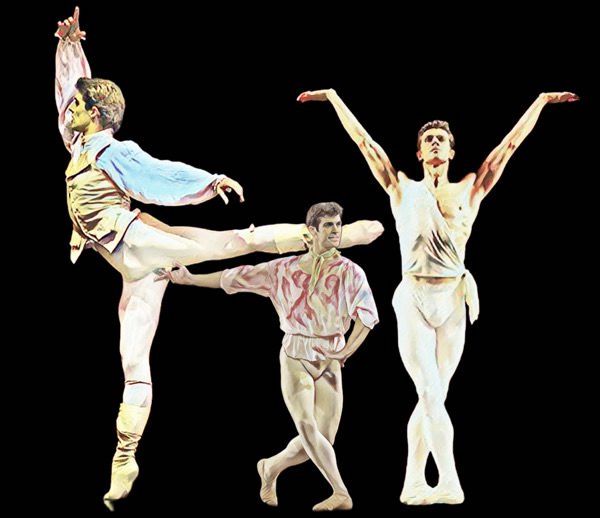
In Italy, however, his importance extends far beyond dance. Bolle became a cultural symbol associated with a visual tradition that reaches back to Greco-Roman sculpture and the Renaissance ideal of proportion and harmony. His athletic physique and clean lines have often been compared to classical statues, and not by coincidence, his photo shoots and open-air performances frequently interact with historic settings such as ancient ruins, monumental squares, and iconic buildings. This dialogue between body and heritage transforms each appearance into a kind of aesthetic affirmation of Italian cultural continuity.
He has also played a decisive role in popularizing ballet in a country where opera has traditionally held a more central position. By bringing performances to open arenas, television events, and large-scale galas accessible to wide audiences, Bolle helped shift ballet from an exclusively elitist space into a more democratic dimension without diluting its artistic complexity. In this sense, he occupies a position similar to certain opera singers who manage to cross the boundary between high culture and mass culture without losing credibility. In recent years, this mission has materialized particularly in the project “Roberto Bolle and Friends,” a series of touring galas that bring together international ballet stars for performances in major theaters or outdoor venues, often broadcast on Italian television and designed to broaden public access to dance.
Fashion has played a fundamental role in expanding his image. Bolle became a constant presence in high-level campaigns and editorials, especially in partnership with Giorgio Armani, whose minimalist and elegant aesthetic naturally aligns with the discipline of ballet. Unlike traditional models, he brings to photography an awareness of movement even when standing still, creating images that suggest tension and narrative. The fashion industry found in him not just a handsome face but a body trained to communicate complex emotions through posture and gesture.
This intersection between dance and fashion reinforced his international visibility and consolidated his image as an icon of Italian masculine elegance alongside actors and designers who project a restrained and timeless sophistication. At the same time, his presence on magazine covers and in campaigns did not trivialize his artistic career but expanded the reach of ballet as a contemporary cultural language.
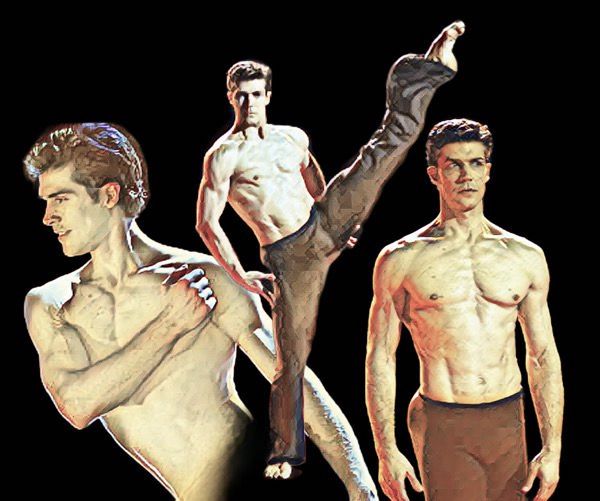
It was in the Winter Olympic ceremonies, however, that Bolle achieved a level of exposure almost unheard of for a classical dancer. Before billions of viewers, his performances offered a powerful contrast to the typically technological and grand aesthetic of such events. While lights, projections, and special effects dominate the stage, the emotional center of the presentation becomes a human body in motion capable of conveying strength, balance, and vulnerability simultaneously. His dancing in these contexts does not require prior knowledge of classical repertoire because it operates on a universal symbolic level, evoking themes such as nature, resilience, and beauty.
The visual impact is immediate. Bolle possesses a sculptural presence that makes him appear simultaneously like an Olympic athlete and a mythological figure, an interpreter who embodies the very idea of physical discipline pushed to its extreme. In an era dominated by rapid images and fragmented attention, his performance creates a rare moment of collective emotional stillness in which the audience is invited to contemplate the expressive power of the human body without complex narrative mediation.
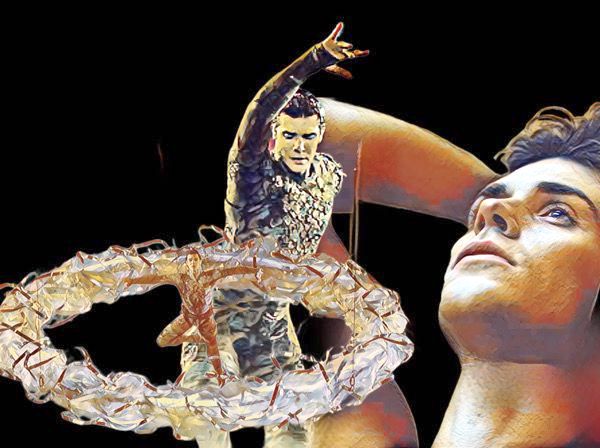
This ability to remain legible to diverse audiences without simplifying his art is perhaps the main reason for his cultural longevity. Bolle represents a figure increasingly rare in the twenty-first century, the classical artist who attains celebrity status without relying on scandal or constant reinvention of his persona. His public image is built on continuity, discipline, and excellence as values in themselves, granting him an almost timeless aura.
Over more than three decades, Roberto Bolle has built something that goes beyond an individual success story. He embodies the persistence of an aesthetic tradition that stretches from antiquity through the Renaissance to the present as a living language. His trajectory demonstrates that ballet can still occupy a central place in the contemporary imagination when it finds an interpreter capable of translating its complexity into immediate emotion. At the Olympics, on fashion platforms, or on Europe’s historic stages, Bolle continues to remind us that the art of movement, when pushed to its limit, is not merely spectacle but a form of cultural memory in motion.
Descubra mais sobre
Assine para receber nossas notícias mais recentes por e-mail.
 miscelana.com