
The enormous success of Love Story already points to what has become almost a signature of Ryan Murphy: turning a story into a franchise before it is even exhausted. Not by chance, the removal of “American” from the title immediately expands the range of possibilities, freeing the anthology from a strictly geographic scope and signaling that, after John F. Kennedy Jr. and Carolyn Bessette-Kennedy, the project can move across decades, countries, and different forms of public mythology. Speculation, naturally, is already following that movement.
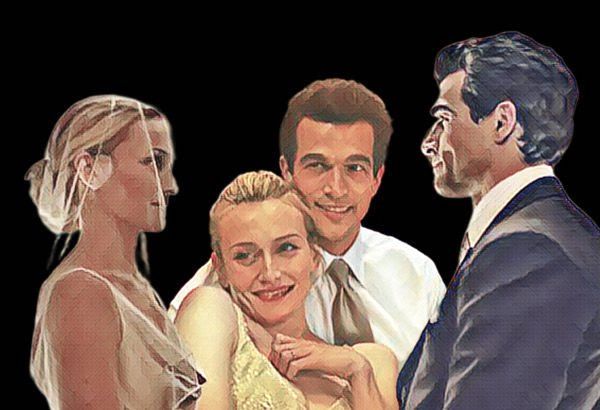
By choosing the story of John-John and Carolyn as its starting point, the new anthology does more than reconstruct a famous romance; it organizes a broader reflection on how certain relationships become impossible to sustain once they begin to exist as public narratives. It is not simply about following a couple, but about observing the process through which a private relationship is absorbed, interpreted, and often distorted by the collective gaze.
The focus now, inevitably, shifts to what comes next. And what begins to emerge is not exactly a list of names, but a very clear pattern. Murphy seems less interested in love stories in the classical sense and more drawn to relationships that have turned into spectacle, into competing versions, into collective memory constantly rewritten. It is in this territory, where the intimate and the public blur, that the most plausible couples for the continuation of the series begin to take shape.
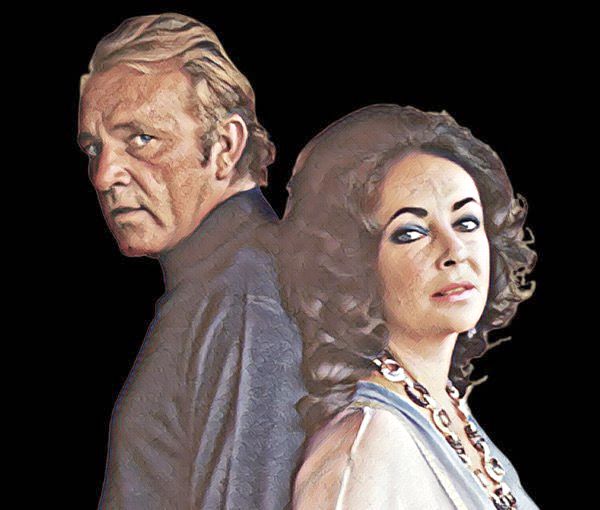
Elizabeth Taylor and Richard Burton
If there is one couple that comes close to an almost inevitable choice, it is Elizabeth Taylor and Richard Burton. Their relationship has already been described by members of the creative team as having the ideal intensity for the format, which is hardly surprising. Few romances have combined so much glamour and so much self-destruction at once, and even fewer have been revisited so persistently over time in books, documentaries, and film and television adaptations, as if each new version were attempting, unsuccessfully, to fully capture a story that always escapes any definitive reading.
Taylor and Burton lived a love that always seemed on the verge of collapse, marked by two marriages, public separations, and constant exposure that turned every gesture into an event. It is the kind of story in which feeling never exists in isolation, but always alongside its own performance. Within Murphy’s logic, already evident in works like Feud, this would be an almost natural step.
Kurt Cobain and Courtney Love
Another possibility that circulates strongly, even if not officially confirmed, is Kurt Cobain and Courtney Love. Here, the axis shifts from classic Hollywood to 1990s culture, but the mechanism remains the same. This is a romance that could never exist outside the pressure of fame, addiction, and a particularly aggressive relationship with the media.
The story of Cobain and Love carries a tragic dimension that deepens over time, not only because of Cobain’s death, but because of how their narrative has been disputed and reinterpreted. Dramatically, it is a story marked from the start by the impossibility of controlling one’s own image, something that aligns directly with what Love Story seems intent on exploring.
Britney Spears and Justin Timberlake
If Murphy chooses to move into more recent territory, the relationship between Britney Spears and Justin Timberlake emerges as a choice that speaks directly to the present. More than a teenage romance, it is an emblematic case of how the industry and the media construct and dismantle emotional narratives in real time.
The historical reassessment surrounding Britney, especially in recent years, has completely reshaped public perception of that relationship. What once seemed like a highly public breakup is now often read as an episode of exposure and control, adding a layer of analysis about power, gender, and reputation.

Grace Kelly and Prince Rainier
Among stories that blend romance and institution, Grace Kelly and Rainier III offer a different kind of tension. At first glance, it resembles a fairy tale, with a Hollywood actress becoming a princess. But, as is often the case, what sustains interest is precisely what does not fit the fantasy.
Kelly’s transition into life in Monaco involved profound personal and professional renunciations, and the image of perfection has always coexisted with accounts of isolation and restriction. For Murphy, who shows a clear fascination with structures that shape and constrain individuals, this would be particularly rich material.
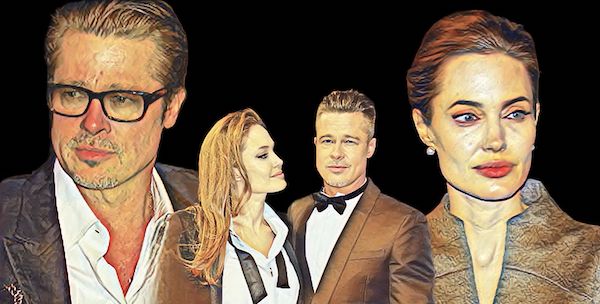
Brad Pitt and Angelina Jolie
In more contemporary territory, the story of Brad Pitt and Angelina Jolie brings together virtually all the elements that define the project. The romance begins under controversy, becomes one of the most high-profile marriages of the century, and ends in a long, public, and still unresolved separation.
The interest here lies not only in the relationship itself, but in how it has been followed, narrated, and reinterpreted over time. It is a story that never belonged solely to those involved, but has always existed as a global spectacle.
Vivien Leigh and Laurence Olivier
If the proposal of Love Story is to investigate the point at which love ceases to be enough, the story of Vivien Leigh and Laurence Olivier fits with striking precision. It is a romance born from artistic admiration that quickly becomes a relationship shaped by external pressures and internal fragilities that find no resolution. Both were not only stars but benchmarks of excellence in their fields, which turned the relationship itself into an extension of their careers, constantly observed, idealized, and, in some sense, demanded.
What sustains the interest, however, is how Leigh’s trajectory, marked by severe psychological suffering, completely reshapes the dynamics of the couple. The marriage exists under permanent tension, between care, exhaustion, and the impossibility of stabilizing what, from the outside, still appeared to be a romantic ideal. It is a story in which love does not disappear, but ceases to be capable of organizing a shared life, and precisely for that reason becomes even more tragic.
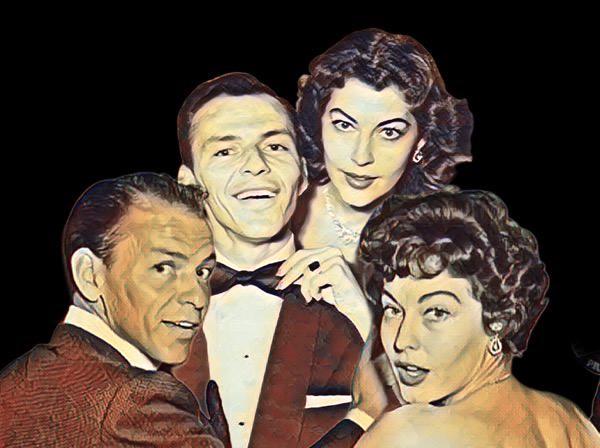
Ava Gardner and Frank Sinatra
Another romance that seems almost written with the intensity Love Story seeks is that of Ava Gardner and Frank Sinatra. Their relationship begins in scandal, when Sinatra was still married, and quickly becomes one of the most turbulent and fascinating stories in Hollywood mythology. From the start, there is a clear emotional imbalance, as if love were always lived at the edge, between absolute passion and irreversible wear.
Gardner and Sinatra embody a dynamic Murphy often explores with precision, that of a bond fueled by its own instability. He, at a low point in his career, was deeply dependent on the relationship; she, independent, aware of her freedom, and at the same time unable to sustain a kind of emotional surrender that would compromise that autonomy. The marriage, far from stabilizing the relationship, intensifies its contradictions, with episodes of jealousy, separations, and reconciliations becoming part of the couple’s public narrative.
What makes this story particularly powerful is the fact that, even after it ends, it never fully closes. Sinatra continued to define Gardner as the great love of his life, while she maintained a more ambiguous relationship with that memory, refusing to fully romanticize it. It is a story in which love does not resolve anything, but deepens the fractures of those who live it, and for that very reason endures.

John Lennon and Yoko Ono
Finally, the relationship between John Lennon and Yoko Ono shifts the axis from intimacy to public narrative in an even more radical way. Few couples have been so intensely appropriated by external perception that their own story became inseparable from the versions told about them. From the beginning, the relationship was mediated by interpretations, accusations, and myths, many of them centered on the end of The Beatles, which turned Yoko into a character before she could be understood in her full complexity.
At the same time, Lennon was going through a process of personal and artistic rupture that intertwines with the relationship, turning the couple into a symbol of an era marked by experimentation, political engagement, and cultural transformation. The dramatic interest lies not only in their bond, but in how it has been continuously rewritten by the public, the press, and the history of music itself. It is a narrative in which love exists, but never in isolation, always shaped by external forces that expand, distort, and ultimately transform it into something larger than the individuals involved.
Sources and what has been said
The most concrete indications about the future of the series come from interviews with the creative team, including statements by Connor Hines, a close collaborator of Murphy, who pointed to Elizabeth Taylor and Richard Burton as a particularly compelling possibility. Publications such as Entertainment Weekly and Elle have also gathered industry analysis and speculation, highlighting other couples that fit the profile sought by the anthology.

More than formal confirmations, these clues help define the shape of the project. Love Story does not move forward through chronology or isolated historical relevance, but through narrative intensity. What matters is not simply who loved, but who loved under pressure, under scrutiny, and, above all, under the constant risk of seeing that love unravel in front of everyone.
In the end, this may be Ryan Murphy’s true criterion. Not the selection of couples, but the selection of stories in which love could never exist without also becoming myth, and in which that myth inevitably exacts its price.
In my view, there is a persistent tendency to romanticize toxic relationships, turning dynamics marked by imbalance, pain, and erosion into something almost desirable when filtered through aesthetics and memory. Still, it is difficult to ignore that, from a narrative standpoint, these stories exert an almost irresistible pull. They carry an intensity that stable love rarely offers, a succession of conflicts that expose fragility, power, dependency, and identity in a rawer form, and that, precisely for that reason, translates so powerfully on screen. This is the paradox that seems to interest Ryan Murphy, not the celebration of these relationships, but the way they reveal, on an amplified scale, tensions we often prefer not to name.
Descubra mais sobre
Assine para receber nossas notícias mais recentes por e-mail.
 miscelana.com