
On April 17, 2011, when Game of Thrones premiered, the prevailing feeling was not inevitability, but risk. What existed there was a complex piece of material, rooted in acclaimed literature, yet still marked by a certain displacement within audiovisual storytelling. Fantasy, despite its popularity, did not occupy the center of prestige television. It was seen as a niche territory, often associated with a specific, loyal audience, but limited in scale.
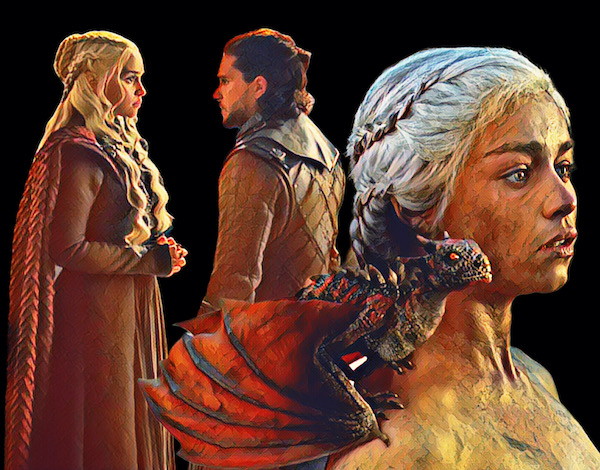
Fifteen years later, what stands out is not simply the success of a series, but the consolidation of a turning point. Game of Thrones did not just find space. It altered the conditions of that space.
Fantasy before legitimacy
For decades, fantasy built its strength in parallel territories. Literature and games absorbed an audience that did not always find proportional recognition in television and film. Even with the impact of The Lord of the Rings, audiovisual adaptations of the genre still carried the need to justify their existence beyond entertainment.
George R. R. Martin understood this trajectory well. Before becoming one of the most influential authors of his generation, he had a modest career in television, with works such as Beauty and the Beast, which gave him experience but not the visibility he would later achieve in literature. It was by writing A Song of Ice and Fire that he found not only his voice, but his audience.
That audience already existed before the series. It was attentive, rigorous, invested in details and implications. Digitalization expanded that engagement, but did not create it. When Game of Thrones arrived on television, it did not start from zero. It started from fertile ground, even if still limited.

HBO and a very specific moment in television
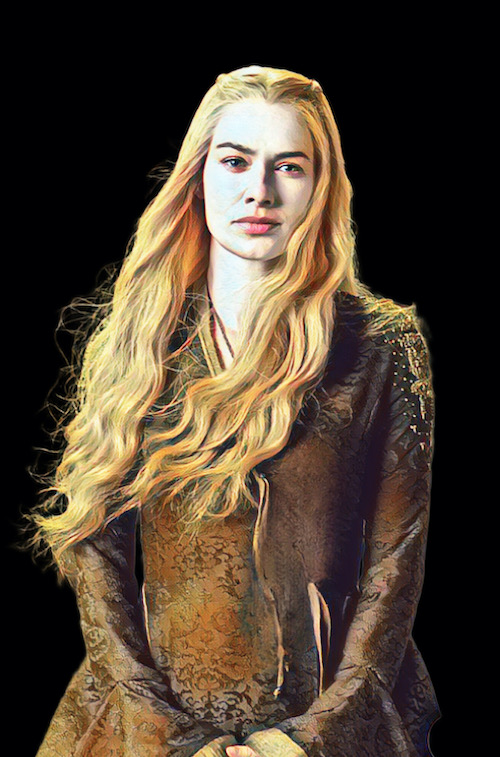
In the early 2010s, HBO occupied a position that now feels distant. It was synonymous with prestige in a television landscape still structured around pay TV, with a curatorial approach that privileged sophisticated dramas, complex characters, and adult storytelling. The kind of competition we recognize today had not yet fully emerged.
The network had already experimented with fantasy, without major impact, and leaned more toward grounded drama and supernatural elements than high fantasy, with projects like Spawn, the biblical mysticism of Carnivàle, and the vampire phenomenon of True Blood. Even as a historical drama, Rome was essential in this period, establishing the scale and political intrigue that would later shape Westeros.
This is why the announcement of Game of Thrones was met with a mix of enthusiasm and caution. Among readers, expectations were high. Outside that circle, skepticism prevailed, understandable in the face of a story that combined politics, incest, violence, and fantasy.
What was not yet clear was that the series would not be sustained by fantasy, but by how it used it.
Story before magic
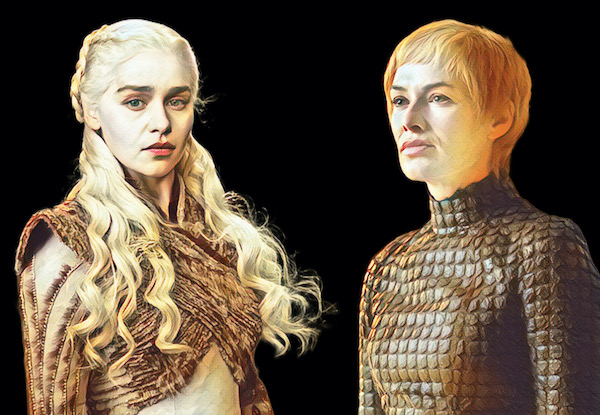
One of Martin’s most decisive choices, preserved in the adaptation, was to shift fantasy into the realm of language rather than central spectacle. Dragons exist. Magic exists. But they do not organize the narrative.
The story does.
This principle allows Game of Thrones to operate in a rare register. Fantasy does not protect its characters. There are no guarantees, no narrative immunity. There is consequence and injustice, and above all, loss — on every side.
The structure of the narrative aligns more closely with historical dynamics than with genre conventions. Fragile alliances, power struggles, decisions with irreversible consequences. The inspiration from European dynastic conflicts is evident, but never literal. What matters is the mechanics of power.
That is what allows the series to cross beyond the boundaries of niche. The viewer does not need to accept fantasy. They need to recognize the world.
A story that could only exist on television
For years, adapting the work as cinema was considered, following the model of epic trilogies. The complexity of the narrative made that approach unworkable. There was no way to condense it without structural loss.
It was in this context that David Benioff and D. B. Weiss convinced Martin that television offered the necessary time for the story to unfold at its own pace. A season of roughly ten episodes would allow for depth, development, and consequence.
The decision did more than make the adaptation viable. It anticipated a model that would come to dominate the following decade, influencing adaptations, prequels, sequels — including those within Game of Thrones itself.
Casting and the construction of distrust
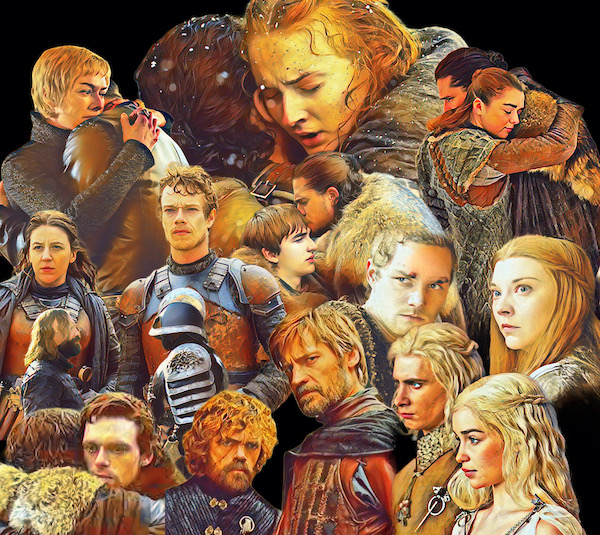
The casting reinforced this balance between risk and strategy. A largely unknown ensemble, combined with key recognizable figures.
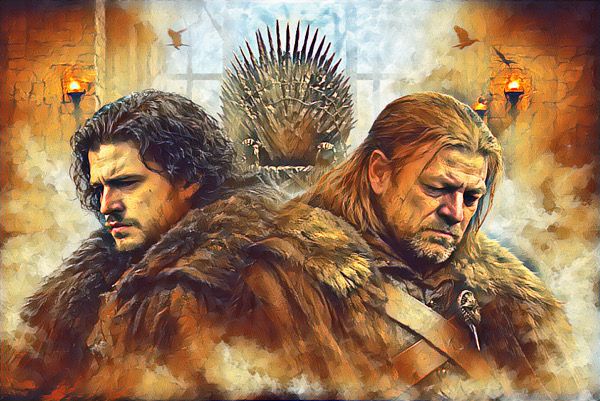
Sean Bean, with his association to fantasy, provided familiarity. His presence helped anchor audience expectations, expectations the narrative would quickly dismantle.
This early move is essential. It teaches the viewer not to trust.
Actors like Lena Headey and Peter Dinklage shared scenes with emerging names such as Kit Harington, Emilia Clarke, and Sophie Turner, all at the beginning of their careers.
When the series becomes an event
The early seasons secured renewals, but growth remained gradual. The transformation into a global phenomenon becomes undeniable by the fourth season, driven by moments that fundamentally alter the audience’s relationship to the narrative.
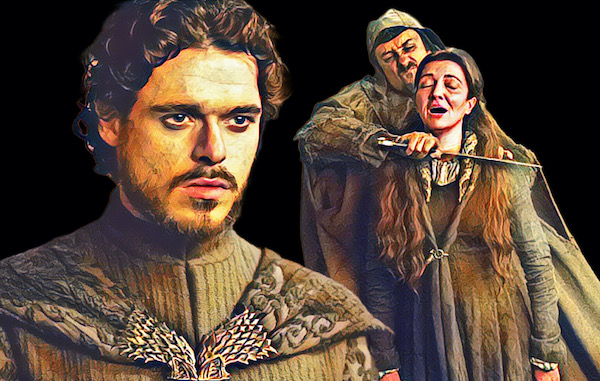
The “Red Wedding” is not just a turning point. It is a shift in expectation. From that moment on, watching becomes experiencing.
Social media amplifies this shift. Reaction videos, detailed breakdowns, and theories proliferate across YouTube, X, and Reddit.

This dynamic also reshapes industry strategy. HBO begins synchronizing global releases to avoid spoilers. Weekly episodes become not a limitation, but a tool for building anticipation.
At a time when Netflix was consolidating binge-watching, Game of Thrones reaffirmed the power of waiting.
Theories, leaks, and collective participation
As the audience grows, engagement deepens. Forums, social media, and video platforms become extensions of the narrative. Each episode generates interpretations, disputes, and reconstructions.
Leaks intensify this dynamic. Watching becomes urgent. Participation becomes inevitable.
Never before — and not since — has a series sustained, for so long and on such a global scale, this level of collective engagement.
Aesthetic construction as system
The strength of Game of Thrones also lies in its aesthetic construction. The score by Ramin Djawadi does more than accompany the narrative. It structures its emotional language. Michele Clapton’s costumes define political identities. Production design builds a world that remains coherent in its diversity.
This is not just scale. It is consistency. Visual richness, controlled emotion, and rigorous detail.

Institutional recognition and its tensions
As the series progressed, industry recognition became inevitable. Game of Thrones dominated the Primetime Emmy Awards, becoming the most awarded drama series in its history, with 59 wins, including four for Outstanding Drama Series.
The peak came with multiple seasons winning 12 Emmys, reinforcing its sustained dominance.
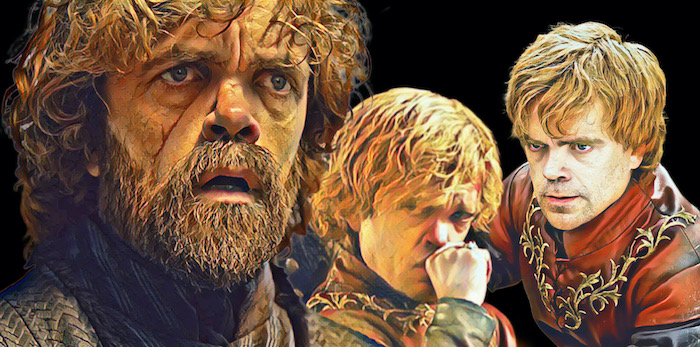
Within the cast, Peter Dinklage stood out as a point of consensus, winning four Emmys across the span of the series.
Even as the writing became more contested in later seasons, his performance remained a point of stability.
This tension between institutional recognition and critical reception deepens the debate around the series’ legacy.
The Game of Thrones effect
Following its success, the industry began actively pursuing projects that could replicate its combination of scale, narrative density, and engagement.
Series such as The Witcher, The Rings of Power, and Shadow and Bone reflect this movement.
At the same time, Westeros expands with House of the Dragon, which also attempts to restore narrative confidence after the divisive ending of the original.
The influence, however, extends beyond fantasy. The model of shorter seasons, higher budgets, serialized storytelling, and event-based viewing spreads across genres.
Television begins to operate with a level of ambition once reserved for cinema.
HBO’s dilemma: expansion without fatigue
The success of Game of Thrones created not just a model, but a challenge for HBO.
How do you turn a phenomenon into a lasting franchise without diminishing what made it singular?
Early attempts reflected both ambition and caution. The most advanced project, Bloodmoon, also known as The Long Night, was produced but ultimately scrapped.
This decision signaled something important. Scale and familiarity were not enough. Control mattered.

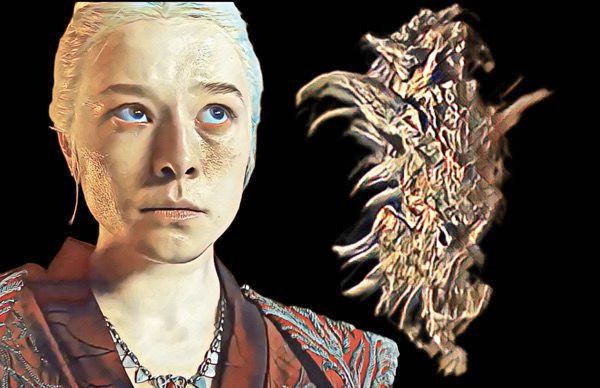
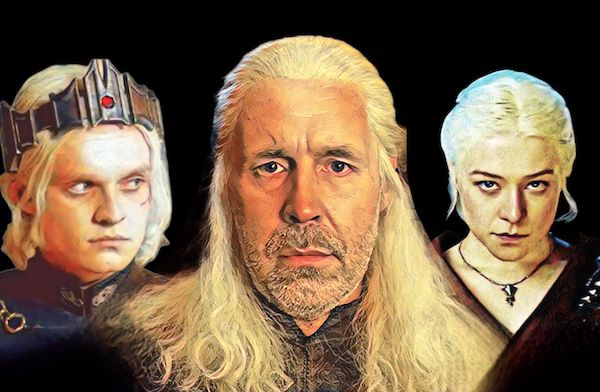
That is the context in which House of the Dragon emerges. It works. But it does not reorganize the landscape in the same way.
Because it was born inside a system Game of Thrones had to invent.
Between continuity and fatigue
HBO now operates within a delicate balance. It must keep Westeros active without oversaturating it.
This helps explain why projects closer to the original timeline have been delayed or abandoned. There is a clear reluctance to reopen unresolved debates surrounding the ending.
At the same time, expansion continues.
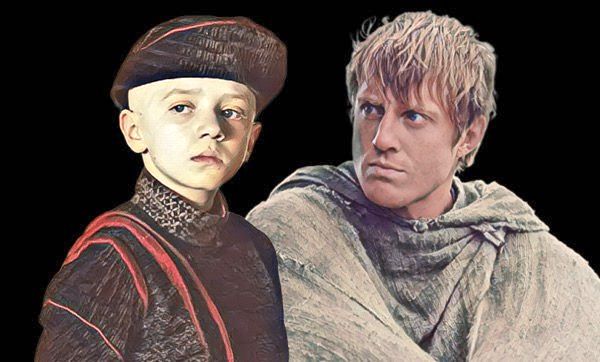
A Knight of the Seven Kingdoms signals a shift in strategy, moving far enough from the original timeline to avoid direct comparison, while maintaining recognizable elements.
Other projects, including a possible Arya Stark series, suggest movement in the opposite direction.

From engagement to tension
The same audience engagement that fueled the series also revealed its limits.
As expectations grew, so did pressure. Narrative decisions were dissected in real time. The gap between expectation and execution became more visible.
In this environment, Benioff and Weiss became central figures in a debate that often exceeded critical boundaries.
The reception of the final season included not only disagreement, but harassment directed at the showrunners.
This reflects a broader tension in contemporary media. The closer the relationship between audience and work, the more unstable the boundary becomes between critique, expectation, and control.

Westeros as contested territory
Fifteen years later, the world of Game of Thrones is not simply expanding. It is being negotiated. HBO moves carefully. The audience remains engaged, but also more demanding. Between continuation and fatigue, Westeros remains active. But no longer neutral.
Fifteen years later
Game of Thrones did not end when it concluded. It continues to function as reference, comparison, and measure. Not only because of what it achieved, but because of what it revealed.
It did not close a way of making television. It opened others.
And since then, the industry has been trying to understand how to reach the same place — without necessarily taking the same path.
Descubra mais sobre
Assine para receber nossas notícias mais recentes por e-mail.


1 comentário Adicione o seu