
The television adaptation of Zelda begins to take clearer shape when we move away from abstraction and look at where it is actually being built. Not only narratively, but physically. The decision to film in New Zealand, specifically in the Otago region, immediately removes the project from a familiar industrial pattern and places it within a tradition that understands landscape as language.
This seemingly technical detail reshapes expectations around the series.
For newcomers: what Zelda is
Before any discussion about adaptation, it is necessary to return to the basics. The Legend of Zelda is not just a game, but one of the most influential mythologies in contemporary pop culture.
Created by Shigeru Miyamoto in the 1980s, the franchise follows, across its many iterations, the journey of a young hero named Link, whose mission is to protect the kingdom of Hyrule and Princess Zelda from forces that threaten the balance of the world, most often embodied by the villain Ganon.
The structure may seem simple, but it has never been only about that.
Each game retells this story differently. The characters recur, but they are not always the same. Time fractures. Narratives reorganize themselves into cycles. What remains is not continuity, but theme: courage, wisdom, and power in constant tension.
For those coming from outside, the best way to understand Zelda may be to see it less as a linear saga and more as a legend that rewrites itself with each generation.
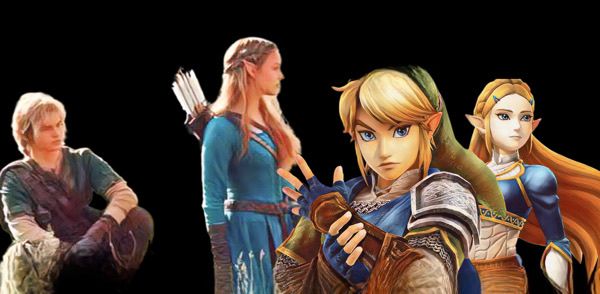
The story and what truly matters within it
On the surface, Zelda is a story of a journey. An unlikely hero crosses a world in ruins, faces challenges, solves puzzles, and attempts to stop a greater threat from destroying what still remains.
But its strength lies not only in what happens, but in how it is experienced.
Unlike many fantasy narratives, Zelda works with silence, solitude, and discovery. The player is not constantly guided. They explore, fail, find paths. There is an ongoing sense of standing before something larger than full comprehension.
This dimension is central to any adaptation. Translating the plot is possible. Translating the experience is the real challenge.
Zelda’s cultural importance
Few franchises have had such a lasting impact as The Legend of Zelda. Since its release, it has helped define what we now understand as the adventure genre in games.
More than mechanics, it introduced a way of thinking about interactive storytelling. A world that not only reacts, but invites curiosity. A space where the player builds their own experience.
Decades later, this logic still influences not only other games, but also film and television. The idea of open worlds, of exploration as narrative, of atmosphere as a central element, all find one of their clearest origins in Zelda.
Adapting it, therefore, is not simply about telling a compelling story. It is about engaging with a legacy.
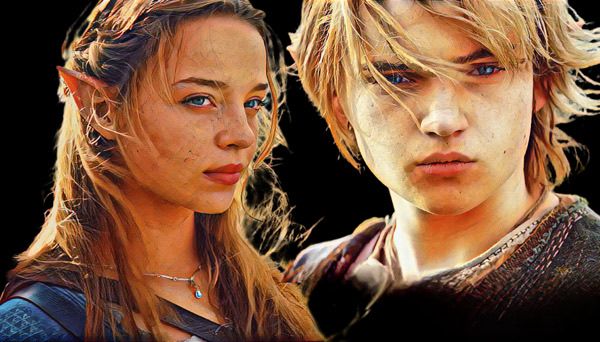
Otago, Hyrule, and the memory of another epic
The production’s presence in Otago is not neutral. For any viewer shaped by the imagery of The Lord of the Rings: The Fellowship of the Ring, that landscape carries a very specific memory. It was there that Peter Jackson built essential parts of Middle-earth, turning New Zealand into a visual shorthand for modern epic fantasy.
Returning to that kind of location does not suggest repetition, but positioning. It signals that Nintendo does not intend to treat Zelda as a generic effects-driven product, but as a work grounded in the relationship between body and space, between character and environment.
There is also an implicit narrative consequence in this choice. By privileging natural landscapes, the adaptation seems to point toward a version of Zelda more centered on traversal than architecture, more interested in the journey than the destination.
The real versus the artificial
This decision directly engages with a recurring critique of contemporary fantasy. Excessive CGI, even when technically impressive, often diminishes the sense of weight, presence, and risk.
By choosing real locations, Zelda appears to be reclaiming something the genre has gradually lost. The idea that the world is not just a backdrop, but material.
Peter Jackson demonstrated this by balancing digital tools with physical environments. Here, that same logic echoes, but with a distinct challenge: translating an interactive universe into a linear medium.
Miyamoto and the origin of that feeling
There is a more intimate layer to this decision. Shigeru Miyamoto created Zelda inspired by his own childhood experiences exploring nature, walking without a fixed direction, discovering caves, encountering the unknown.
Filming in real environments is not only an aesthetic choice. It is, in a way, a return to that original gesture.
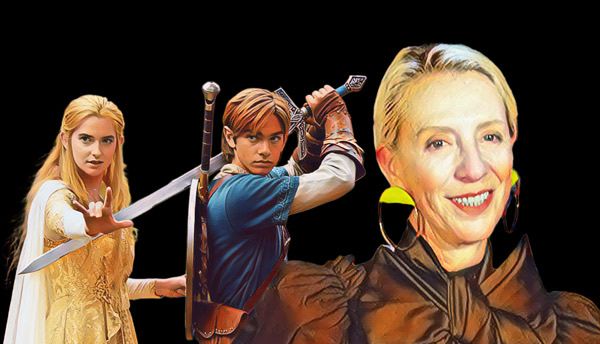
Michele Clapton and costume as extension of the world
Within this framework, the presence of Michele Clapton gains even greater weight. Her costumes never exist in isolation. They absorb the environment, evolve with it, carry the marks of time and movement.
In a project grounded in physical space, costume ceases to be mere characterization and becomes a continuation of the world itself.
The challenge will be to preserve recognizability without reducing characters to literal replicas. Clapton’s work consistently operates within that tension, reshaping references without erasing them.
What is truly at stake
More than an adaptation, Zelda functions as a test. For television, for streaming, and for Nintendo in live-action.
The choice of New Zealand, the emphasis on realism, the involvement of names like Michele Clapton all point to an ambition that goes beyond surface fidelity.
The central challenge remains something else. To translate what has never existed solely within the story, but within the experience of moving through it. To preserve mystery, silence, and the sensation of encountering a world that never fully reveals itself, yet still compels you to continue.
Descubra mais sobre
Assine para receber nossas notícias mais recentes por e-mail.
 miscelana.com