
When Madonna first began signaling, back in 2025, that she would return to the dancefloor, there was something familiar in that move — but also something deeply calculated. It wasn’t just a new album. It was a return to a very specific point in her own narrative: the moment when everything worked at once.
Back in September, when she confirmed she was once again working with Stuart Price and that a successor to Confessions on a Dance Floor was in development, the promise was clear, even without a release date, without an official title, without a defined shape. There was only one persistent idea: going back to where everything aligned with near-perfect precision — the dancefloor.
Now, in April 2026, that promise takes form. Confessions II is officially set for July 3, marking not only her first album of original material since Madame X (2019), but also a broader movement that extends across music, image, and narrative.
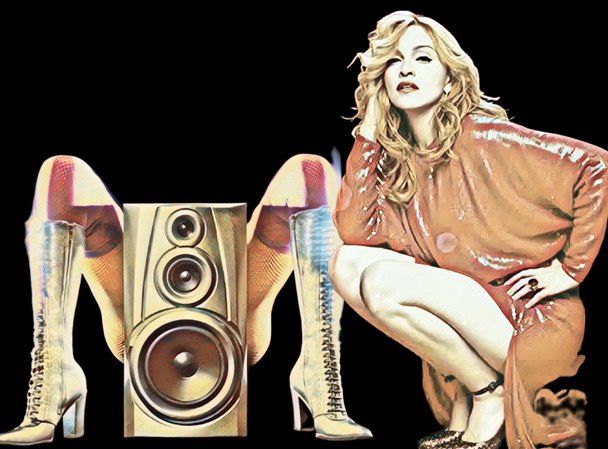
The dancefloor as language and as strategy
The new album does not present itself as a sequel in the traditional sense. Madonna insists on calling it a “continuation,” which makes sense within the logic that has always guided her career: she doesn’t revisit, she reconfigures.
The manifesto accompanying the album helps clarify what is at stake. By defining the dancefloor as “a ritualistic space where movement replaces language,” Madonna shifts dance music from something superficial into something symbolic. It is not just sound, it is experience. It is not just nostalgia; it is meaning-making.
This idea is not entirely new — it was already present, intuitively, in the original Confessions — but now it appears articulated, almost theorized. There is something almost psychoanalytic in this notion of the body speaking when language fails, of repetition altering states of consciousness, of the collective dissolving the individual. The dancefloor stops being a setting and becomes a mechanism.

Stuart Price and the return to aesthetic control
The return of Stuart Price is not just a nod to fans. It is an aesthetic repositioning.
In the years that followed, that control became fragmented. Hard Candy, MDNA, Rebel Heart, and even Madame X explored different directions, often more aligned with contemporary trends than with a centralized artistic vision.
By returning to Price, Madonna is not simply returning to dance music. She is returning to a model of artistic construction in which everything answers to a larger idea.
Warner Records: a full-circle moment
Another equally important movement is happening in parallel: her return to Warner Records.
More than a contractual shift, this is a symbolic gesture. It was there that Madonna built the first 25 years of her career, from Like a Virgin to Ray of Light, consolidating not only her musical relevance but her ability to shape culture.
By returning, she reorganizes her own history. She centralizes her catalog, reclaims her narrative, and aligns past and future within the same axis. Once again, it is about control.
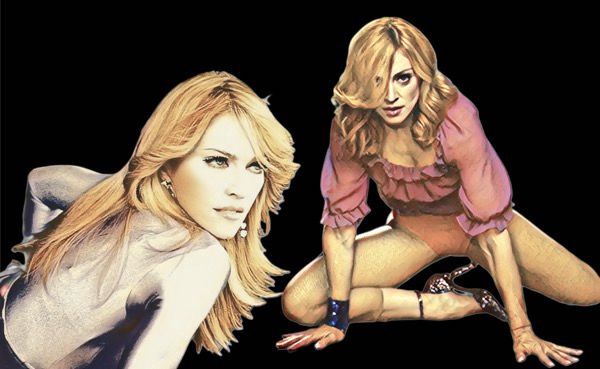
A new persona: erasing to begin again
By wiping her Instagram clean today, Madonna activates another recurring element of her trajectory: reinvention through visible rupture.
It is not the first time she has done this, but the gesture carries new weight when aligned with the album’s discourse. If the dancefloor is a space where the body replaces language, then persona itself becomes fluid. Identity is not fixed; it is performance.
In the Confessions II teaser, she states this explicitly: she can be whoever she wants, create a new version of herself, hide in the shadows, and re-emerge in a different form. This is not just aesthetic. It is a method.
2026: far beyond the album
What is perhaps most interesting is that the album does not exist in isolation. 2026 is shaping up to be a year of multiple presences for Madonna.
With her biopic still unrealized, she seems to be displacing that narrative into other formats. Her appearance in the series The Studio, filmed in Venice, points precisely in that direction: an indirect way of staging, fragmenting, or even commenting on her own story.
Rather than delivering a closed biographical narrative, Madonna appears to be scattering versions of herself across different surfaces, music, television, and digital images. Fragments, which feel far more faithful to her trajectory than any linear story.

Returning is not repeating
Nearly twenty years later, Confessions on a Dance Floor remains one of the most cohesive and successful moments of her career — not only commercially, but in terms of artistic clarity.
Returning to that point now is risky. But Madonna has never operated from a place of safety.
If Confessions II works, it will not be because it revives the past, but because it understands what that moment represented: control, precision, and above all, connection.
Madonna has never been about nostalgia. She has always been about movement.
And once again, she is asking us to return to the dancefloor.
Descubra mais sobre
Assine para receber nossas notícias mais recentes por e-mail.

