
After decades of avoiding turning Top Gun into an ongoing franchise, Tom Cruise didn’t just return to the character; he changed the logic around it. Top Gun: Maverick wasn’t simply a long-delayed sequel. It functioned as proof of concept. It showed that it was possible to revisit an ’80s icon without relying solely on nostalgia, elevating the material in scale, technique, and emotional weight. The result wasn’t just critical. It was industrial. And that, more than anything, explains why Top Gun 3 now exists.
Paramount officially confirmed the project during CinemaCon 2026. Tom Cruise is set to return as Pete “Maverick” Mitchell, with Jerry Bruckheimer once again producing and a script currently being written by Ehren Kruger, who co-wrote Maverick. There is no release date yet, but the mere existence of the film signals a significant shift in Cruise’s approach. He is no longer avoiding sequels. He is choosing which stories justify being told.
What we know about the story
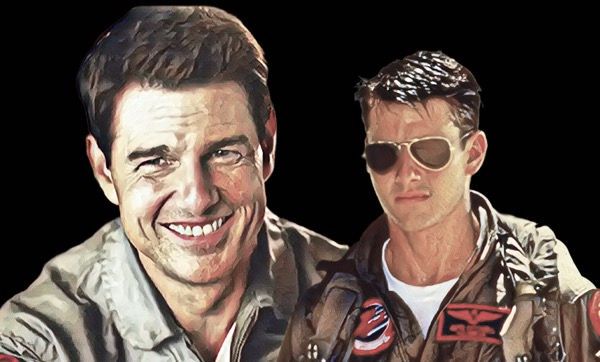
There is no official synopsis, but the early signals point to a different direction from the second film. If Maverick was built around legacy, mentorship, and reconciliation, the third chapter seems drawn to something more unsettling: the possibility of irrelevance.
Joseph Kosinski, who directed Maverick and is in talks to return, has suggested that the new story involves an existential crisis for the protagonist. The choice of words matters. Maverick has always been defined by his skills as a pilot, his resistance to authority, and his ability to prove himself in the air. Placing him in a world where those qualities are no longer central shifts the narrative entirely.
This is where the most consistent thematic rumors come into play. Modern warfare, increasingly shaped by drones, automation, and artificial intelligence, raises a fundamental question about the role of the human pilot. From there, the conflict becomes internal as much as external. It is no longer just about completing an impossible mission, but about justifying one’s place in a system that may no longer need you.
Returning cast and narrative continuity
While only Tom Cruise is officially confirmed, continuity with Maverick is widely expected. Miles Teller and Glen Powell are likely to return as Rooster and Hangman. More than obvious choices, they are structurally important.
Rooster carries the emotional legacy tied to Goose and his relationship with Maverick. Hangman represents a younger, still competitive version of the protagonist. Together, they help create a generational contrast that the third film can deepen.
There are also ongoing rumors about new additions to the cast, likely in roles connected to contemporary military structure, strategic command, or technological development. One recurring rumor involves Liam Neeson in a high-ranking role, though nothing has been confirmed.
Direction, production, and the weight of Maverick
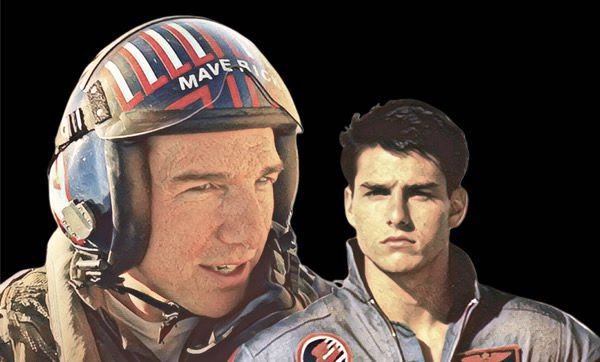
Joseph Kosinski’s potential return is one of the most crucial elements. Top Gun: Maverick was not successful because of Tom Cruise alone. It was a carefully constructed film in terms of direction, visual language, and its commitment to practical effects. Keeping that creative team intact is, in many ways, a guarantee of continuity in tone and quality.
The expectation is that the new film will maintain the franchise’s commitment to real aerial sequences and minimal CGI, something that has become central to its identity. At a time when action cinema increasingly relies on digital environments, Top Gun has come to function almost as a counterpoint.
When it might be released
With no official release date announced, the most realistic window points to 2028 or 2029. The timeline is not just strategic, but necessary. Tom Cruise’s schedule, combined with the technical complexity of the production, demands a longer development cycle.
There is also a structural factor to consider. Top Gun has never been a fast-moving franchise. The gap between the original film and Maverick spanned more than three decades. While the third film will not take that long, the guiding principle remains the same: wait until the story makes sense.
Why Top Gun 3 exists now
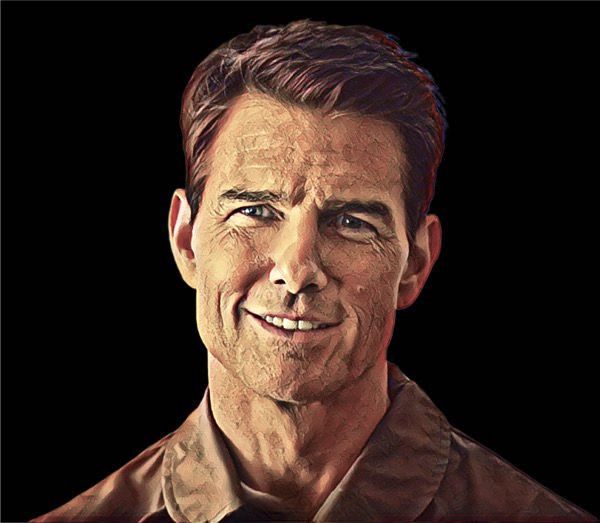
More than any production detail, this is the central question. For years, Cruise resisted making a sequel because he did not see a compelling narrative reason. The success of Maverick did not just answer that question — it created a new one.
If the second film proved there was still something to say about Maverick, the third now has to prove there is still something to say about the world around him. In that sense, the theme of obsolescence does not feel accidental.
There is also a meta layer at play. Tom Cruise, one of the last major action stars still associated with physical, practical filmmaking, continues to defend a model built on presence, risk, and real spectacle. Placing Maverick in a world dominated by automation and artificial intelligence mirrors that stance.
Top Gun 3 is not being driven by nostalgia. It is being driven by tension. The same tension that defines the character and, to some extent, the actor himself. The question the film seems ready to ask is no longer whether Maverick can still fly. It is whether it still makes sense for him to be there at all.
Descubra mais sobre
Assine para receber nossas notícias mais recentes por e-mail.
 miscelana.com