
There is something curious — and revealing — about the way the conversation around Nicole Kidman’s wigs has taken shape. At first glance, it seems like a technical detail, almost trivial, the kind that belongs behind the scenes and should remain there. But in her case, hair has stopped being a finishing touch. It has become language. And at a certain point, it crossed the boundary between character and public persona.
Looking back at the 1990s helps clarify what is at stake. The Nicole of that decade was inseparable from her own hair: red, voluminous, unruly, with a texture that didn’t seem to ask for permission. There was something there that escaped control, and perhaps that is precisely why it became so memorable. It wasn’t just aesthetic. It was present.
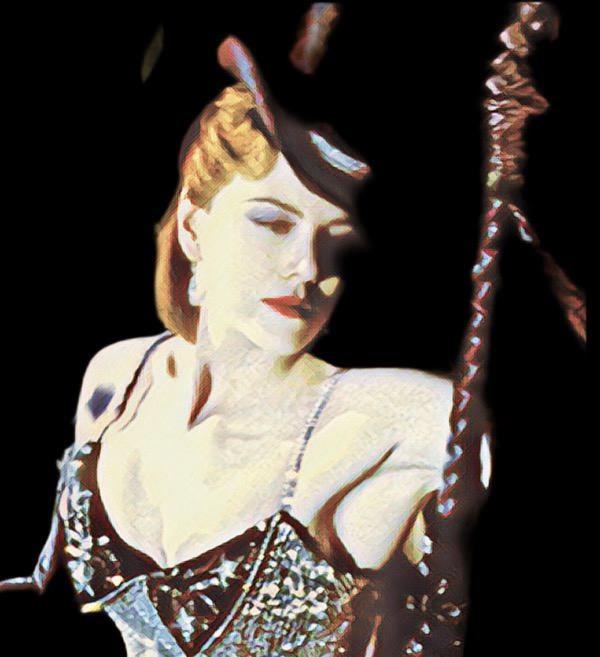
The shift begins subtly in the early 2000s, when her hair becomes progressively more controlled. Straighter, lighter, more aligned with a version of sophistication that Hollywood was consolidating at the time. It was still, essentially, her own hair. But there was already a gesture of editing, a movement toward polish.
The real turning point, however, comes later, and it comes decisively.
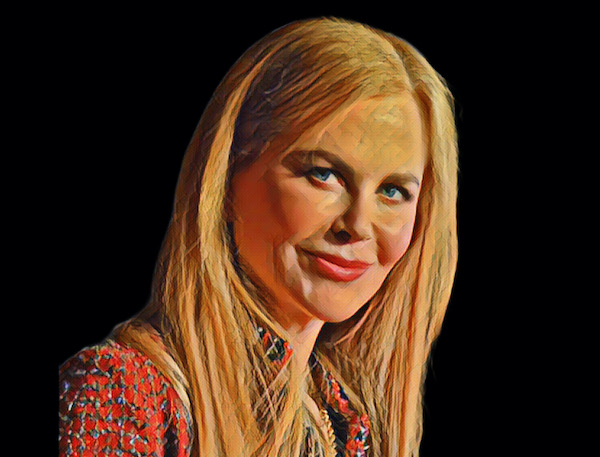
When hair stops being natural
Today, we rarely see Nicole Kidman’s natural hair on screen. And that cannot be explained simply by practicality or vanity. There is a clear logic behind this choice.
Wigs offer consistency in long productions, where visual continuity must survive months of fragmented shooting. They prevent the cumulative damage of repeated chemical processes — something the actress herself has addressed over the years. But above all, they allow something more sophisticated: they turn hair into a psychological extension of the character.
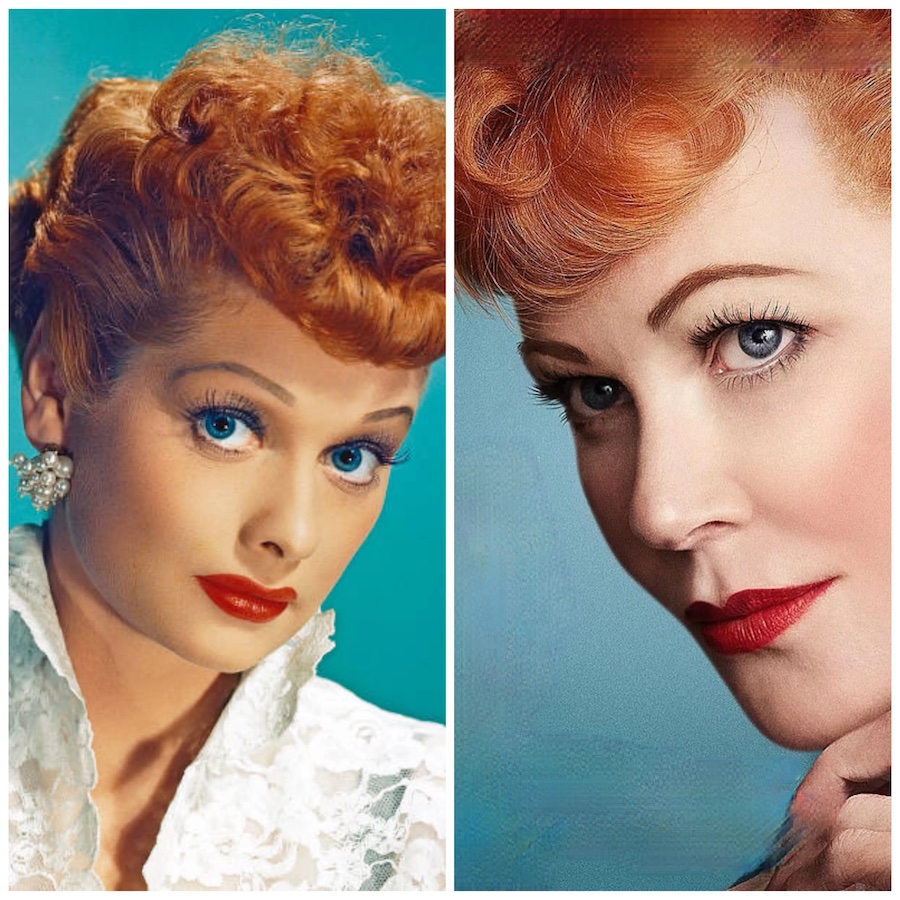
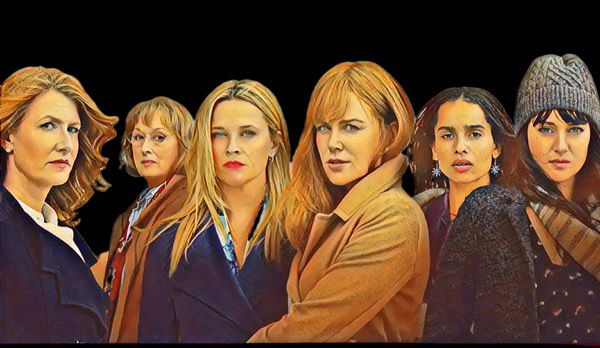
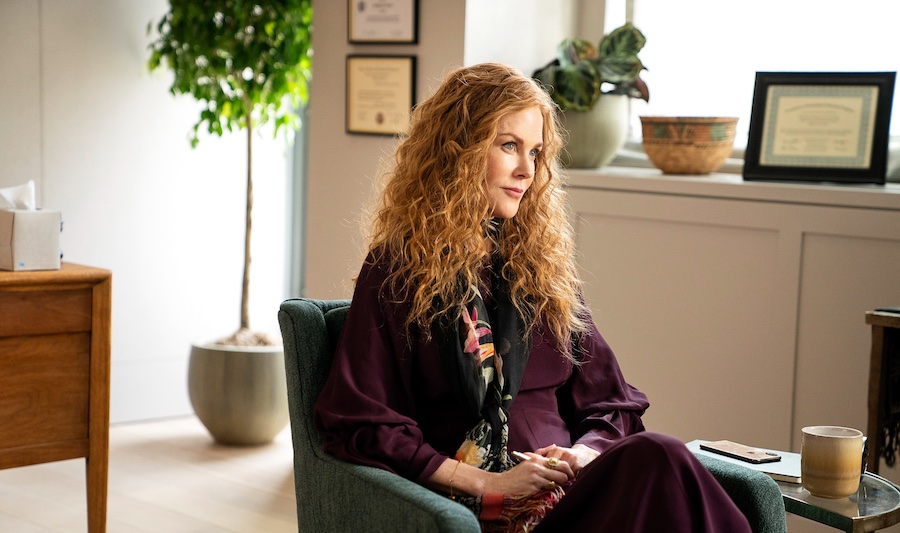
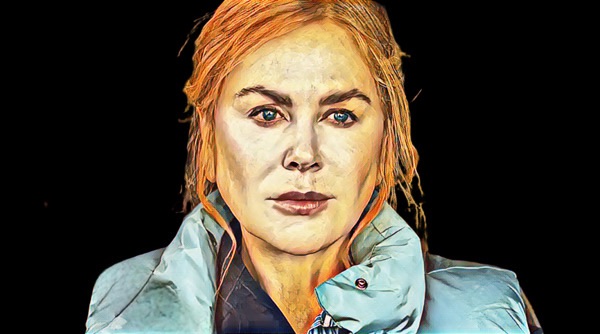
In Big Little Lies, Celeste’s hair is controlled, almost rigid, as if her appearance needed to sustain an idea of perfection that her private life contradicts. In The Undoing, the red returns, but in overly calculated waves, almost unreal, mirroring a character living inside a fantasy of stability that is about to collapse. In Being the Ricardos, the wig stops being invisible and becomes a site of tension, because recreating Lucille Ball means competing with collective memory. And in Nine Perfect Strangers, the almost overt artificiality of Masha’s look turns spirituality itself into aesthetic performance.
What could have been a technical resource begins to operate as discourse.
The moment it spills into public life.
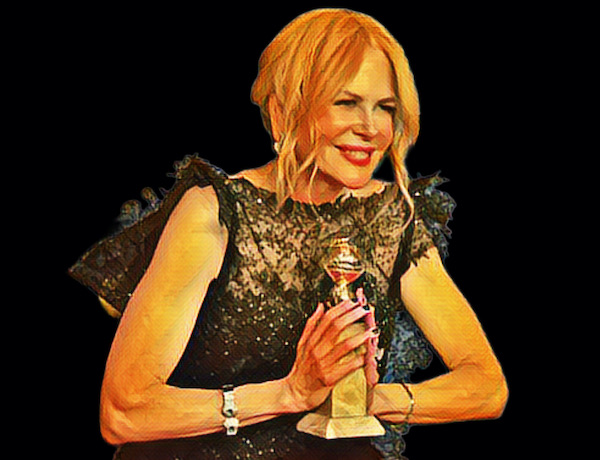
The most interesting shift, however, happens when this logic leaves the set and arrives on the red carpet.
From the 2010s onward, Nicole Kidman’s hair in public appearances starts to follow the same construction principles seen in her characters. This is no longer just styling. It is a system.
Less variation in texture. Precisely calibrated volume. Clean, repeatable lines. A kind of predictability that signals not carelessness, but intention.
On the awards circuit — from the Academy Awards to the Cannes Film Festival — where every image is captured in extreme resolution and endlessly replicated, wigs, lace fronts, and extensions offer something natural hair rarely sustains with the same precision: absolute control under any condition.
But reducing this to a technique would miss the point.


Image as an extension of performance
Nicole Kidman has never treated the red carpet as a neutral space. There is a clear continuity between what she constructs on screen and what she presents outside of it.
In this context, hair stops being a personal attribute and becomes a narrative element. Like a wardrobe, it participates in building a public figure that echoes her characters: sophisticated, controlled, often distant from any idea of spontaneity.
This is not an image that simply happens. It is an image that is directed.
The discomfort and what it reveals
Perhaps that is why the wigs provoke so much discomfort when they become noticeable.
There is today a near-rigid expectation of naturalism, as if the ideal were not to perceive the artifice. We want to believe that what we see — especially outside of fiction — is direct, unmediated, real.
But what Nicole Kidman’s choices do is precisely the opposite: they make the mechanism visible.


When the wig “shows too much,” it breaks the illusion. And in doing so, it exposes something that cinema, television, and celebrity culture have always tried to soften: identity is also constructed.
Time, control, and authorship
There is another, more delicate layer running through all of this: aging in Hollywood.
Wigs allow control over density, texture, hairline, and color. They allow, ultimately, an editing of how time appears.
But in Nicole’s case, this does not seem to function as denial. It functions as authorship.
She is not necessarily trying to hide time. She is choosing how it enters the frame.
In the end, what are we really seeing?
The question may never have been why Nicole Kidman wears so many wigs.
The question is why we expect her — or any woman under this level of scrutiny — not to.
Because, at its core, the discomfort is not about artificiality. It is about the rupture of an expectation: that outside of fiction, something should remain unconstructed.
And what Nicole Kidman seems to do, with almost stubborn consistency, is refuse that separation.
Between character and person. Between backstage and the stage. Between natural and fabricated.
Hair, in this case, is just the most visible detail of a much larger decision: to turn her own image into an extension of performance.
Descubra mais sobre
Assine para receber nossas notícias mais recentes por e-mail.

