
There are sequels that exist to expand a universe, and others that return because something within that story was never truly resolved. Practical Magic: Spellbound clearly belongs to the latter. More than two decades after the original film, what comes back is not just the story of Sally and Gillian Owens, but a conflict that never stopped operating, even offscreen.
The starting point already signals this shift. Sally is now a widow, which immediately places the curse back at the center of the narrative. The idea that love inevitably leads to loss is no longer a hypothesis or a youthful fear, but something fully experienced. Time has not softened that logic; it has confirmed it. And that changes the film’s perspective from the outset, because there is no longer any room for innocence in how this fate is confronted.
At the same time, Sally’s daughters are now adults, and the story gains a dimension that had only been hinted at before. The curse stops being an individual condition and becomes a form of inheritance, something that moves across generations not only as a supernatural event, but as an internalized narrative. The fear of love, the expectation of loss, and the way a relationship is built already shaped by an anticipated ending all become part of a legacy that must now be faced.

Gillian returns as a counterpoint, but she, too, is marked by time. The dynamic between the sisters remains central, yet it shifts into a different stage of life, where it is no longer about choosing between reason and impulse, but about confronting something that has repeated itself too often to be ignored. What once felt like destiny begins to reveal itself as a pattern.
The teaser suggests that this repetition does not remain purely symbolic. There are signs of a more tangible threat, possibly tied to the origin of the curse itself, as if what was once treated as an inevitable condition now starts to act more directly upon the family. The presence of new, younger characters points to an expanded conflict, one that involves not only Sally and Gillian but the entire Owens lineage.
Within this framework, the choice of Coconut by Harry Nilsson feels especially deliberate. The song immediately recalls the midnight kitchen dance from the original film, one of its most memorable moments. At the time, it functioned as a suspension, a brief space of freedom within a reality that remained unchanged. By bringing the song back, the sequel does more than tap into nostalgia; it reframes that gesture.
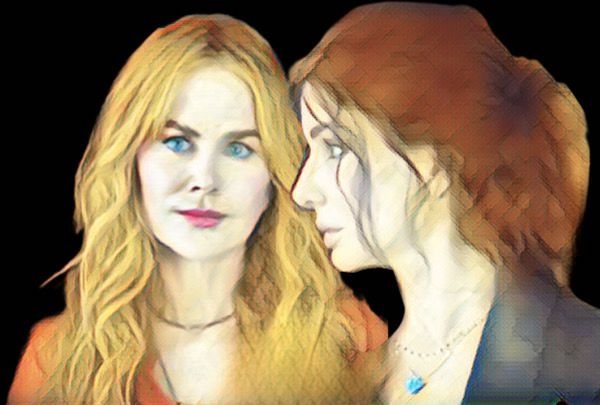
What once felt like an escape can now be read as repetition. Sally and Gillian once again attempt to break free from the logic that governs their lives, but the fact that they must do so again suggests that the issue was never truly resolved. In that sense, the curse moves beyond the supernatural and becomes something closer to an internal structure, a way of relating to love that insists on returning.
The film appears to build toward this realization. It is no longer just about surviving the curse, as it was in the original, but about deciding what to do with it. Whether it can be broken once and for all, or whether the real challenge lies in refusing to let it dictate every choice. That shift gives the story a different weight, one that avoids simple answers and forces the characters to confront what had long been treated as inevitable.
Set for release in September 2026, the film balances recognition and renewal. The return of Sandra Bullock, Nicole Kidman, Stockard Channing, and Dianne Wiest preserves the emotional continuity, while the introduction of a new generation opens the story toward an uncertain future.
At its core remains the same question that defined the 1998 film, now seen from another angle. If love is marked by loss, what can still be made of it? And how much of that knowledge must shape what one allows oneself to feel.
Descubra mais sobre
Assine para receber nossas notícias mais recentes por e-mail.

