
If she were alive today, April 21, 2026, Elizabeth II would have turned 100.
But when she died, the dominant image was that of a figure who had moved through time without wearing down in proportion to the power she represented. On the centenary of her birth, marked by a major exhibition in her honor at Buckingham Palace, that image re-emerges carefully arranged, almost edited, as official memory. The queen who became a meme of immortality, who was treated as a kind of collective “grandmother,” seemed to occupy a rare place in recent history: that of a leader largely untouched by explicit public rejection.
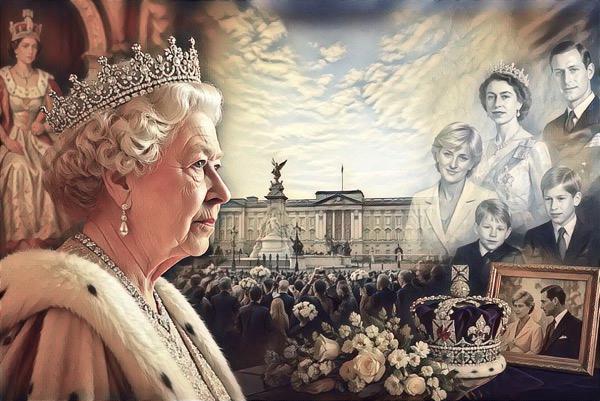
This perception did not happen by chance. It was built over decades through a combination of personal discipline, institutional strategy, and a precise understanding of the role of monarchy in the 20th and early 21st centuries. Elizabeth understood early on that her strength would not lie in intervention, but in repetition. Predictability, ritual, emotional restraint, and the refusal to publicly engage in political debate created a sense of continuity that, for the public, translated into trust.
What appeared to be neutrality was, in practice, a highly refined form of communication, shaped over 70 years by temperament, counsel, and circumstance.
Silence as a strategy and as a historical problem
Recent historical analysis begins at this point. The principle that a monarch reigns but does not govern has long been framed as a constitutional limitation. Contemporary historiography, however, increasingly treats that silence as an institutional choice with real consequences.

Elizabeth II reigned through wars, economic crises, profound social change, and global debates on civil rights and inequality. Her absence of public positioning on many of these issues, once read as prudence, is now understood as part of a system that prioritizes stability over confrontation.
This shift does not turn the queen into a direct agent of those issues, but it does reposition her as the face of a structure that avoids conflict and, in doing so, avoids openly acknowledging certain historical tensions. In the later years of her reign, this dynamic came under closer scrutiny, especially when applied to crises within the royal family itself.
Decolonization, the Commonwealth, and the weight of the post-empire
One of the central axes of this reassessment lies in Elizabeth II’s relationship to the end of the British Empire. When she ascended the throne in 1952, the United Kingdom was still attempting to maintain its global status. In the decades that followed, the independence of colonial territories reshaped that role entirely.
For a long time, this transition was described as relatively orderly, with the Commonwealth functioning as a diplomatic and symbolic link between former colonies and the Crown. Today, that interpretation is more critical, pointing to continuities of power and structural asymmetries that persisted beyond formal independence.
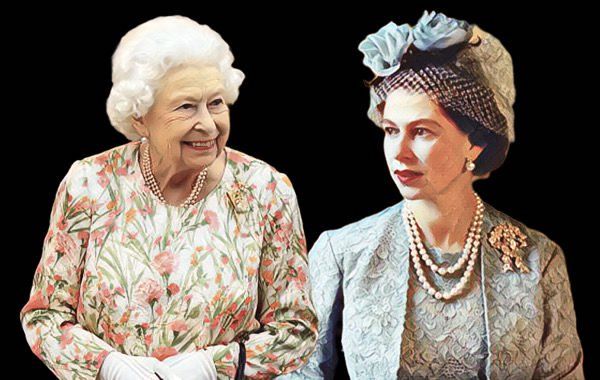
Elizabeth II occupies a complex position within this process. She did not make executive decisions, but she was the public face of a monarchy that moved through this period without taking a clear stance on reparations, colonial violence, or historical memory. That silence, once largely unnoticed, is now part of the discussion.
This reassessment extends beyond former colonies. Within the United Kingdom itself, her reign also moved through significant internal tensions. The conflict in Northern Ireland, particularly during the Troubles, placed the monarchy in a delicate position where any gesture carried political weight. Decades later, her meeting with Martin McGuinness was seen as a symbolic moment of reconciliation, though it did not resolve the complexities of the past.
In Scotland, independence movements gained strength during her reign, exposing internal fractures that challenge the idea of a unified Britain. The republican debate, which never fully disappeared, has taken on new dimensions in the 21st century, shaped both by these tensions and by a more critical view of the monarchy itself.
Elizabeth II’s popularity often functioned as a stabilizing force, helping sustain the institution even as pressures for change intensified.

Diana, the 1990s, and the limits of institutional distance
If the post-imperial era defines the global dimension of her reign, the crisis surrounding Princess Diana exposes its internal limits. The 1990s revealed a clear gap between the institution and public sentiment.
The initial response to Diana’s death, marked by absence and strict adherence to protocol, was widely criticized and forced a shift in approach that did not originate within the monarchy’s traditional logic, but from public and media pressure. This episode is now understood as a moment when the model of institutional distance came into direct conflict with a society that expected emotional visibility.
From that point on, the monarchy began to adjust more visibly, even while maintaining its underlying structure.
Managing an image before social media
Another aspect that stands out in contemporary analysis is how Elizabeth II managed her public image. In a pre-social media era, her strategy relied on consistency. Controlled appearances, formal speeches, no improvisation, and a presence that avoided personal overexposure.
This model proved highly effective for decades. Today, it can also be read as a form of opacity. The same restraint that once generated trust can now be interpreted as emotional distance.
This ambiguity helps explain why her popularity at the end of her life coexisted with structural criticism of the institution she represented.
Stability, succession, and the future of the monarchy
One element remains relatively consistent across interpretations: Elizabeth II’s role as a point of continuity. Over seven decades, she moved through profound political, social, and cultural change without the monarchy losing its symbolic relevance.
That continuity extended beyond her own presence. It was also built through the way she managed succession. Her relationship with Charles was marked by tension, both personal and institutional, shaped by rigid expectations and an unusually long period of preparation. Even so, it was under her reign that he became firmly established as the inevitable heir, already operating within a more exposed and more scrutinized model of monarchy.

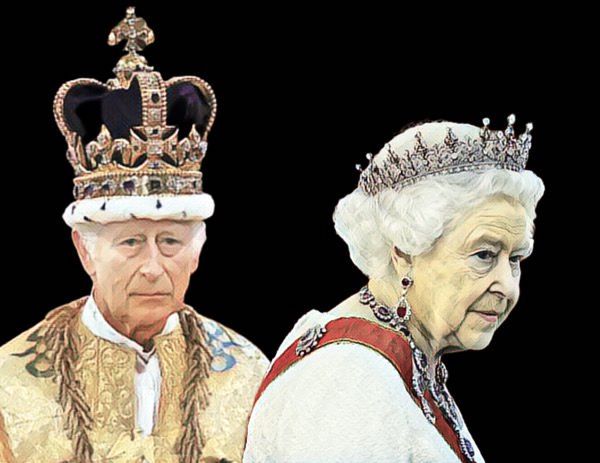
With William, that transition takes on a different dimension. He is often seen as a direct product of his grandmother’s influence, someone shaped within a framework more attuned to the 21st century, even without breaking from it. How he may eventually be perceived as king, if the monarchy endures that long, is closely tied to the balance between tradition and adaptation that Elizabeth sought to maintain.
Elizabeth II in culture: decoding a reserved figure
That same stability is now in question. The continuity that sustained the monarchy also preserved structures that are increasingly challenged. It is outside institutional history, in the cultural sphere, that this contrast becomes most visible.
Films, television series, theater, and even memes attempt to answer a question Elizabeth herself never set out to explain: who was the woman behind the role. Unlike many public figures, she offered little direct access. She was not born to be queen, was not initially prepared for it, and ascended the throne at 25, reorganizing her life entirely.
Productions such as The Crown and The Queen have played a central role in shaping a more accessible, often empathetic image, even when dealing with controversial events. Distance is contextualized, silence is framed as a dilemma, and restraint is given narrative meaning.
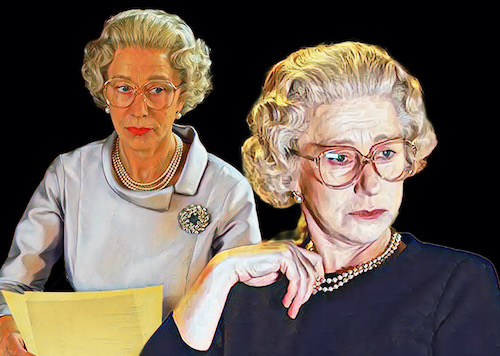
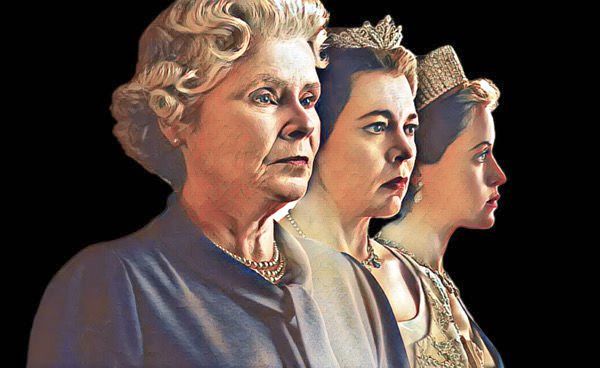
This interpretation exists alongside a less romanticized view. Elizabeth II was never seen as an intellectual in the conventional sense, and her simple, almost domestic tastes contrasted with the sophistication expected of her position. That trait reinforced the image of someone deeply shaped by rules, more comfortable with repetition than reinvention.
Family tensions are central to this cultural reading. Her relationship with Charles is often viewed as an example of institutional pressure overriding personal life. Harry and Meghan’s departure exposed a more contemporary conflict, tied to autonomy, identity, and media exposure.
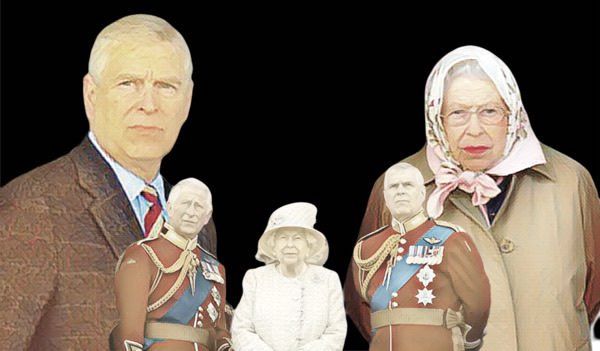
None of these episodes, however, weighs as heavily today as the case of Prince Andrew. The allegations, the financial settlement, and, above all, Elizabeth II’s decision to support her son through the crisis have become one of the most difficult aspects of her legacy to reconcile. In this case, silence does not read as restraint, but as a choice to protect the institution at a clear moral cost.
Unlike previous crises, this one does not fade with time or resolve through protocol.
How history is repositioning Elizabeth II
On the centenary of her birth, there is no rupture with the image built over her lifetime, but there is a clear expansion of it. The exhibition in her honor, bringing together dresses, personal objects, and official records, constructs a coherent narrative while also revealing how memory is shaped by selection.
Elizabeth II remains associated with stability and institutional discipline, but that reading no longer stands on its own.
Recent analyses incorporate the contradictions of the period she reigned over and project part of that weight onto the monarch herself. She is no longer seen only as a constant presence across decades, but also as the face of an institution that preserved its strength while avoiding some of its most difficult questions.
Descubra mais sobre
Assine para receber nossas notícias mais recentes por e-mail.

