
Season four of The White Lotus is still in production, but it already carries something that usually only surfaces after a premiere: a significant rupture within the cast. Helena Bonham Carter, one of the most prominent names attached to the new season, had already begun filming and left the project just days later.
The exit was framed as a creative decision, with confirmation that the role will be rewritten and recast. The wording is precise and, at the same time, insufficient to fully explain what this kind of move typically signals.

What is known so far about the season helps frame the context. Filming is taking place in France, maintaining the show’s structure of using luxury locations as social microcosms, now within a European setting that suggests a shift in tone. As in previous seasons, the narrative will revolve around a group of guests and staff whose lives intersect through money, power, and emotional fragility. The structure remains ensemble-driven, dependent on a delicate balance between characters who cannot dominate the story without disrupting the whole.
It is within this framework that Helena Bonham Carter’s casting stands out. Not only because of her stature, but because of the nature of her screen presence. She is not an actress who blends easily into a project. She alters rhythm, redistributes weight, and reshapes the scenes she inhabits. That kind of presence requires a role calibrated with precision, not just in terms of its own arc, but in how it affects the ensemble.
The official statements surrounding her departure follow a familiar industry pattern. They refer to something that “didn’t work,” to an adjustment of direction, to a decision made early in filming in order to preserve the integrity of the series.
Very suspicious…
Because this language is not necessarily untrue, but it operates as a form of code. In productions of this scale, decisions like this are usually resolved before cameras start rolling. When they carry into filming and are reversed quickly, it suggests that the issue was no longer theoretical. It had become visible, immediate, and difficult to reconcile without affecting the project as a whole.
Trouble in paradise?

This moment does not exist in isolation. Season three had already begun to shift how the show’s behind-the-scenes dynamics were perceived. Jason Isaacs, reflecting on his experience, acknowledged that there was “drama, of course, there’s always drama,” describing an environment where tension was not necessarily dysfunctional, but embedded in a demanding creative process.
At the same time, fans began to read into off-screen dynamics that seemed to echo that atmosphere, such as the visible distance between Aimee Lou Wood and Walton Goggins. Despite playing a couple on screen, they were not seen together publicly, did not engage with each other online, and never addressed the speculation. None of this was confirmed as conflict, but the absence itself became material for interpretation.
Helena Bonham Carter’s exit intensifies that reading. It does not confirm a specific conflict, but it reinforces the idea that The White Lotus is operating within a more exposed threshold than before. The series’ growth has brought larger names, greater expectations, and, with that, less room to absorb misalignment. At the same time, it has maintained a highly centralized creative core. Mike White remains the decisive force, and the series does not reorganize itself around any single performer, regardless of stature.

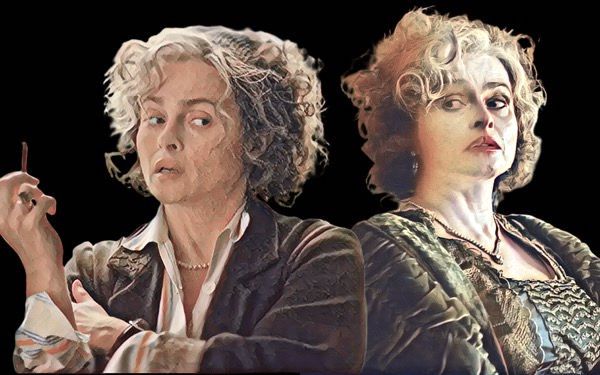
In that sense, what happened is less an isolated incident and more a point of friction between two forces that are difficult to reconcile. On one side, an actress whose presence reshapes the material. On the other, a series that depends on a precise equilibrium and does not easily bend its structure. When that balance fails, the solution tends to be immediate and definitive.
What comes next becomes, in itself, a test for the series. Replacing an actress of this magnitude at the start of filming can be absorbed narratively, as has happened in other productions, or it can leave more subtle marks on the final shape of the season. More than anything, it signals a shift in status. The White Lotus is no longer just a successful series. It is a project where everything, including what happens off screen, is read as part of its story.
Descubra mais sobre
Assine para receber nossas notícias mais recentes por e-mail.


1 comentário Adicione o seu