
In the film Michael, even within an accelerated and somewhat superficial narrative of the singer’s childhood, there is an element that does not appear as a mere detail, but as an early signal of something larger: Peter Pan. His presence does not function only as a cultural reference, but as a point of identification that already emerges as part of Michael Jackson’s symbolic construction.
In one of the images, the young Michael watches Peter Pan with almost fixed attention. What is present there is not simply childish fascination, but a kind of recognition that, over time, would no longer remain implicit. Throughout his life, he not only reinforced this connection but turned it into a central axis of his own narrative. In interviews, he repeatedly said that he did not have a childhood and that, in adulthood, he sought to recover what had been denied to him.
This statement, far from being episodic, organizes his public image.
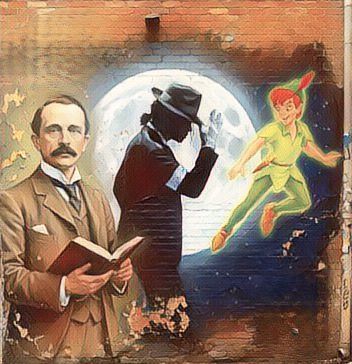
At times, it even extends to his own body. Among the many readings of his physical transformations, there is the perception that Michael may have sought to approximate his features to an idealized aesthetic that echoes the Peter Pan imagery he kept in his books, including the shape of his nose. More than confirming or denying this intention, this detail reveals the depth of identification: it is not only about admiring the character, but about approaching him in what can also be seen.
What is Peter Pan syndrome, and why does it (not) apply to Michael
The association between Michael Jackson and Peter Pan has, over the years, led to a recurring interpretation: that he embodied what came to be known as Peter Pan syndrome.
The term, popularized from the 1980s onward, describes adults who resist fully entering adult life, showing difficulty in assuming responsibilities, dealing with frustrations, and sustaining relationships that require reciprocity. Although it is not a formal clinical diagnosis, the idea has become a cultural lens used to interpret figures who construct an image based on perpetual youth.
In Michael’s case, this reading may seem inevitable at first glance, since he himself admitted being obsessed with the character.
His explicit identification with Peter Pan, the constant valorization of childhood as an ideal state, and the attempt to recreate that universe in the real world make this association almost automatic. But turning it into a diagnosis is a step that does not hold.
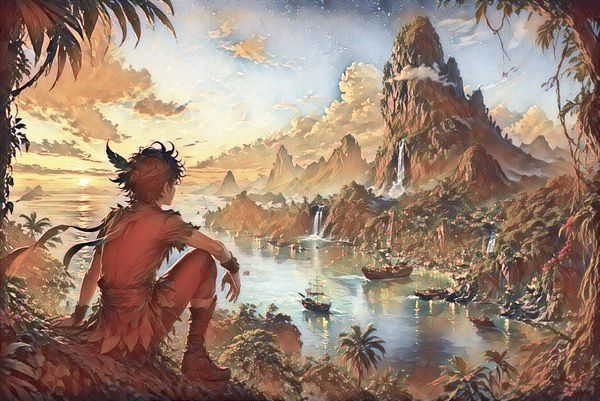
Michael Jackson operated, at the same time, within another logic. He was a highly disciplined artist, with rigorous control over his career, direct involvement in creative, financial, and strategic decisions, and a work ethic that required organization, consistency, and mastery of complex processes. He did not refuse to grow up; rather, he sought the coexistence of two dimensions.
On one side, a symbolic construction deeply anchored in childhood. On the other hand, a concrete performance in the adult world is marked by control and awareness of one’s position.
His identification with Peter Pan can therefore be read less as incapacity and more as an attempt to give form to a specific experience: that of someone whose childhood was interrupted and who later tried to reorganize it outside the time in which it should have taken place.
Peter Pan: the archetype of the boy who refuses the world
To understand the strength of this identification, it is necessary to return to the character created by J. M. Barrie at the turn of the 20th century.
Peter Pan is not simply the boy who does not grow up, but someone who represents the refusal to accept the rules that structure adult life. Neverland, where he lives, is a space where time does not move forward, where there are no lasting consequences, and where loss — a central element of maturation — is constantly avoided.
Growing up in this universe implies giving something up. And Peter Pan exists precisely to refuse that loss. Any loss.

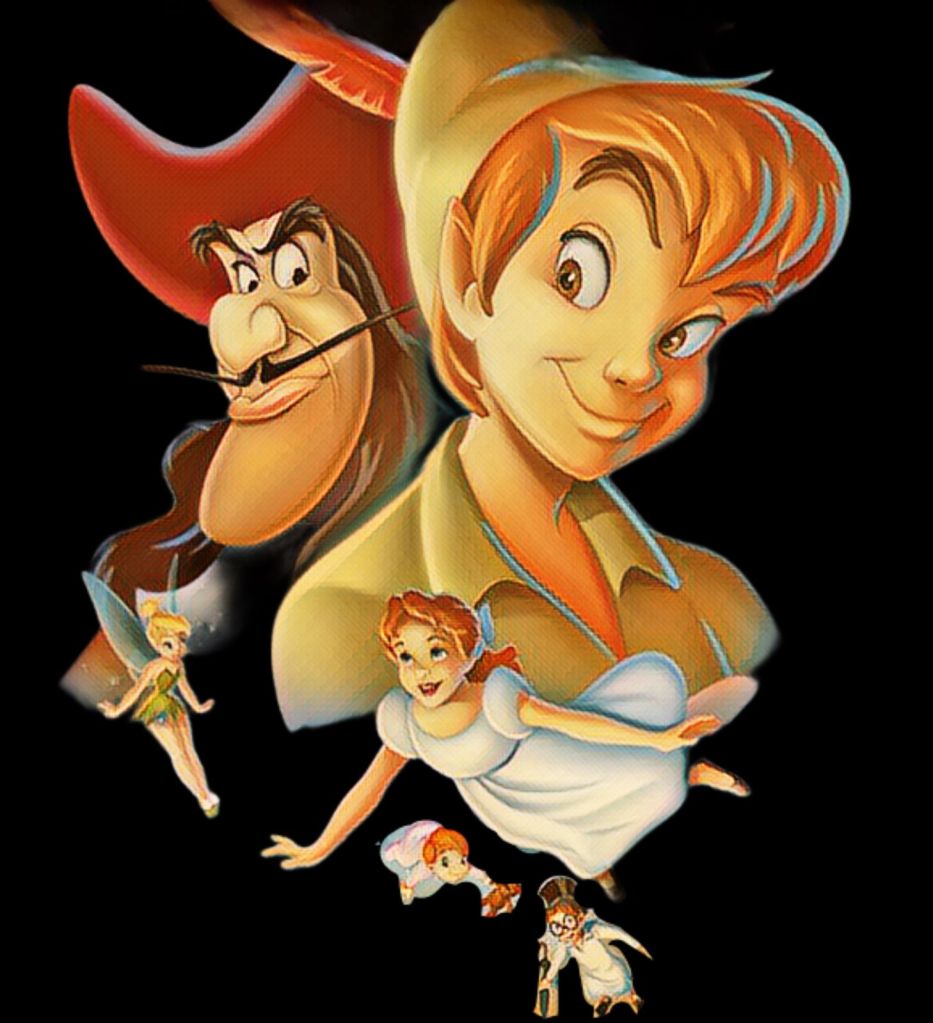
This logic finds a direct echo in Michael Jackson’s biography, whose childhood was marked by early labor, rigid discipline, and constant exposure. Instead of play, spontaneity was replaced by performance. For Michael, identifying with Peter Pan is therefore not just about adopting a symbol, but about constructing a language to explain what he did not live.
But that language is not neutral.
J. M. Barrie and the less innocent origin of Peter Pan
The relationship with Peter Pan gains another dimension when one considers the origin of the character, born out of an unavoidable tragedy.
Before existing as a story, Peter Pan already functioned as a personal elaboration. It emerged from J. M. Barrie’s attempt to process the death of his older brother at the age of 12. For the author’s mother, who never overcame the loss, the child remained frozen in time, forever young and idealized. Barrie, still a child, tried to occupy that place, reproducing gestures and attempting to capture the attention of a mother who never fully recovered.
This is not merely a biographical detail, but anticipates the core of what Peter Pan would come to represent: the idea that something in childhood can be preserved outside of time, even if that implies a distortion of reality.

Later, as an adult, Barrie developed an intense relationship with the Llewelyn Davies brothers, who became the main inspiration for the character. He drew close to the family, established a constant presence, became indispensable in the children’s lives, and, after the parents’ deaths, assumed a central role as their guardian.
Seen today, this relationship carries an ambiguity that is difficult to neutralize, even without evidence of criminal behavior. There is a type of bond that oscillates between affection, projection, and appropriation. Barrie did not merely observe those children; he absorbed them into his own narrative construction, transforming real experience into fiction.
Peter Pan emerges from this displacement.
When fantasy meets reality
This is where the “problem” lies. Contrary to a more naïve reading, Peter is not an innocent character. He refuses to grow not simply because he wishes to remain a child, but because he rejects everything that growing up implies: responsibility, limits, loss, and, above all, entry into a moral order. As a child who insists on remaining one, there is something deeply self-centered in him. He does not mature because he does not accept the existence of the other as something that requires continuity.
This layer makes the story more complex and more unsettling.
It is at this point that Michael Jackson’s identification with Peter Pan ceases to be merely symbolic and enters a more problematic territory.
Throughout his life, he not only affirmed this connection but built a universe in which it could exist outside fiction. Neverland, the ranch that would become the center of his adult life, emerges directly from this logic.
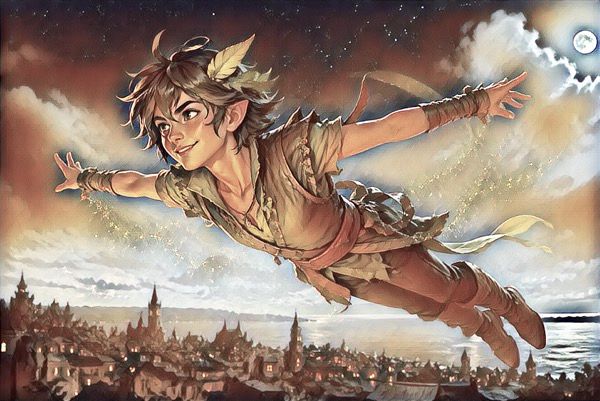
The idea of a space where childhood could be preserved, where time would not advance, and where the rules of the adult world could be suspended is not merely an extension of Peter Pan’s imagination. He managed to materialize his fantasy, but once removed from fiction, that logic encounters a limit.
Childhood cannot be reconstructed as a permanent state without other dimensions of reality imposing themselves. And it is precisely at this point that the narrative constructed by Michael Jackson begins to coexist with contradictions that cannot be resolved through fantasy alone — becoming, instead, a ground for suspicion and accusations.
Between identification and impossibility
Michael Jackson’s identification with Peter Pan does not resolve his story; it reframes it.
If, on one hand, it offers a language to speak about an interrupted childhood, on the other, it reveals the limits of that attempt when displaced into the real world.

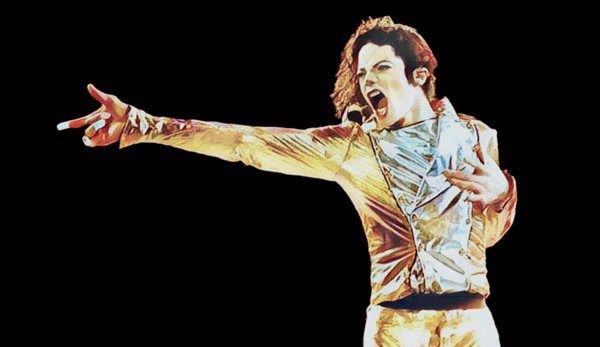
Peter Pan only exists because Neverland is not a concrete place. It is a suspension. A fiction in which time can be interrupted without consequences. Michael, in attempting to cross that boundary, transforms the symbol into physical space, into a way of life, into a public image. And it is precisely in this movement that fantasy ceases to protect and begins to collide with reality.
This is not, therefore, about deciding whether he “was” or was not a Peter Pan, nor about fitting him into a diagnosis that reduces more than it explains. It is about recognizing that this identification organizes a contradiction that never resolves: that of someone who built his adult life with absolute control while simultaneously trying to inhabit a space where growth should not exist.
It is within this tension that his narrative remains open, and perhaps that is why it resists any definitive conclusion.
Descubra mais sobre
Assine para receber nossas notícias mais recentes por e-mail.
 miscelana.com