
The Met Gala takes place today, May 4, 2026, maintaining the tradition of the first Monday in May, a rule that has been part of the event’s calendar since the 1970s, when it aligned itself with the annual opening of the Costume Institute exhibition. Over more than five decades, what began as a logistical choice has become part of its identity.
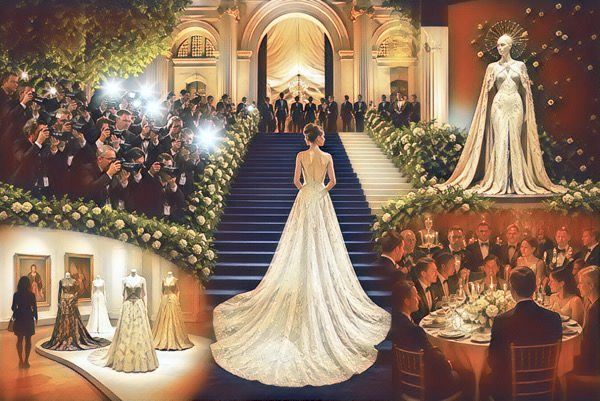
What unfolds throughout the night, from celebrity arrivals to the flood of images that take over social media and websites, creates the impression of spontaneity and excess. But nothing there is improvised.
The steps of the Metropolitan Museum function as an entry stage for an event that begins long before and ends long after the photographs. Every guest, every look, and every appearance is part of a larger mechanism that connects fashion, visibility, and cultural positioning on a global scale. It may look like a parade of millionaires and celebrities detached from reality, but the objective is to raise funds to sustain the Costume Institute of the Metropolitan Museum of Art, one of the few fashion departments within an art museum in the world, responsible for research, conservation, and exhibitions that treat fashion as part of cultural history.
Who organizes it and why that defines everything
The Met Gala is structured around three core pillars. The Metropolitan Museum, which hosts the event, and the Costume Institute are responsible for the exhibition. Vogue operates as the communication and coordination arm, with the controversial and legendary Anna Wintour at the center.
Since 1995, she has not only presided over the event but controlled its logic: the guest list, the selection of co-chairs, the balance between established names and emerging figures all pass through her personal filter.
The co-chairs change every year and help expand the event’s reach, acting as public representatives of that edition. Their selection is not arbitrary. It reflects the cultural moment, media reach, and the ability to translate the theme.
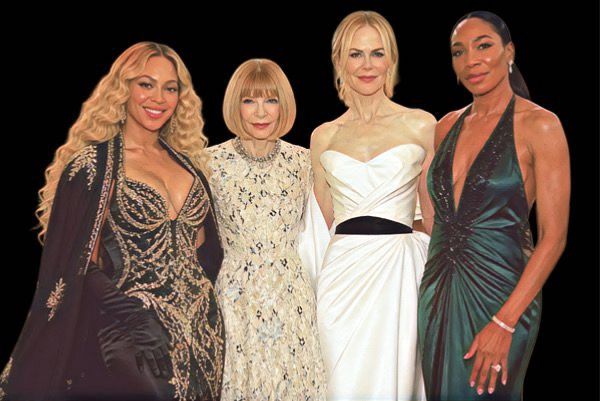
In 2026, Anna Wintour’s co-chairs are Beyoncé, Nicole Kidman, and Venus Williams, major figures in music, film, and sports. Beyoncé returns after a decade away, turning her presence into a narrative in itself. It is not just attendance, but a calculated reentry into a space that shapes global image. Nicole Kidman represents the long-standing relationship between cinema and haute couture, while Venus Williams expands the event beyond traditional entertainment, connecting fashion, sports, and industry. Anna Wintour remains the axis, ensuring coherence. She does not divide power; she distributes roles.
Beyond the official co-chairs, there is a less visible but equally important second layer. In 2026, Anthony Vaccarello and Zoë Kravitz lead the host committee, an extended group of guests who help structure the event and expand its network of influence.
There are also honorary chairs, such as Jeff Bezos and Lauren Sánchez, pointing to another dimension of the event: its direct connection to capital and funding.
The theme and how it is defined
The Met Gala theme is not conceived for the red carpet. It originates in the Costume Institute’s annual exhibition.
The museum’s curatorial team develops, over the years, a research framework that can be historical, aesthetic, or conceptual, and this framework becomes the exhibition. From there, it becomes the event’s theme.
The dress code is the translation of that concept for guests. This is where the central friction of the Met Gala emerges. While the museum operates with academic rigor, the red carpet functions through interpretation. When it works, fashion becomes language. When it does not, it turns into a costume without context.
In 2026, the theme is “Costume Art,” with a dress code defined as “Fashion Is Art.” It sounds abstract, but the exhibition is built around a specific idea: treating the dressed body as an artistic object. The proposal places garments in direct dialogue with works of art across five thousand years, shifting fashion from appearance to materiality and representation of the body.
This changes the game because it moves beyond literal aesthetic references. The expectation is that guests understand clothing as artistic language, almost as an extension of the body.
The risk, as always, lies in translation. This type of theme expands interpretive space, but it also exposes those who cannot move beyond the surface. We will see the outcome later.
What the Met Gala is and why it exists
Formally, the Met Gala is a fundraising ball that supports the Costume Institute, although this function often recedes in coverage. The spectacle exists because it finances the preservation and study of fashion as part of cultural history.
The numbers clarify the scale. Individual tickets can exceed fifty thousand dollars, while tables are purchased by brands for millions. Being there means both funding the institution and associating with it.
How it began from elite dinner to global spectacle
The Met Gala was founded in 1948 by Eleanor Lambert as a fundraising dinner for New York’s social elite.
In the 1970s, Diana Vreeland transformed the event by introducing thematic exhibitions, bringing fashion closer to curatorial practice and shifting the focus toward narrative.
The decisive turning point comes in 1995 with Anna Wintour. From then on, the event begins to operate as a global visibility device. Celebrities are strategically incorporated, the guest list becomes exclusive, and the red carpet becomes central to the experience. With social media, its reach has only expanded.
What happens beyond the red carpet
There is an implicit agreement around the Met Gala: what matters most is not widely documented.
After arriving, guests enter a restricted environment, visit the exhibition in advance, attend a carefully orchestrated dinner, and watch exclusive performances. The use of phones is discouraged, maintaining a layer of opacity around what happens inside.
This space functions as a meeting point for different spheres of power. Designers, actors, musicians, executives, and financiers share the same environment. It is where relationships are formed, and public images begin to be reshaped. And precisely because it is not fully visible, it generates even more curiosity.
Who attends and why it matters
The guest list is one of the Met Gala’s main instruments of power. It is not open, and every name is selected under Anna Wintour’s curation, known for its rigor. It almost echoes a modern-day Bertha Russell from The Gilded Age, deciding who makes it onto the list of the powerful.
Being there does not simply mean being famous. It means being considered relevant within a circuit that merges fashion, art, and global influence. In the age of social media, that recognition becomes even more strategic.
Some names help define the event itself. Sarah Jessica Parker has built a consistent relationship with the themes. Rihanna has turned her appearances into moments of aesthetic rupture. Blake Lively has established a presence based on visual narrative and precision. Lady Gaga, in 2019, transformed her arrival into a performance, dissolving the boundary between fashion and spectacle. Zendaya constructs a narrative by turning the theme into a literal image. Billy Porter uses his own body as an aesthetic and political affirmation.
Anna Wintour remains the central axis, organizing not only who enters but the type of image the event projects.
In the end, the Met Gala is not about clothes. It is about who can transform appearance into discourse and presence into strategy. Today, as cameras capture every detail on the steps, what is at stake is not just the look of the night, but the ability to occupy, even if only for a few hours, the center of the global cultural narrative.
Descubra mais sobre
Assine para receber nossas notícias mais recentes por e-mail.


1 comentário Adicione o seu