
In 2026, Dolly Parton turns 80 at a delicate point in her trajectory, not because she has lost relevance or space, but because, for the first time in a more visible way, her body begins to interfere with the sense of continuity that has always defined her career. The definitive cancellation of her Las Vegas residency, after successive postponements, does not function merely as a practical decision in response to health issues, but as a symbolic marker of something she has always managed to avoid: interruption.
The most recent information points to a condition that does not revolve around a single illness, but rather a set of vulnerabilities involving her immune and digestive systems, with medication side effects that include dizziness and directly compromise her ability to perform. The most relevant detail is not clinical severity, which appears to be manageable, but the incompatibility between this state and the level of physical demand she has always imposed on herself on stage.
There is an important distinction between not being able to sing and not being able to sustain the character who sings. In Dolly Parton’s case, those two things have never been separate.
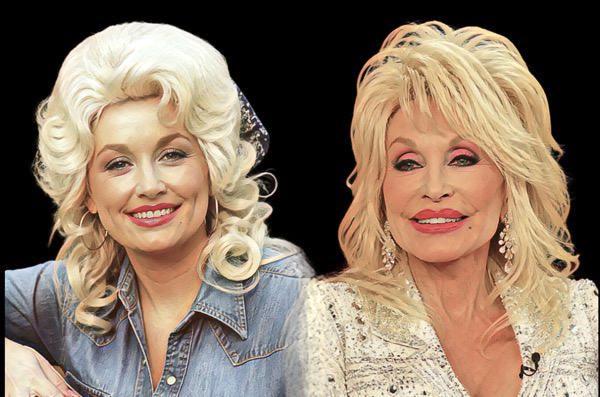
The construction of a figure that does not allow cracks
Over more than six decades, Dolly has not only accumulated success but has built one of the most consistent and controlled personas in popular culture. Everything about her has always been deliberate, from the exaggerated aesthetic to the sharp humor, from the way she speaks about herself to the way she manages her public exposure. This is not spontaneity, but a continuous performance that extends across the stage, interviews, and public life.
That construction requires integrity. Not in a moral sense, but in terms of completeness. Dolly does not step on stage partially. The image depends on a specific combination of elements that include physical energy, presence, costume, and timing. When she says she does not want to go on stage unless she can deliver “everything,” what is at stake is not perfectionism, but coherence with an identity project that has always been total.
This is why the impact of the current moment lies not only in the suspension of performances but in the temporary impossibility of sustaining that totality. The body does not prevent the artist from existing, but it prevents the character from manifesting as it was conceived.
Aging and grief as overlapping layers
Her health situation cannot be analyzed in isolation. In March 2025, Dolly lost Carl Dean, her husband of nearly six decades, a discreet and almost invisible figure to the public, but structurally central to her private life. Over the years, that relationship functioned as a stabilizing axis that coexisted with the extreme exposure of her career.
His death introduces a reorganization that goes beyond the emotional sphere. It alters rhythms, routines, and, in less visible ways, physical disposition itself. When Dolly speaks about going through “firsts” without him, she is describing a process that does not resolve quickly and that inevitably passes through the body.
In this sense, what appears as a health issue can also be read as a point of convergence between aging and grief. Not as a direct cause, but as a context that weakens a structure that, for decades, operated almost without interruption.
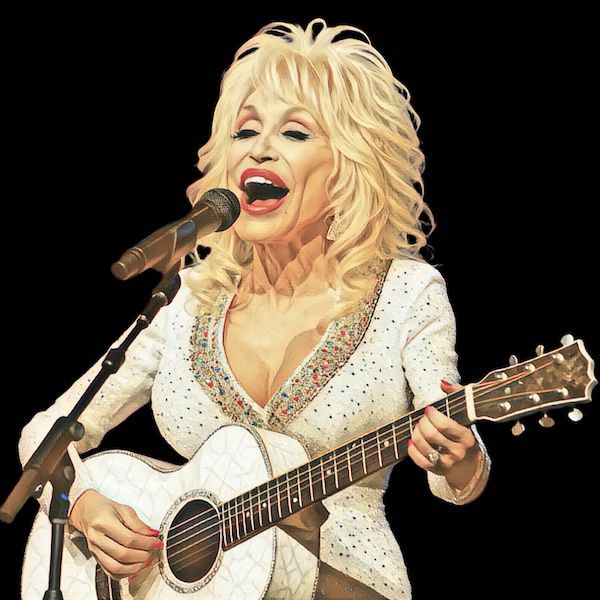
A career that never depended on a single format
If there is something that distinguishes Dolly Parton from many artists of her generation, it is the fact that she has never relied exclusively on the stage. Since the 1970s, she has built a career that expanded strategically beyond music, incorporating film, television, literature, and business.
Songs like Jolene and I Will Always Love You secure her a permanent place in music history, but they do not fully explain her longevity. What sustains Dolly is her ability to transform her image into a multifaceted brand, which includes everything from Dollywood to educational projects like the Imagination Library.
This structure allows a reduction in live activity to function not as disappearance, but as redistribution. It opens space for her presence to continue in formats that are less physically demanding but equally effective in terms of cultural impact.
The refusal to turn pause into closure
Even in the face of current limitations, Dolly maintains a consistent stance that she does not intend to retire. This position is not merely rhetorical. It aligns with how she has always conducted her career, avoiding abrupt ruptures and preferring gradual transitions.
The difference now is that this transition is no longer entirely controlled. For the first time, factors external to her will impose a shift in rhythm. Still, she responds within the same logic she has always used, reorganizing projects, shifting priorities, and maintaining control over her narrative.
The pause, therefore, does not function as an ending, but as an adaptation that preserves continuity, even if at a different pace.
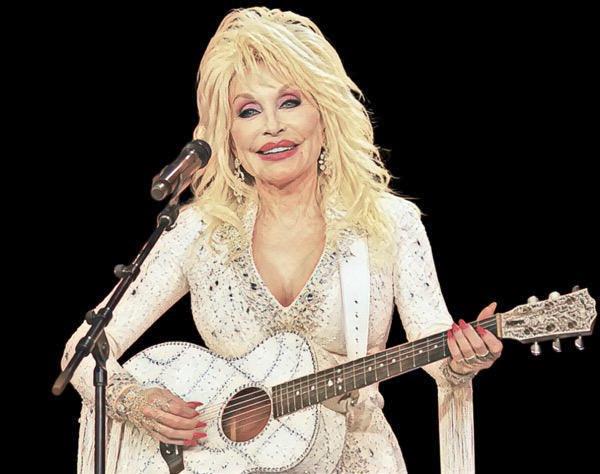
The paradox of a figure built on permanence
There is an inevitable contrast between the image Dolly Parton constructed and the moment she is living through. For decades, she represented an idea of constant energy, uninterrupted presence, and an identity that seemed immune to the wear of time. At 80, that image encounters a limit that can no longer be fully circumvented.
Even so, what emerges is not rupture, but reconfiguration. Dolly does not abandon the character, but adjusts the conditions under which it can exist. The humor remains, as does her lucidity about her own image, and her awareness that her story has always been, to a great extent, one she writes herself.
What changes is the relationship between control and contingency. For the first time, control is no longer absolute.
What this moment reveals about Dolly Parton
More than a portrait of fragility, this moment reveals the coherence of a life project that has always been deeply self-aware. Dolly Parton is not simply an artist who ages, but one who incorporates aging into her narrative without allowing it to define her entirely.
At 80, the body imposes limits that can no longer be ignored, but the way those limits are integrated into her story preserves what has always been her most distinctive trait: the ability to remain recognizable, even as everything around her changes.
It is not continuity itself that is at stake, but the way it is sustained.
Descubra mais sobre
Assine para receber nossas notícias mais recentes por e-mail.

