
In the 1980s, teenagers quickly learned to recognize — and anticipate — films written by John Hughes. The filmmaker who seemed to “speak to youth” worked with simple narrative frameworks, but what set him apart was less structure and more perspective: there was empathy, there was observation, and there was a genuine interest in characters that cinema rarely placed at the center. In The Breakfast Club and Sixteen Candles, unlikely protagonists moved from social margins to become narrators of stories about prom, first kisses, and the quiet misalignments with their parents.
In 1986, Hughes consolidated that movement with an instant classic: Pretty in Pink, a film that, four decades later, no longer functions merely as a record of a generation, but as an emotional model for how cinema learned to look at youth without reducing its contradictions.
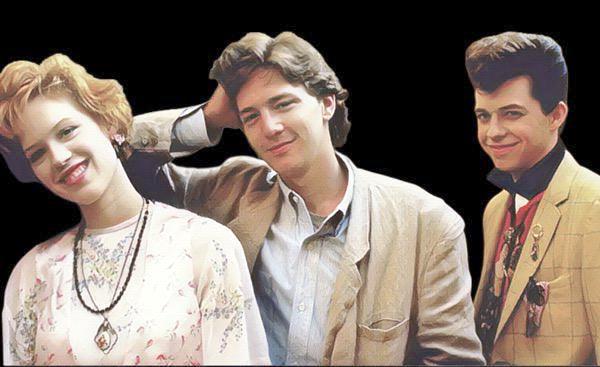
Written by Hughes and directed by Howard Deutch, the film is built on a simple and rare gesture: taking teenagers seriously. Not as archetypes, but as subjects shaped by class, desire, shame, and belonging. The story of Andie Walsh, a working-class girl who falls in love with a wealthy boy in a hostile environment, is structurally simple yet emotionally precise. It is this shift — from cliché to lived experience — that sustains its cultural longevity.
The class logic that structures desire
What sets Pretty in Pink apart from other teen romantic comedies of its time is the way it embeds romance within a clearly defined social structure. Andie is not simply an outsider because of style or personality. She is economically displaced. The school operates as a microcosm of hierarchies that do not need to be explained because they are already internalized.
Blane, the love interest, does not represent only a romantic ideal. He also embodies access to a world Andie observes from the outside. It is precisely this intersection between desire and belonging that the film refuses to simplify. When Blane hesitates, when he pulls away under pressure from his peers, what is at stake is not merely emotional cowardice, but the difficulty of crossing a boundary the film insists on making visible.
In that sense, the conflict was never simply a love triangle between Andie, Blane, and Duckie. What is really being negotiated is the possibility of moving between worlds that do not easily overlap.
Duckie and the gesture that endures
Forty years on, few scenes hold as firmly as Duckie’s dance to Try a Little Tenderness. What could have been a quirky moment becomes, over time, an inadvertent manifesto about exposure and vulnerability.

Jon Cryer has recently revisited the scene as a defining moment for the character, a point at which Duckie tries to assert his worth in a world that marginalizes him. At the time, some of his co-stars found it embarrassing. Today, it stands as one of the most recognizable moments in teen film history precisely because it does not seek approval.
There is something deeply contemporary in that reading. In a cultural environment that rewards the careful curation of image, Duckie remains a body out of place, insisting on existing without mediation.
A rewritten ending and what it reveals
One of the most revealing aspects of Pretty in Pink exists off-screen. The original ending had Andie ending up with Duckie, but negative test audience reactions led John Hughes to rewrite the conclusion, replacing it with the now-iconic reunion with Blane at the prom.
This change is more than a piece of trivia. It reveals how the film was already negotiating with audience expectations. The logic of the fairy tale — the idea that the protagonist must end up with the object of her desire — ultimately imposes itself over a more ambiguous alternative, reshaping not only the ending, but the emotional reading of the story itself.

The following year, Howard Deutch and Hughes seem to revisit that decision in Some Kind of Wonderful. The 1987 film functions almost as a structural variation of Pretty in Pink, this time preserving the ending that had been abandoned: the choice of the best friend, of intimacy built outside social hierarchies. Even so, although it developed its own audience over time, it never approached the cultural impact of its predecessor, as if the more emotionally coherent resolution was not necessarily the one that resonates most strongly within the collective imagination.
Even with the altered ending, Pretty in Pink still attempts to preserve Duckie, offering him a gesture of continuity, almost as a promise that his story does not end there. It is a curious balance between frustration and consolation, one that says a great deal about the kind of romantic narrative 1980s cinema was willing to sustain.
The soundtrack as narrative
Few films have integrated music as organically as Pretty in Pink. Not as background, but as an emotional extension of its characters. John Hughes himself made it clear that the soundtrack was never an afterthought, but a central element of the film’s construction. Director Howard Deutch initially leaned toward a more traditional, score-driven approach, but Hughes intervened, insisting on the use of contemporary songs — not as isolated hits, but as a curated selection capable of engaging directly with the emotional state of each scene.
The selection blends new wave, post-punk, and soul in a way that now feels not only representative but defining of an era. This becomes even more evident in the construction of the ending. Before the change, Orchestral Manoeuvres in the Dark had composed Goddess of Love, intended for the original Duckie ending. With the narrative shift, Hughes requested a new song that could emotionally support Andie and Blane’s reunion. OMD wrote If You Leave in less than 24 hours.
The result is not merely functional. The song redefines the ending, softens the class conflict, displaces ambiguity, and delivers a sense of resolution that the script alone might not sustain.
This is a key point in understanding the soundtrack as curation. It does not simply follow the story. At decisive moments, it reorganizes it.
That logic explains why so many tracks do more than fit; they define scenes. Left of Center, by Suzanne Vega, functions almost as a description of Andie herself. Please Please Please Let Me Get What I Want, by The Smiths, condenses adolescent desire in its rawest form. And Bring on the Dancing Horses, by Echo & The Bunnymen, adds a layer of displacement that reinforces the characters’ sense of misalignment.
Forty years later, the impact of that curation is still visible. Pretty in Pink helped consolidate a model that would become dominant in the years that followed: soundtracks built from carefully selected songs capable of existing beyond the film without losing their connection to it.
Perhaps more importantly, the soundtrack does not function merely as nostalgia. It continues to resonate because it translates something the film itself understands: adolescence is not silent. It organizes itself through references, through music, through what one listens to to give shape to what cannot yet be named.
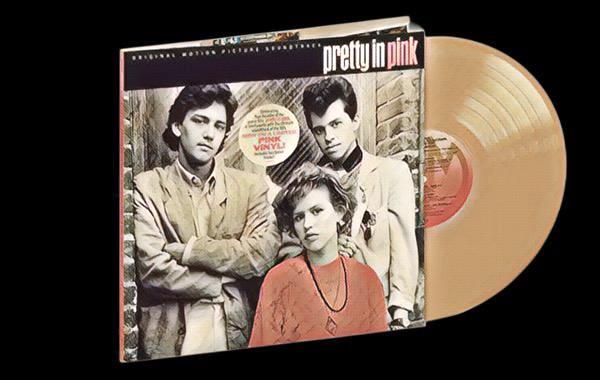
In that sense, Pretty in Pink did not simply use music. It helped teach cinema how to listen to its characters. The re-release on pink vinyl, including additional tracks such as Otis Redding and Talk Back, is not merely a marketing move, but a recognition that this soundtrack remains one of the most influential in modern cinema, frequently ranked among the greatest ever assembled.
The return to theaters and what still holds
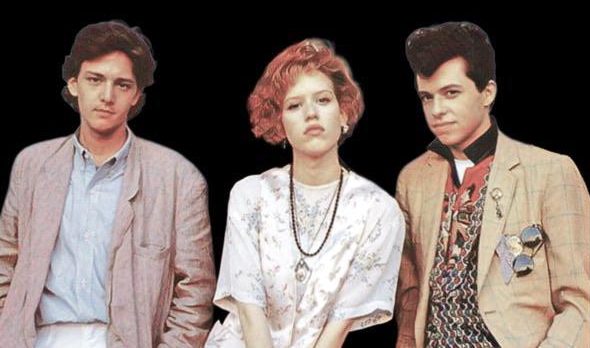
In 2026, Pretty in Pink returned to theaters in a newly remastered 4K version, accompanied by additional material featuring Howard Deutch, reinforcing something time had already made clear: this is not a film that depends on nostalgia to exist.
It continues to be revisited because it still offers a recognizable reading of belonging, desire, and identity. And perhaps that is the most revealing way to look at its 40th anniversary. What could have become merely an artifact of the 1980s remains active because it was never only about that decade.
From the beginning, it was about the discomfort of trying to occupy a place in the world without quite knowing where that place is.
And that is not a question that fades.
Descubra mais sobre
Assine para receber nossas notícias mais recentes por e-mail.

