
As published in CLAUDIA
Putting together a list of the five or ten “best” anything is always a complicated exercise, but on Mother’s Day, it feels inevitable. I found myself thinking about the radical transformation in the way motherhood has been portrayed in cinema and how much it has changed over the last twenty years.
For decades, films treated mothers almost as narrative organizers. They appeared to comfort, advise, protect, or sacrifice their own lives in the name of their children. Most of the time, they were characters built to emotionally sustain the protagonists, not necessarily to exist as complete women themselves. What changed over the past two decades was precisely that: mothers stopped being merely symbols of care and began occupying the center of stories as contradictory, flawed, exhausted, ambitious, and emotionally complex characters.
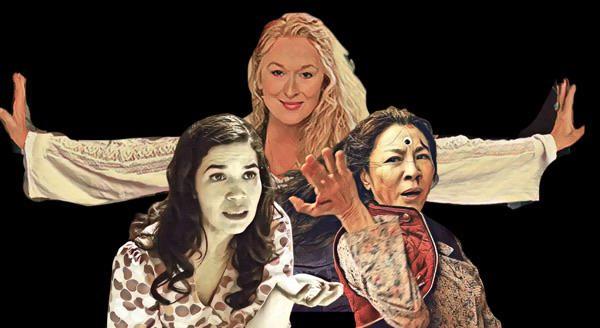
Perhaps that is why so many recent cinematic mothers sparked such immediate identification among female audiences. Not because they are perfect, but because they seem permanently trapped trying to balance affection, guilt, survival, and their own identities in a world that still expects from them a kind of infinite emotional availability.
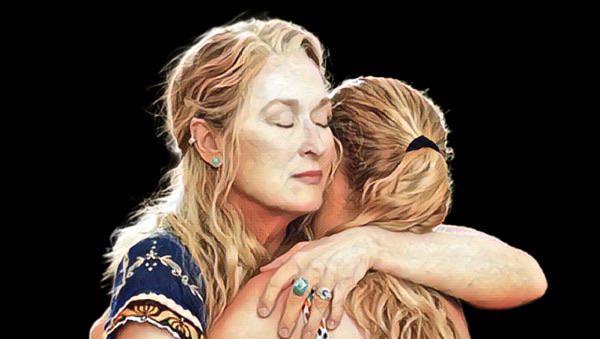
Donna Sheridan, in Mamma Mia!, for example, helped break apart a traditional image of motherhood in mainstream cinema. Played by Meryl Streep, Donna is chaotic, funny, sexually free, impulsive, and deeply loving without needing to exist as an idealized maternal figure. She raises her daughter alone, carries financial and emotional insecurities, yet the film never transforms her into a martyr. There is something almost revolutionary in the way Mamma Mia! allows Donna to remain a whole woman instead of simply “the bride’s mother.” In many ways, she opened space for a cinema more comfortable with imperfect mothers.
Today, Mamma Mia! can be revisited on Prime Video and also frequently appears in digital rental catalogs such as Apple TV and Google Play.
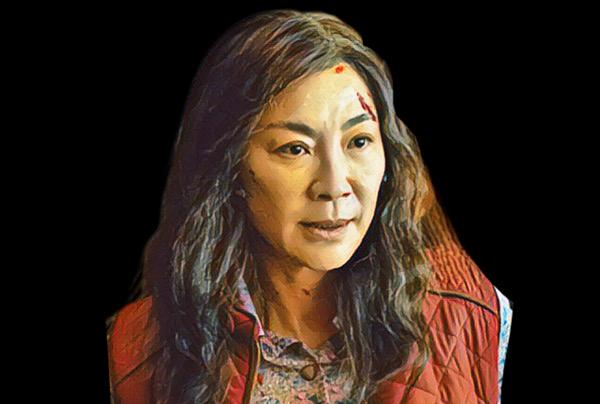
Years later, Evelyn Wang, from Everything Everywhere All at Once, would transform this discussion into something even more radical. Michelle Yeoh, who won the Oscar for the role, plays a mother crushed by feelings of failure, by the emotional distance separating her from her daughter, and by the painful perception that she may never manage to meet either the expectations projected onto her or the ones she created for herself. The entire film functions almost like a metaphor for contemporary female exhaustion. Evelyn manages work, marriage, bureaucracy, family expectations, and generational conflict while trying to survive the idea that her life could have been different. At its core, the multiverse is less about science fiction than about maternal regret.
Everything Everywhere All at Once is available on Prime Video in Brazil.
There is something deeply contemporary in the way recent cinema has started admitting that mothers also feel anger, frustration, and ambivalence. Malorie, from Bird Box, played by Sandra Bullock, begins the story emotionally rejecting motherhood. The film does not hide her discomfort with pregnancy, nor does it immediately romanticize her bond with the children. Love emerges gradually, built through fear and survival instinct. In another era of Hollywood, this character would probably have needed to be “corrected” by the narrative. In Bird Box, she becomes human precisely because she does not instantly conform to the model of the naturally devoted mother.
Bird Box remains available on Netflix, where it became one of the platform’s biggest global phenomena.
Tess Coleman, from Freaky Friday, may be one of the most underestimated characters in this entire conversation. Looking back today, the 2003 comedy feels as though it anticipated debates that would dominate discussions about motherhood years later. Tess is professionally successful, exhausted, constantly judged by her teenage daughter, and unable to find balance between career and emotional presence. When mother and daughter switch bodies, the film does something rare: it forces each of them to experience the weight of the other’s life. What initially seems like a simple generational conflict becomes a discussion about female invisibility, mental overload, and the sensation that mothers are expected to function without ever failing. And now, the 2025 sequel introduces yet another generation into the chaos.
Both Freaky Friday films can be found on Disney+.
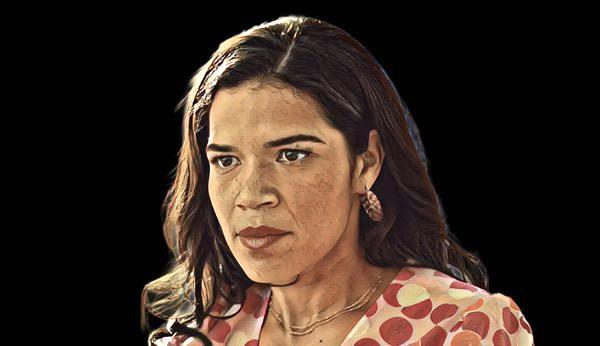
And perhaps no character has synthesized the contradictions of contemporary motherhood as brutally as Gloria in Barbie. In a film initially sold as pop fantasy, America Ferrera ends up delivering one of the most shared and discussed moments in recent cinema by verbalizing something many women immediately recognize: the impossibility of fulfilling every expectation imposed upon them at the same time. Gloria does not appear as an idealized mother, but as a woman trying to survive aging, guilt, emotional distance from her daughter, and a permanent feeling of inadequacy.
Barbie is available on HBO Max.

What is fascinating is realizing that none of these mothers are constructed as classic heroines. Contemporary cinema seems less interested in unreachable mothers and far more fascinated by emotionally real women. Women who love their children but are also afraid of disappointing them. Who try to protect them, but fail. Who still want to exist beyond motherhood. Who sometimes resent their own exhaustion. Who carries guilt even when they do everything right?
Perhaps that is the great transformation of recent years: cinema has finally begun admitting that mothers do not exist solely to sustain other people’s narratives. They also have their own crises, fantasies, regrets, and desires. And that is precisely why these characters remain in the collective imagination for so long. Because they stopped feeling like abstract symbols of perfection and started sounding human.
Descubra mais sobre
Assine para receber nossas notícias mais recentes por e-mail.

