
I never liked Jon Snow’s ending. I never made a secret of it.
Not because he survived. In Game of Thrones, survival itself was already a kind of moral miracle. The problem is that Jon’s exile always felt less like a coherent narrative choice and more like the series desperately trying to balance guilt, symbolism, and political compromise after a final season that felt painfully rushed.
Jon was the classic hero of that story, at least, the closest Westeros would allow to a classic hero. The rejected bastard, the honorable man trapped inside a universe that punished honor, the warrior who literally died trying to protect others and returned carrying a burden impossible to translate. For years, Game of Thrones built its trajectory as that of someone destined to change the world. Then, in its final stretch, it transformed him into a melancholic figure condemned to disappear.
There is something cruelly ironic about all of it: Jon Snow discovers he is Aegon Targaryen, the rightful heir to the Iron Throne, only to end up removed from power, family, and any visible future. The series’s biggest revelation ultimately serves little purpose beyond justifying Daenerys’s collapse.
Maybe that is why the character continues to haunt HBO and Kit Harington years later.
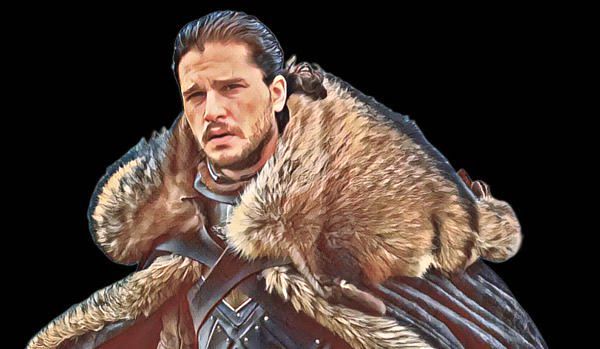
This week, during Motor City Comic Con, Harington once again addressed the Jon Snow spin-off and admitted that the project is currently “on hold.” According to the actor, they spent time trying to develop the series but simply could not find the right story.
What feels most interesting is not necessarily the temporary cancellation itself, but the emotional hesitation that appears in almost every statement Harington gives about Jon.
The actor explained that his main concern has always been “not wanting to do an injustice to the character,” adding that he believes Jon “ended where he was supposed to end.” At the same time, he also admitted that he feels there is “something left to say” about him.
That contradiction has shaped nearly every recent interview Harington has given and perhaps reveals something important about the audience’s relationship with Jon Snow itself. Part of the fandom sees the ending as liberation, as a return to the North, to silence, and to the only place where Jon ever truly seemed to belong. But there is also another reading, one I personally share, that views the ending as a melancholic punishment for the series’s most sacrificial character.
Because Jon Snow was, paradoxically, one of Game of Thrones’ least psychologically explored protagonists. Surrounded by wars, prophecies, betrayals, and dragons, he rarely had space to exist as an individual. The series used him as the moral axis of the narrative while rarely stopping to examine the accumulated trauma of a man who lost family, identity, love, and even his own life while trying to save people who often rejected him.
George R. R. Martin revealed earlier in 2026 that one of the ideas discussed for the spin-off involved exploring Jon living in isolation, struggling with PTSD, distancing himself even from Ghost, and abandoning Longclaw, his sword.
That might finally have been the right story for him.
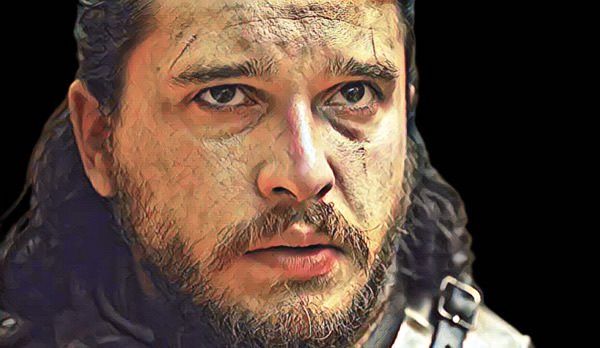
Not another war, not another White Walker apocalypse, and certainly not another battle for the Iron Throne, but a study of what remains of someone after they survive the end of the world and are forced to continue living without a clear purpose.
Because Jon always carried something profoundly tragic within him, he never wanted the role he was given. Unlike Daenerys, Cersei, or even Tyrion, Jon was never driven by power, legacy, or recognition. He was someone constantly pushed into leadership while simply trying to do the right thing. And Game of Thrones transformed that into a kind of inevitable curse.
At its core, the final exile almost functions as punishment for his integrity.
Jon kills Daenerys to prevent a greater massacre, saves Westeros once again, and still ends up banished beyond the Wall while the real political game remains intact. Bran becomes king. Sansa secures the North. Tyrion remains at the center of power. Jon disappears.
There is something deeply bitter about that outcome, especially because the character had become one of contemporary television’s defining faces. For years, Jon Snow was treated as the natural successor to a heroic archetype Hollywood increasingly seemed incapable of producing at the time: vulnerable without losing strength, ethical without seeming naive, and melancholic without losing humanity.
Maybe that is why the debate around his ending never truly died.
And maybe that is exactly what frightens Kit Harington.

Because revisiting Jon Snow also means revisiting the collective trauma surrounding Game of Thrones’ conclusion. It means confronting a character who remains beloved even as his farewell continues to feel deeply controversial. It means trying to answer a question HBO still has not solved: Is there a story capable of justifying his return without damaging what remains of that ending even further?
Right now, apparently, the answer is no.
Still, something is revealing in Harington’s own words. Even while saying he does not want to return now, he also admitted that he feels “older” and perhaps eventually ready to revisit Jon differently in the future.
As though the character is still waiting.
And perhaps he is, because Jon Snow belongs to a rare kind of television character: the kind that remains alive in the collective imagination even after the story officially ends.
Descubra mais sobre
Assine para receber nossas notícias mais recentes por e-mail.


2 comentários Adicione o seu