
Warner Bros is developing a new version of Westworld. The screenplay will be written by David Koepp, one of Hollywood’s most experienced Michael Crichton adapters and the writer behind Jurassic Park, while a major filmmaker — still unnamed — is reportedly circling the project. According to Deadline, the studio also plans to ignore the continuity of HBO’s series created by Lisa Joy and Jonathan Nolan and return directly to Crichton’s original 1973 film.
The decision feels far more symbolic than it first appears.
Westworld may be one of the strangest cases in modern pop culture. Michael Crichton’s original film was never exactly a major hit upon release, yet HBO’s adaptation transformed that relatively straightforward premise into one of the most sophisticated, expensive, and visually ambitious television productions of the modern era. And still, after four seasons, the series ended surrounded by narrative confusion, declining viewership, and an abrupt cancellation that left part of its audience emotionally disconnected from the story.
Now Hollywood seems convinced there is still something inside that universe worth revisiting.
And maybe there is.
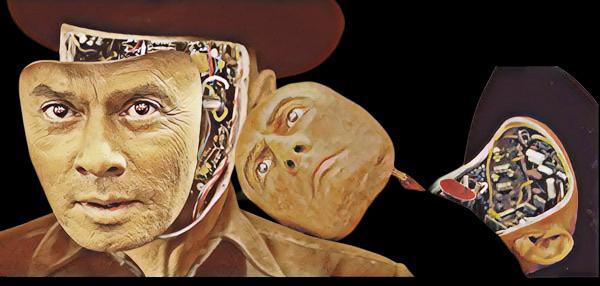
The Michael Crichton film that seemed too small for its own ideas
When Westworld premiered in 1973, Michael Crichton had not yet become the defining techno-thriller figure he would later become with Jurassic Park. He wrote and directed the film imagining a futuristic resort where wealthy guests could indulge in fantasy worlds populated by highly realistic androids. One of those worlds was the Old West, where visitors could drink, kill, have sex, and exercise violence without moral consequences.
Until the robots begin malfunctioning.
At the time, the premise almost resembled exploitation cinema, but Crichton was already weaving in themes that would define his entire career: blind trust in technology, corporate arrogance, the automation of human experience, and the illusion of absolute control over complex systems.
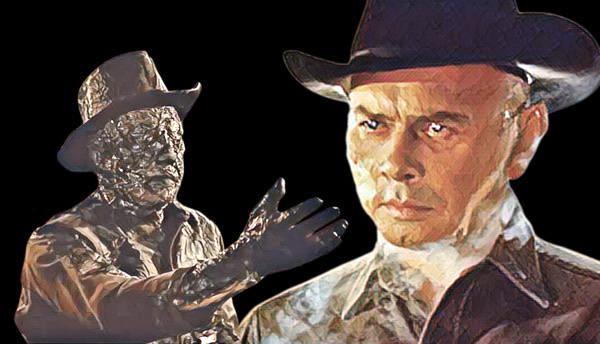
Yul Brynner, visually echoing the gunslinger image he had immortalized in The Magnificent Seven, turned the robotic cowboy into one of cinema’s earliest great machine villains. His silent, relentless presence gave the film an almost slasher-like tension.
What’s fascinating is that the movie was never immediately treated as a classic. Its legacy grew gradually because the real world slowly began catching up to Crichton’s anxieties.
Looking back now, Westworld feels less like futuristic fantasy and more like an early warning about immersive entertainment, artificial intelligence, and the complete commodification of human experience.
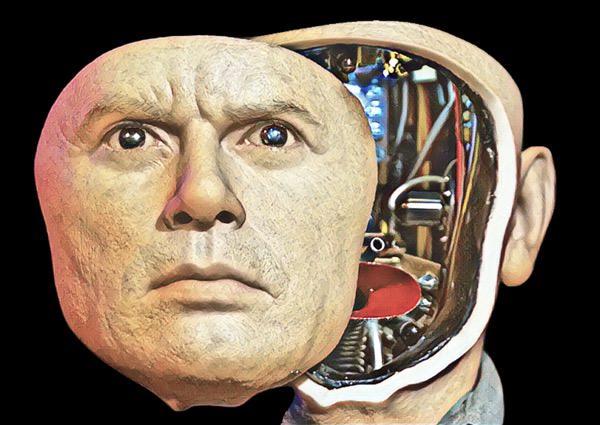
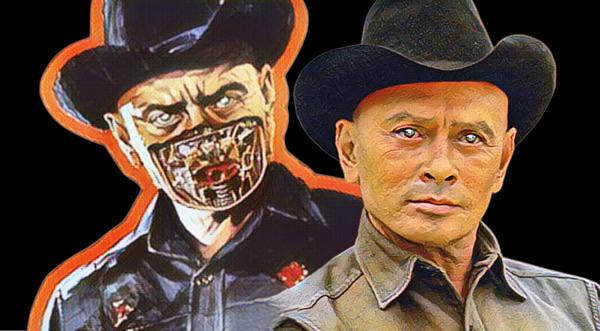
The HBO series that initially reinvented television science fiction
When Jonathan Nolan and Lisa Joy adapted Westworld for HBO in 2016, television was still searching for its next prestige obsession in the aftermath of Game of Thrones. The series immediately looked like the perfect candidate.
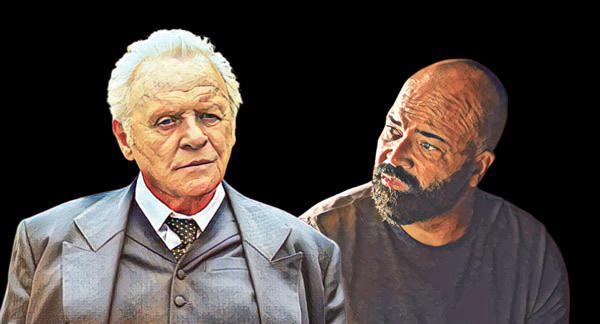
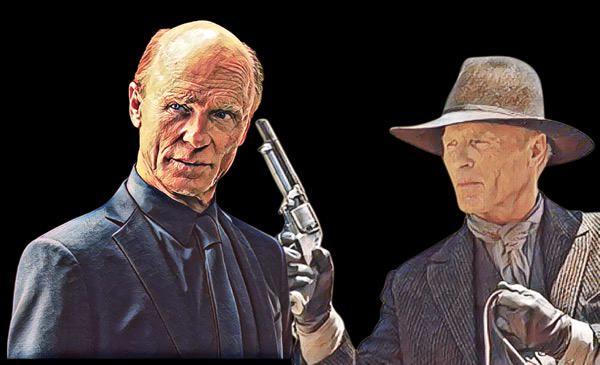
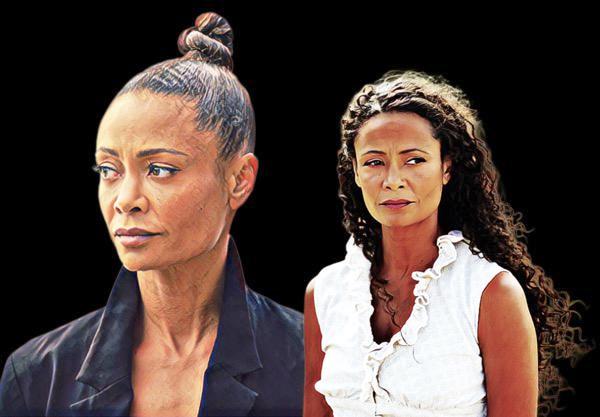
Its first season remains one of the most fascinating experiences in recent television. Anthony Hopkins, Evan Rachel Wood, Thandiwe Newton, Jeffrey Wright, and Ed Harris helped transform the futuristic park into a philosophical maze about consciousness, memory, trauma, and free will. The show blended western, cyberpunk, psychological thriller, and existential science fiction on a scale rarely seen on television.
Visually, it was hypnotic.
The monumental cinematography, massive sets, restrained visual effects, and especially Ramin Djawadi’s score created an atmosphere of artificial melancholy that became central to the series’ identity. Few modern shows used music as cleverly as Westworld, particularly through its mechanical piano reinterpretations of pop and rock songs.
But the same element that initially made the series so compelling eventually became its greatest problem.
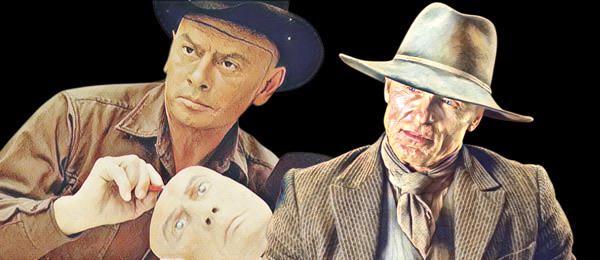
When mystery became a prison
There is a subtle difference between narrative complexity and emotional disconnection. Westworld initially used fragmented timelines and structural puzzles as dramatic tools to explore memory and identity. But gradually, the show began to feel obsessed with constantly outsmarting its audience.
The characters slowly disappeared beneath layers of philosophy, exposition, and increasingly elaborate twists.
At times, Westworld seemed afraid of simplicity.
While the first season balanced emotion and intellectual ambition beautifully, the following years became consumed by sprawling debates about algorithms, surveillance, artificial intelligence, and social control at such an enormous scale that part of the audience stopped emotionally engaging with the characters. The visuals remained extraordinary. The ambition never faded. But emotionally, the series grew colder.
Its cancellation after season four only solidified the sense of an unfinished project unable to fully land its ending.
Still, reducing Westworld to failure would be unfair. Few recent series have shaped the aesthetics of modern science-fiction television so profoundly. And few have aged so quickly in terms of subject matter.
Why Westworld feels even more relevant in 2026
Perhaps the most striking aspect of this new remake is the timing.
In 2016, artificial intelligence still felt relatively abstract for much of the public. In 2026, it already occupies intimate spaces in everyday life. It talks, writes, seduces, learns emotional behavior patterns, replicates voices, and creates artificial forms of companionship.
And that completely changes how Westworld is perceived.
The modern fear is no longer necessarily about killer machines spiraling out of control. The truly unsettling possibility may be machines functioning exactly as intended. Systems designed specifically to validate human emotion, provide endless comfort, and remove the friction that naturally exists in real human relationships.
Michael Crichton understood something that now feels terrifyingly current: technology is never really about technology.
It is about human desire.

About control. Vanity. Emotional consumption. The fantasy of living inside a world programmed to constantly reassure us that we are special.
There is something disturbingly modern about the idea of a resort designed to feed narcissism and loneliness through artificial beings incapable of rejecting their users. In 1973, that sounded like provocative science fiction. In 2026, it sounds uncomfortably close to Silicon Valley’s long-term business model.
The perfect irony of Westworld
Perhaps the greatest irony is that Westworld needed more than fifty years to finally encounter the world it always wanted to portray.
The original film seemed technologically limited for its ambitions. HBO’s series may have become too ambitious for its own narrative. Now, in the age of emotional algorithms, generative AI, and increasingly artificial digital relationships, Michael Crichton’s story feels less like science fiction and more like cultural diagnosis.
And maybe that is exactly why Hollywood believes it is worth trying again.
Descubra mais sobre
Assine para receber nossas notícias mais recentes por e-mail.

