
Betty Boop turns 95 in 2026, carrying a rare achievement for any pop culture character: she remains instantly recognizable even to people who have never watched a single one of her original cartoons. The face, the enormous eyes, the hoop earrings, the tiny black dress, and the Boop-Oop-a-Doop survived classic Hollywood, television, the collapse of the old animation studios, America’s shifting moral standards, and even the disappearance of the cultural universe that created her in the first place.
Perhaps because Betty Boop was never just a cartoon.
She has always functioned as a strange mirror reflecting America’s relationship with femininity, desire, spectacle, and consumer culture. And perhaps that is exactly why she continues to feel both fascinated and uncomfortable at the same time.
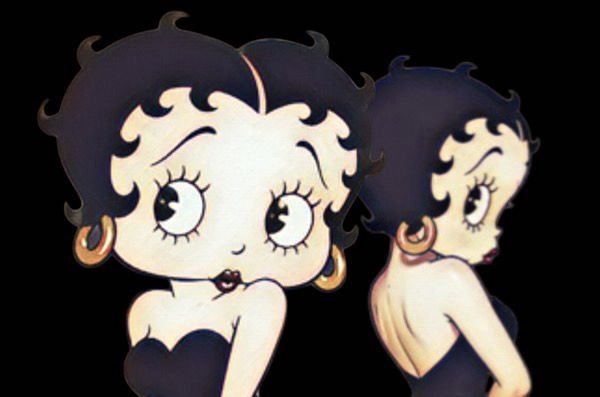
The character’s origins are already filled with contradictions. When she first appeared in “Dizzy Dishes” in 1930, Betty was not entirely human. She emerged as a kind of anthropomorphic poodle inside the Fleischer Studios’ Talkartoons series, created by Max Fleischer and initially designed by Grim Natwick. Gradually, however, that hybrid figure evolved into the cartoon woman who would eventually define an entire era of American animation.
The dog ears became earrings. The snout turned into a tiny human nose. The body began emphasizing hips, legs, and cleavage while the face retained almost doll-like proportions. The result was an extremely calculated combination of innocence and sensuality, adulthood and childishness, sophistication and fantasy, something that already seemed unsettling even in the 1930s.
In a legal case from the era, Betty herself was described as a mixture of “the childish and the sophisticated.” Perhaps no definition captures her more accurately.
Because Betty emerged precisely at the moment when the United States was trying to process the cultural impact of flappers, women who cut their hair short, occupied nightlife spaces, danced to jazz, smoked in public, and rejected traditional expectations of femininity. Long before female pop culture characters were discussed through contemporary feminist lenses, Betty already existed as a contradictory symbol of both freedom and objectification.
She became one of animation’s first explicitly sexual female characters.
While other female cartoon figures still functioned mostly as softened or infantilized versions of male protagonists, Betty wore high heels, tiny dresses, and garters while frequently appearing in stories filled with voyeurism, harassment, and male desire. The Fleischer cartoons carried a distinctly adult energy, mixing jazz, surrealism, eroticism, and bizarre humor in a way that now feels very distant from the contemporary idea of “children’s animation.”
And perhaps no song explains that better than “Boop-Oop-a-Doop,” released in 1932.
In the cartoon, Betty works in a circus and suffers direct harassment from the ringmaster, who threatens her career if she refuses his advances. As she tries to escape him, she sings, pleading for him not to “take her boop-oop-a-doop away.” Watching the cartoon today feels almost startling because the sexual subtext barely remains subtext. Decades later, many critics revisited the short as an astonishingly early representation of sexual harassment within entertainment culture.
At the same time, there is something undeniably problematic about Betty Boop.
She was built inside a male fantasy framework, designed to appear simultaneously sexy and infantilized, independent yet vulnerable, provocative yet still “cute” enough to remain socially acceptable. Perhaps that tension explains why Betty continues generating radically different readings even today. Depending on the perspective, she can appear either as a pioneer of female autonomy or as a classic product of industrialized male objectification.
And then there is the racial dimension.
Because Betty Boop was always visually presented as a white character within classic American animation. Still, the character has never escaped the cultural appropriation debates surrounding her origins.
Betty’s primary inspiration was likely Helen Kane, the white singer famous in the late 1920s for her “boop-oop-a-doop” style, babyish voice, and performative mixture of innocence and exaggerated sensuality. Kane sued Max Fleischer and Paramount in 1932, arguing that Betty Boop was essentially a direct caricature of her.
The trial, however, exposed something far more complicated.
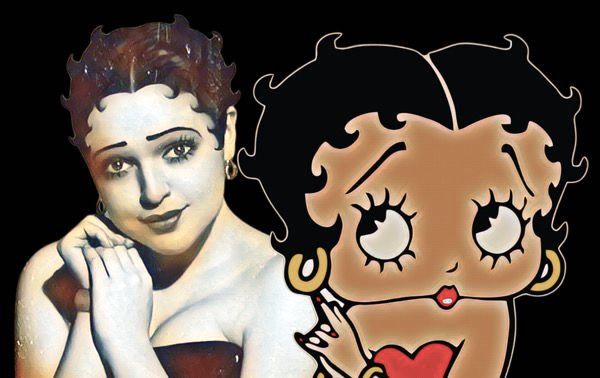
During the case, the name of Baby Esther Jones emerged, a young Black performer who had already been using similar vocalizations, scat singing, and mannerisms before Helen Kane’s rise to fame. Suddenly, the discussion stopped being simply “Did Betty copy Helen Kane?” and became a much larger portrait of how American entertainment repeatedly transformed Black artistic expression into commercially acceptable white mainstream products.
The judge ultimately ruled against Kane, arguing there was insufficient evidence that the style belonged exclusively to her. But the lawsuit remained a historical snapshot of America’s complicated relationship with jazz, race, appropriation, and entertainment culture.
Decades later, Betty still carries all of that inside her own image.
Perhaps that is why she feels simultaneously modern and deeply uncomfortable.
When the Hays Code strengthened Hollywood censorship in 1934, Betty was immediately domesticated. Her dresses became more conservative, her sexuality was softened, her movements became less suggestive, and the character gradually shifted into a far more “respectable” figure. The free, sexualized flapper slowly gave way to a more acceptable image of the hardworking young woman or future housewife aligned with America’s new moral standards.
Many critics still consider Betty’s earliest years her most creative because they carried the distinctly pre-Code energy of the Fleischer Studios, filled with jazz, adult humor, surreal imagery, and strange eroticism.
Betty was fundamentally a character of the night, and perhaps that explains why she aged differently from so many other classic animation icons. As the United States moved away from the world of flappers and entered a more moralized and family-oriented culture, Betty increasingly felt tied to a world that officially was supposed to disappear.
Except she never disappeared. Instead, she was rediscovered.
During the 1980s, Betty Boop returned as a retro symbol. Her face began appearing on clothing, makeup, posters, watches, handbags, mugs, dolls, and fashion campaigns. Many people started consuming Betty without even knowing she originated in the 1930s cartoons. She stopped being merely an animated character and became a fully intergenerational consumer icon.
Very few animated figures have crossed generations that way. The grandparents who watched Betty during the Great Depression probably never imagined their grandchildren and great-grandchildren would still be buying her merchandise nearly a century later.
An important part of that survival also came from the women who voiced her.
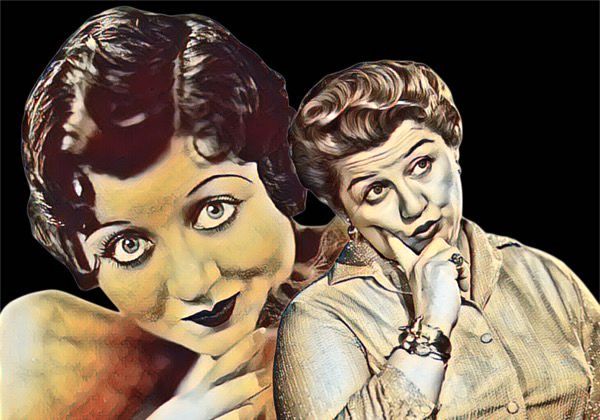
The actress most associated with Betty Boop remains Mae Questel, who took over the role in 1931 after gaining attention precisely for performing Helen Kane impersonations in talent contests. Questel would become Betty’s definitive voice for decades while also voicing Olive Oyl in the Popeye cartoons. There is something almost circular about that story: the woman who immortalized Betty began her career imitating the singer who sued Betty’s creators for allegedly imitating her.
And perhaps that circularity explains the character herself.
Betty Boop has always been a mixture of references, fantasies, appropriations, industrial desires, and cultural reinventions. She crossed cinema, television, comics, advertising, Broadway musicals, video games, and even opportunistic horror adaptations that emerged after her earliest appearances entered the public domain.
Because yes: in 2026, Betty Boop’s earliest versions officially enter the public domain in the United States.
But even that is complicated.
The rights to the cartoons passed through decades of corporate disputes involving Paramount, Republic, Viacom, and multiple media conglomerates. At the same time, Betty’s name and image remain protected by trademarks tied to Fleischer Studios and international licensing agreements that transformed the character into a massive global merchandising empire.
In other words, Betty partially entered the public domain while still being carefully managed as a global brand, and perhaps nothing symbolizes this new phase better than Quinta Brunson’s decision to revisit the character in cinema.
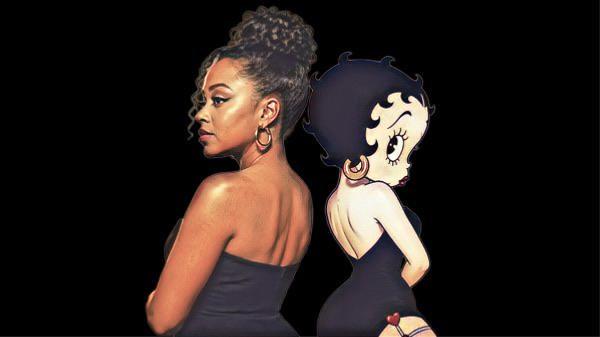
The choice feels particularly compelling because Quinta built her career balancing humor, social commentary, and humanity without turning everything into simplistic speeches. “Abbott Elementary” proved that clearly. More importantly, the new project does not appear interested in treating Betty merely as vintage nostalgia, but rather as a character deeply connected to conversations about authorship, commercial exploitation, public identity, and female autonomy.
Ultimately, perhaps Betty Boop remains alive because she never became fully resolved.
She simultaneously represents freedom and exploitation. Femininity and fetishization. Black cultural influence and industrial whitening. Innocence and eroticization. Nostalgia and discomfort.
Very few characters survive 95 years while remaining this contradictory.
And perhaps it is precisely that contradiction that makes her impossible to abandon.
Descubra mais sobre
Assine para receber nossas notícias mais recentes por e-mail.


1 comentário Adicione o seu