
When people talk about Marilyn Monroe, the conversation usually begins with the dresses, the platinum blonde hair, or the way Hollywood transformed Norma Jeane into a myth. But there is a quieter figure behind that construction, someone who remained present throughout nearly all of the actress’s most iconic years: Allan “Whitey” Snyder, the makeup artist who helped create — and preserve — Marilyn Monroe’s cinematic face.
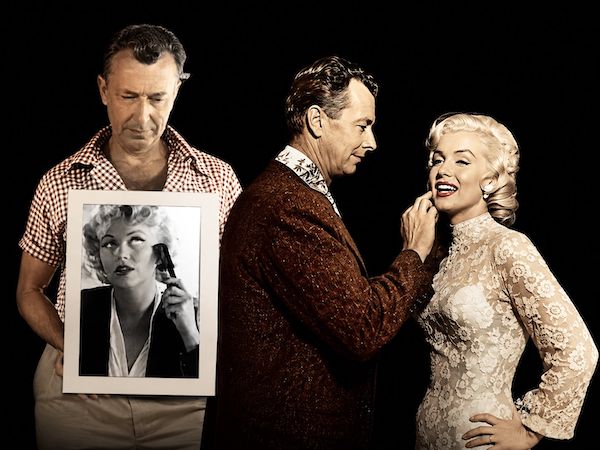
Whitey Snyder was already a respected professional at 20th Century Fox when Marilyn was still trying to find her place in Hollywood in the late 1940s. A product of the classic studio system, he belonged to a generation of makeup artists who understood makeup not simply as cosmetics, but as a combination of photography, optical illusion, and light engineering. This was an era when cinema depended on handcrafted techniques to “translate” a face onto the enormous Technicolor cameras of the time.
The two met inside the Fox studio system. Marilyn was not yet quite the Marilyn Monroe the world would come to know a few years later. The blonde hair was, of course, and so was the magnetic presence in front of the camera, but the definitive image of the star was still being formed. Snyder quickly realized something many executives would take longer to understand: Marilyn did not work when people tried to harden her.
While other actresses of the era were made up to appear sophisticated, distant, or flawless, Whitey began taking Marilyn’s image in another direction. The goal was to create luminosity, softness, and vulnerability on camera. Instead of turning Marilyn into a classic femme fatale, he helped build a face that felt glamorous and emotionally accessible at the same time.
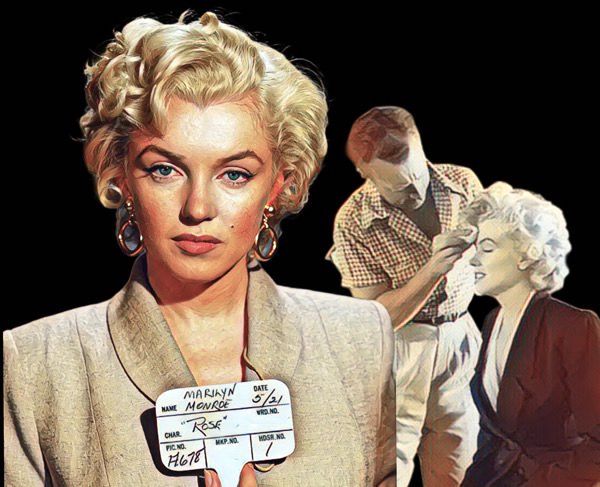
Their partnership grew quickly because Marilyn trusted him. That may sound like a small detail, but it was not. Hollywood in the 1950s was deeply invasive toward actresses, especially Marilyn. She was constantly surrounded by men trying to manage her appearance, her career, her body, and even her public personality. Whitey occupied a different space. He understood the importance of image without treating Marilyn solely as a product.
The two would work together for more than a decade, throughout the most important years of her career, from Niagara to Some Like It Hot and The Misfits. Snyder became a constant presence on film sets, photoshoots, and public appearances. Marilyn even specifically requested him for various productions, whether the studio required it or not.
Much of what now simply feels like “Marilyn’s face” was refined by Whitey Snyder.
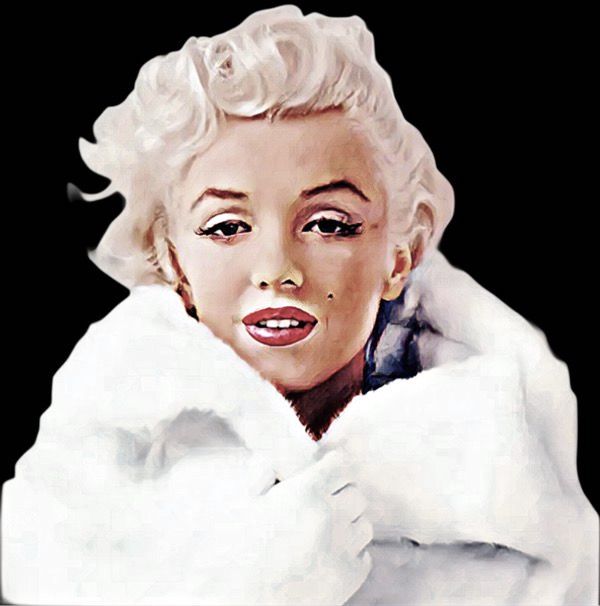
He helped establish the luminous skin that became one of her signatures. To achieve it, he used thin layers of oily products and strategically placed petroleum jelly on certain areas of the face to reflect light in front of the cameras. Decades before contemporary beauty culture became obsessed with “glow,” Snyder already understood that controlled shine made a face appear more alive on film.
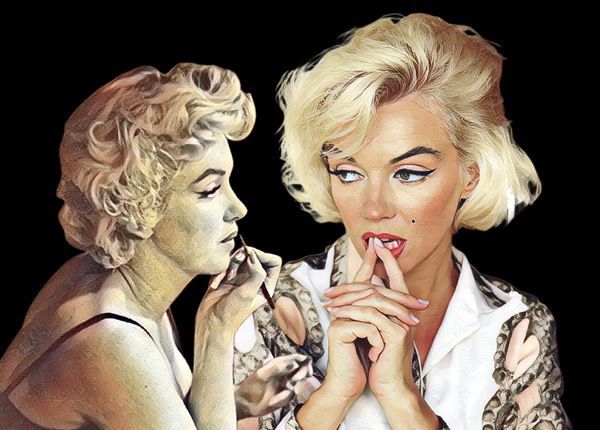
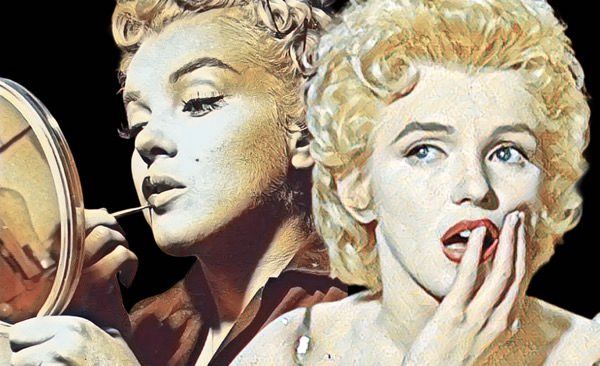
Another famous technique involved Marilyn’s lips. She did not wear just one iconic shade of red lipstick. Whitey layered lighter colors in the center of the lips and darker tones toward the edges to create optical depth. The effect made her lips appear fuller and more dimensional without any cosmetic procedures — a technique still repeated today in editorials, red carpets, and makeup tutorials.
Her eyeliner was equally calculated. Snyder subtly extended the outer corners of Marilyn’s eyes and used soft shadow beneath the lower lash line to enlarge the eyes for the camera. Instead of harsh lines, the result was almost smoky, preserving the delicate, dreamlike quality that became inseparable from Marilyn’s public image.
And perhaps one of his most modern techniques was precisely the way he avoided excessive perfection. Marilyn’s makeup had texture, light, dimension, and natural shadows. In today’s era of filters and flattened digital skin, her face still appears remarkably alive because Snyder understood something essential about cinematic beauty: a face needs to breathe in front of the camera.
Marilyn Monroe: a full guide to her films, legacy, and Hollywood
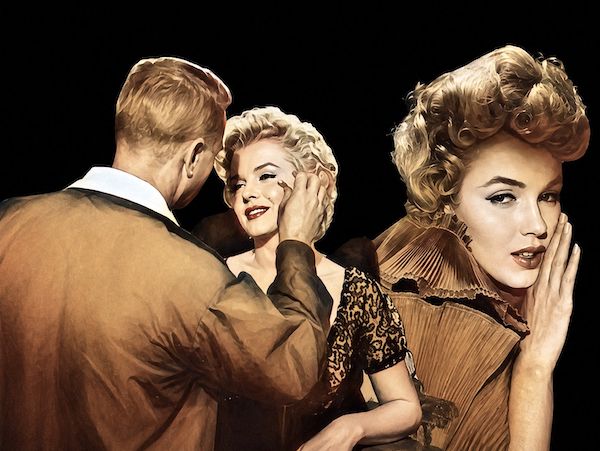
Other makeup artists also passed through Marilyn’s career. Ern Westmore, from the legendary Westmore family, participated in Norma Jeane’s early transformation within Fox. There were also different artists connected to specific shoots and publicity campaigns. But Whitey Snyder occupied a singular place because his relationship with Marilyn extended beyond the standard studio dynamic.
There is even a famous story between the two that helps explain the level of intimacy and trust in their relationship. Marilyn once joked that if she died before him, she wanted Whitey to do her funeral makeup. He replied with the dark humor typical of old Hollywood crews: “Sure, just leave the body warm.” Later, she reportedly had a Tiffany money clip engraved with a dedication referencing the joke.
The story feels unsettling today, but it also reveals something about the dynamic between them: Whitey belonged to the small circle of people around whom Marilyn could briefly let go of the public character she constantly had to perform.
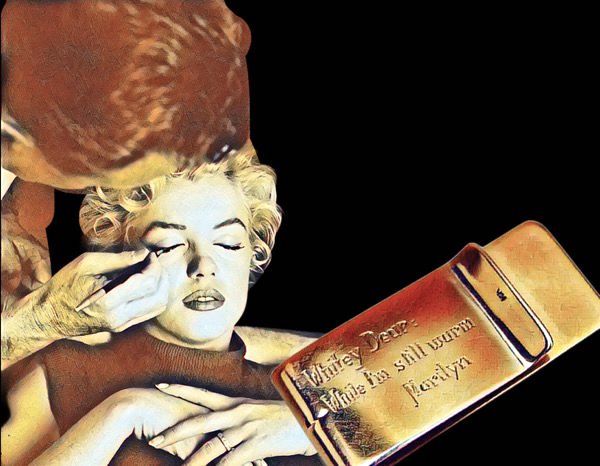
Perhaps nothing symbolizes that more painfully than the fact that he was the one who applied Marilyn Monroe’s mortuary makeup after her death in August 1962. Whitey also served as one of the pallbearers at her funeral.
The man who helped create one of the most recognizable faces of the twentieth century was also responsible for the final time the world would see it.
Whitey Snyder died decades later, on April 16, 1994, at the age of 79. He continued working on numerous film and television productions after Marilyn’s death, but he never stopped being associated with her. And perhaps that says something important about both of them: not only because Snyder helped create Marilyn Monroe’s image, but because he understood early on that the image itself was far more complicated, vulnerable, and labor-intensive than Hollywood ever admitted.
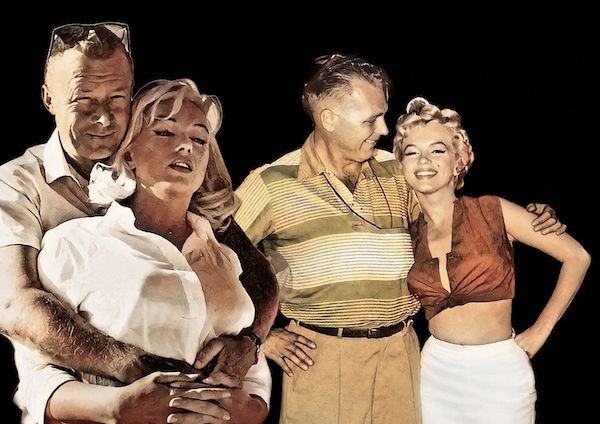
More than six decades later, Whitey Snyder’s influence remains everywhere. Soft contouring is meant to appear natural. In strategically luminous skin. In lips built through optical depth. In the idea that makeup does not need to erase humanity to create glamour. And above all, in the understanding that Marilyn Monroe’s face was never simply beauty: it was a carefully constructed visual language designed to survive both the camera and the crushing weight of the myth itself.
Descubra mais sobre
Assine para receber nossas notícias mais recentes por e-mail.


1 comentário Adicione o seu