
The enormous success of Michael demonstrated something that may never have stopped being true: Michael Jackson remains one of the most powerful figures in popular culture. The biopic became a global phenomenon, boosted his music catalog across streaming platforms, and introducing his work to millions of young people who were not yet born when the singer died in 2009. On social media, particularly TikTok, videos recreating his choreography, analyzing his performances, and rediscovering his songs once again accumulated millions of views. For a new generation, Michael Jackson ceased to be merely a historical figure and became a living presence in pop culture once more.


For a few months, it seemed as though the narrative had returned to the place where fans and admirers always wanted it to be. The focus was once again on the artist who revolutionized the music industry, redefined the music video, transformed live performances into global spectacles, and created some of the most influential albums in the history of popular music. The Michael Jackson emerging from the film was the one the world had learned to love.
Yet there is an obvious reason why the biopic ends where it does. The film concludes before reaching the period that permanently transformed public perception of the singer and continues to provoke debate more than three decades later. By choosing not to deeply explore the child sexual abuse allegations that began to follow his name in the 1990s, the production leaves aside the most controversial chapter of his life.
The space created by that omission began to be filled almost immediately. While Disney enjoyed the benefits of the biopic’s success, competing platforms started revisiting the other side of the story. Amazon once again highlighted Leaving Neverland, the documentary that caused a major cultural impact in 2019 by presenting the accounts of Wade Robson and James Safechuck. Now Netflix has entered the conversation with Michael Jackson: The Verdict, a documentary series released exactly twenty years after the trial that acquitted Jackson of all criminal charges.
What distinguishes The Verdict is its approach. Unlike Leaving Neverland, which centers on the experiences of the accusers, the new series attempts to reconstruct the 2005 trial as a historical record. Its filmmakers argue that despite the unprecedented media coverage and worldwide attention, very few people truly know what happened inside the courtroom. Because cameras were not allowed during the proceedings, the public received only fragments of the story, filtered through commentators, journalists, and often contradictory headlines. Two decades later, the series seeks to revisit that moment through the testimony of those who actually participated in the events.
Among those interviewed are prosecutor Ron Zonen, defense attorney Mark Geragos, jurors who deliberated the case, investigators, witnesses, and journalists who followed the proceedings firsthand. Martin Bashir, the journalist behind Living with Michael Jackson, also appears in the series. The filmmakers’ stated goal is to allow audiences to revisit the facts presented in court and gain a clearer understanding of the arguments advanced by both the prosecution and the defense.

The timing of the release could hardly be more significant. The success of Michael helped restore fascination with the artist. The Verdict, meanwhile, serves as a reminder that there is a part of his story that never truly disappeared and perhaps never will.
The allegations against Michael Jackson did not begin in 2005. The first major crisis erupted in 1993, when Jordan Chandler, then 13 years old, accused the singer of sexual abuse. The case generated enormous media attention and cast doubt for the first time on the carefully crafted public image Jackson had built over decades. Jackson consistently denied the allegations, but the civil case ended with a multimillion-dollar financial settlement. His defenders point out that civil settlements do not constitute admissions of guilt and are frequently used to avoid lengthy legal battles. Critics, however, argue that the settlement left important questions unanswered and allowed suspicion to linger.
The controversy returned with even greater intensity in 2003 following the broadcast of Martin Bashir’s documentary. The footage showed Jackson discussing childhood, friendship, and his relationships with children, provoking widespread public reaction. Shortly afterward came the allegations involving Gavin Arvizo, which led to the criminal trial held in 2005.
The proceedings became a global spectacle. Journalists from around the world descended on Santa Barbara to cover every development. Fans lined up daily in hopes of obtaining seats inside the courtroom. Every move Jackson made, every witness statement, and every legal strategy were dissected by the media. When the jury ultimately acquitted Michael Jackson on all charges, many believed the story had finally come to an end.
That was not what happened.
The years that followed demonstrated that legal acquittal would not be enough to erase the doubts that had already taken root in public opinion. New journalistic investigations emerged. Former employees gave interviews. Witnesses revisited earlier testimony. The debate remained open.
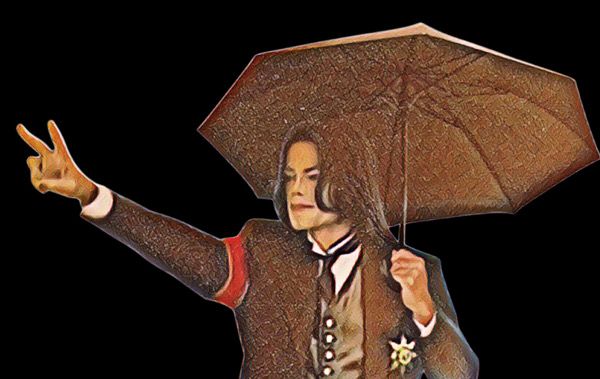
It was within this context that Leaving Neverland became one of the most significant moments in the discussion. The documentary presented the accounts of Wade Robson and James Safechuck, two men who had publicly defended Michael Jackson for years before later alleging that they had been abused as children. The documentary’s impact stemmed from the fact that it did not function as a courtroom proceeding or a criminal investigation. Instead, it focused on the long-term psychological consequences that the men said they continued to carry decades later.
For me, Leaving Neverland was profoundly unsettling. Not because it provided definitive proof capable of resolving such a complicated issue, but because it offered an emotional portrait that was difficult to dismiss. At the same time, any honest assessment must acknowledge that Michael Jackson never had the opportunity to respond to those specific allegations. Having died in 2009, he could not challenge the accounts, present his version of events, or participate in the debate that followed.
That impossibility is precisely what makes his legacy so unique. There are public figures whose guilt is conclusively established. There are others whose innocence becomes widely accepted. Michael Jackson remains trapped in a far more uncomfortable space, where a criminal acquittal coexists with decades of allegations, financial settlements, conflicting testimonies, documentaries, and interpretations that seem incapable of producing consensus.
Perhaps that is why it will be so fascinating to watch how the generation that has just discovered Michael Jackson through film and social media reacts. Many of these young fans first encountered the artist behind Thriller, Billie Jean, Smooth Criminal, and Man in the Mirror. They discovered the extraordinary dancer, the revolutionary performer, and the pop icon. Now they will also encounter the other narrative, the one built around lawsuits, allegations, documentaries, and testimonies that continue to be debated more than thirty years later.

We live in an era that prefers quick answers and simple categories. We like to divide the world into the innocent and the guilty, heroes and villains, people worthy of admiration and people deserving rejection. Michael Jackson continues to challenge that impulse because his artistic importance remains too enormous to erase, while the allegations remain too serious to ignore.
Perhaps that is precisely why his story continues to return to the center of popular culture. Not only because he was one of the most important artists of the twentieth century, but also because he has become one of the most enduring moral dilemmas in the history of modern entertainment.
In the end, Michael Jackson may have escaped criminal conviction, sold hundreds of millions of records, and permanently transformed popular music. What he never managed to defeat was doubt. Seventeen years after his death, that doubt continues to accompany his name with the same persistence that accompanies his music. And all signs suggest it will remain there as future generations continue trying to answer a question that may never have a definitive answer.
Descubra mais sobre
Assine para receber nossas notícias mais recentes por e-mail.

