
Few characters in crime fiction have survived the passage of time as successfully as Hercule Poirot. More than a century after his first appearance, Agatha Christie’s legendary detective continues to inspire film, television, and streaming adaptations, captivating generation after generation of readers and viewers. Now, the BBC has decided to take a new approach to keeping that legacy alive: introducing the youngest version of Poirot ever seen on screen.
The broadcaster has announced that Edward Bluemel, 33, will star in Hercule, a new drama produced by Mammoth Screen and Agatha Christie Limited. The series will follow the character’s arrival in England and his early years there, long before he became the world-famous detective audiences know today.
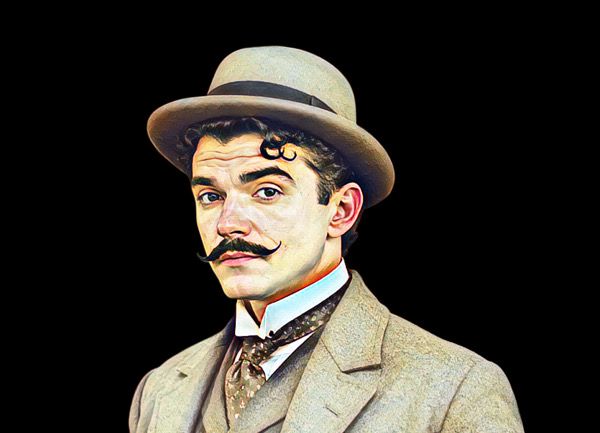
The decision represents a significant shift in how Poirot has traditionally been portrayed. Although Agatha Christie never specified his exact age, the character was already a retired police officer when he first appeared in The Mysterious Affair at Styles in 1920. Since then, most adaptations have favoured older versions of the detective.
David Suchet, still regarded by many as the definitive Poirot, was 42 when he first took on the role in ITV’s beloved adaptation in 1989. Albert Finney, who received an Academy Award nomination for Murder on the Orient Express in 1974, was 38. Kenneth Branagh and Peter Ustinov also portrayed well-established versions of the detective. Bluemel, therefore, becomes the youngest actor ever to play Poirot in a major screen production.
Christie herself later admitted that aging her detective had been a narrative mistake. In her autobiography, she acknowledged that she never imagined she would continue writing Poirot stories for more than fifty years. As a result, the character eventually became trapped in an impossible timeline.
“What a mistake I made there. The result is that my fictional detective must really be well over a hundred by now,” she wrote.
The new series appears determined to solve that problem by returning to the beginning of Poirot’s story. Described by the BBC as both an intimate study of Hercule Poirot and an epic portrait of Britain between the wars, the production will explore aspects of the character rarely seen in previous adaptations. These include the beginnings of his friendship with Captain Arthur Hastings, his first encounters with Scotland Yard’s Inspector James Japp, and the formative experiences that shaped the man behind the detective.
The structure of the series is equally intriguing. Rather than adapting a single novel, Hercule will draw on three of Christie’s most celebrated mysteries across six episodes, functioning simultaneously as an adaptation and an origin story. According to the BBC, the series will place a “magnifying glass” over these cases while charting Poirot’s transformation into the investigator the world would come to know.

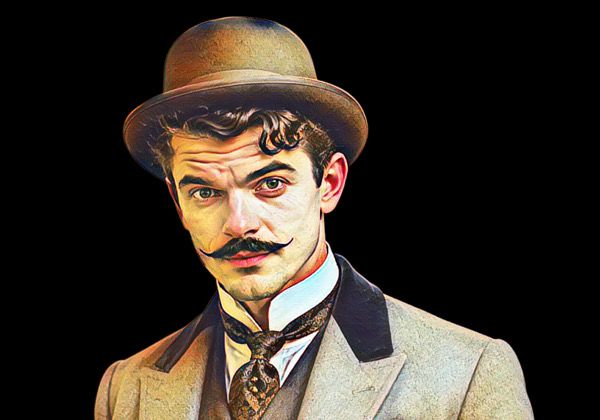
That may be the project’s most radical element. Christie never wrote a formal origin story for Poirot. Unlike many modern fictional icons who are constantly revisited through prequels, reboots, and reinventions, the detective always arrived fully formed. Readers never witnessed his development; they simply followed his investigations.
For that reason, the BBC’s approach represents a relatively bold gamble. The challenge will not simply be solving crimes but convincing audiences that there is a compelling story to tell before Poirot becomes the Poirot everyone already knows.
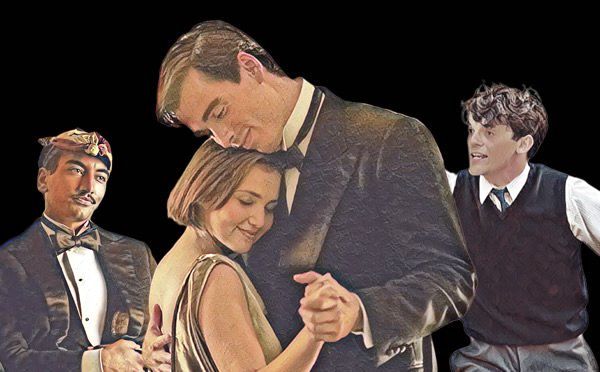
Edward Bluemel’s casting also appears to be part of a broader strategy. The actor is no stranger to Agatha Christie’s world. In 2026, he was part of the principal cast of The Seven Dials Mystery, Netflix’s adaptation overseen by Agatha Christie Limited. His selection for Hercule suggests that those responsible for preserving Christie’s legacy had already identified him as a performer capable of introducing that universe to a new generation of viewers.
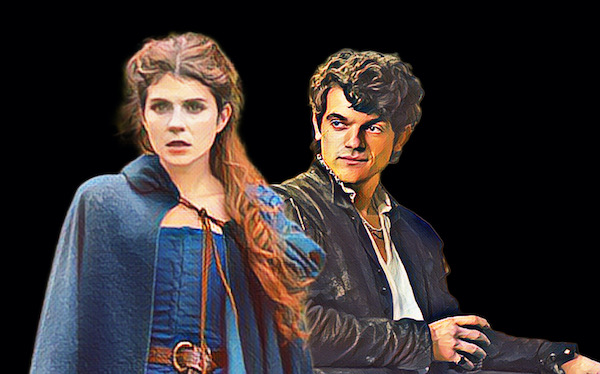
In recent years, Bluemel has built a strong reputation across British and international television. His credits include My Lady Jane, Sex Education, Killing Eve, and A Discovery of Witches. More recently, he also drew attention on the London stage opposite Ncuti Gatwa in Born With Teeth, a play imagining a relationship between William Shakespeare and Christopher Marlowe.
Perhaps it is precisely that combination of experience, youth, and contemporary appeal that attracted the producers. James Prichard, Agatha Christie’s great-grandson and the guardian of her literary estate, made it clear that one of the goals of the new series is to bring Poirot to younger audiences. After decades of seeing his great-grandmother’s stories captivate successive generations, he believes the time has come to introduce the detective to a new wave of viewers.
His comments are revealing because they expose a concern that usually remains unspoken in adaptations of classic literary characters. Poirot’s longevity depends on his ability to keep finding new readers and viewers. After David Suchet, many felt that the detective had already found his definitive screen incarnation. Kenneth Branagh’s films divided opinion, while The ABC Murders, starring John Malkovich in 2018, received a considerably cooler reception. At some point, every enduring fictional icon faces the same question: how do you remain relevant without simply repeating what has already been done?
The BBC appears to have found its answer. Rather than searching for another David Suchet, it has chosen to search for a Poirot audiences have never seen before.
Whether that gamble succeeds remains to be seen. But there is something genuinely fascinating about the idea of following Hercule Poirot before he became Hercule Poirot. More than a simple recasting, Hercule represents an attempt to reimagine one of literature’s most famous detectives for a generation that may never have watched the classic adaptations.
Filming, primarily based in Liverpool, is set to begin this year, with the series expected to premiere in 2027 on the BBC in the UK and BritBox in North America. Should ratings prove strong enough, additional seasons are already being considered.
More than a hundred years after his creation, perhaps Poirot’s greatest mystery is no longer who committed the crime. It may be how many times he can continue reinventing himself.
Descubra mais sobre
Assine para receber nossas notícias mais recentes por e-mail.
 miscelana.com