
At some point, Hollywood always seems to return to the same titles. No matter how many decades pass, certain films continue to exert a peculiar fascination over studios. The latest example is The Blair Witch Project.
Lionsgate has announced a new version of the 1999 classic, set for release on September 24, 2027. The film will be directed by Dylan Clark, a filmmaker who first gained attention on YouTube before breaking through with the acclaimed horror short Portrait of God. Behind the scenes, two of the biggest forces in modern horror are joining forces: Jason Blum’s Blumhouse and James Wan’s Atomic Monster.
But the announcement raises an unavoidable question: how do you remake a film whose greatest strength was being something entirely new?
When The Blair Witch Project premiered in 1999, it did not feel like a movie. It felt like an event. Made on a microscopic budget, it followed three student filmmakers who vanished while investigating the legend of the Blair Witch. Audiences watched shaky footage, saw unknown actors using their real names, and encountered a marketing campaign that blurred the line between fiction and reality.
Today, that seems commonplace. In 1999, it was revolutionary.
Long before social media transformed everyday life, the film used the internet to create a completely new kind of experience. Some viewers genuinely believed the students had disappeared. Viral marketing did not yet have a name, and The Blair Witch Project helped invent it.
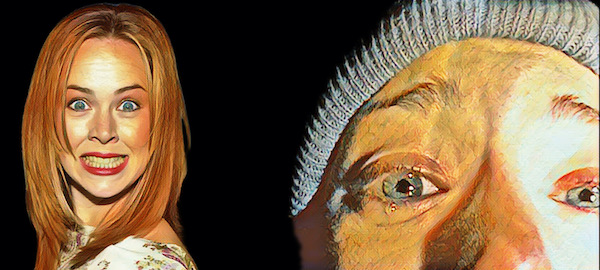
The result was a cultural phenomenon that grossed nearly $250 million worldwide and transformed found footage into a horror subgenre that would later inspire films such as Paranormal Activity, REC, and Cloverfield.
But perhaps its greatest achievement was proving that the audience’s imagination can be far more terrifying than any special effect.
Ironically, that is exactly where every attempt to revive the franchise has struggled.
Book of Shadows: Blair Witch 2, released in 2000, abandoned the original formula and was met with a lukewarm response. In 2016, Blair Witch attempted to modernize the mythology but came nowhere close to matching the cultural impact of the first film.
Now, the 2027 production promises a “new vision” of the Blair Witch mythology. There is also an intriguing twist: original creators Eduardo Sánchez and Daniel Myrick are returning as executive producers, alongside producer Gregg Hale and actors Joshua Leonard and Michael C. Williams. Their involvement marks a reconciliation after years of public criticism regarding how the franchise had been handled.
Still, bringing back the original team does not solve the central problem.
The Blair Witch Project belongs to a very specific category of films that may simply be impossible to reproduce. Not because they are perfect, but because they were deeply tied to the moment in which they appeared.
The same debate emerges whenever Hollywood revisits phenomena such as Jaws, The Matrix, or even Paranormal Activity. The problem is not a lack of talent or technology. It is that certain films were not merely successful. They were cultural experiences born from unique circumstances.
Nobody had seen anything like Jaws in 1975. In 1999, nobody quite knew what to make of The Blair Witch Project. The internet was still new enough for the line between fiction and reality to feel uncertain.
In 2027, everyone knows the trick.
That is why the biggest challenge facing this new version may not be frightening an audience already accustomed to every imaginable horror scenario. The real challenge is far more difficult: finding a way to recreate the sense of discovery that transformed a tiny independent film into one of the most influential phenomena in movie history.
Because monsters can come back, but cultural phenomena? It rarely does.
Descubra mais sobre
Assine para receber nossas notícias mais recentes por e-mail.

