
At just eight episodes, I Will Find You may be one of Harlan Coben‘s strongest Netflix adaptations to date. Not because it has fewer twists—those arrive at a relentless pace, exactly as longtime Coben fans expect—but because, this time, every revelation reinforces the story’s emotional core instead of competing with it. Famous for piling mystery upon mystery, Coben finally strikes a rare balance: the surprises aren’t there simply to shock the audience; they deepen a story that never loses sight of what truly matters. The result is one of his most compelling streaming adaptations yet.
With 24 million views in its first four days, I Will Find You became Netflix’s biggest series debut of 2026. The success is hardly surprising. Over the years, Coben has turned disappearances, family secrets, hidden identities, and improbable revelations into his trademark. Anyone familiar with his work knows that distrusting every character is part of the experience.
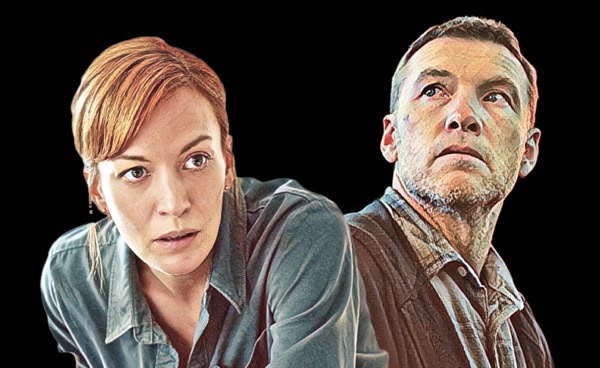
The new adaptation delivers exactly that. But it also accomplishes something that not every Coben story manages to do: it builds a central twist that resonates because it is inseparable from the emotional heart of the narrative. Although marketed as a thriller about a man imprisoned for murdering his own son, I Will Find You is never just about solving a crime. From its opening episode, it is a story about fathers and children.
Sam Worthington delivers one of the most restrained and emotionally grounded performances of his career because he understands that distinction. In interviews, the actor revealed that he often thought about his own son while filming, imagining what it would feel like to lose him and spend years believing he had been murdered. That personal connection is evident throughout the series. David Burroughs never becomes a conventional action hero. Even while escaping prison or confronting a conspiracy far larger than himself, he remains, above all else, a father desperately trying to recover what he believes he has lost forever.
That exploration of fatherhood extends to nearly every relationship in the series. David must confront his complicated bond with his own father, retired police officer Ed Burroughs, whose love has always been filtered through silence, guilt, and impossible expectations. His closest friend, Slade, struggles with his own son, revealing another family fractured by misunderstanding despite genuine affection. Even the FBI investigation introduces another perspective through its father-and-daughter dynamic, offering a rare portrait of trust and mutual respect that contrasts with the broken families surrounding them.
Not even the antagonists escape this theme. Fathers grieving lost children, emotionally absent parents seeking redemption, and sons crushed beneath impossible expectations all shape the story. Even when the narrative ventures into increasingly dramatic territory, every major decision grows out of the same question: how far would someone go for a child?
That is precisely why Harlan Coben manages to conceal his biggest revelation so effectively. For much of the season, the audience is led to believe that Matthew’s disappearance is an act of revenge carried out by a father devastated by the loss of his own son. The series carefully encourages viewers to assume that David is being forced to experience the same unbearable grief he once caused another family. It is a logical explanation, emotionally convincing, and it is exactly the kind of solution audiences expect from a thriller like this. Then the series pulls the rug out from under them.
The man responsible for Matthew’s disappearance isn’t driven by revenge. He is driven by obsession. SPOILER ALERT!

Hayden Payne, played by Milo Ventimiglia, genuinely believes Matthew is his biological son. Convinced that his genetic material had been used during an IVF procedure, he kidnaps the boy, believing he is reclaiming what was always his.
Later, the series reveals that this belief itself was built on manipulation. Hayden thought his then-girlfriend would undergo IVF using his sperm. In reality, it was his sister who had been pursuing fertility treatment, while Rachel conceived Matthew naturally with her husband, David Burroughs. Unaware of the truth—and encouraged by years of deception orchestrated by his own mother, Gertrude Payne, who manipulated DNA evidence—Hayden builds an alternate reality that eventually consumes his entire life.
The casting of Milo Ventimiglia makes the twist even more effective. After years of playing warm, dependable father figures—most notably the beloved Jack Pearson in This Is Us—Ventimiglia brings with him an image of kindness and trustworthiness. I Will Find You deliberately weaponizes that audience goodwill. Hayden appears to be exactly the kind of character viewers instinctively trust, someone who will help Rachel and David uncover the truth.
When the reveal finally comes, it isn’t just the script that deceives us. Our own expectations do.
Although the series is not based on any specific real-life case, its premise inevitably recalls the shocking fertility scandals that have surfaced around the world, including in Brazil, where doctors were accused of secretly using their own sperm to inseminate patients while manipulating fertility treatments and, in some cases, sexually abusing women. The comparison makes one of the show’s most unsettling ideas even more disturbing: the fear that our biological origins—and the trust placed in medical professionals—can be manipulated without our knowledge.
Perhaps that is the single word that best defines I Will Find You: manipulation. Evidence is manipulated. DNA results are manipulated. Investigations are manipulated. Memories are manipulated. Entire families are manipulated. Nearly every character spends the series chasing a version of the truth that has been carefully manufactured by someone else.
That idea elevates the story beyond a conventional mystery. The series is less interested in who committed the crime than in exploring how easily people can be convinced to believe a lie—especially when that lie speaks to their deepest fears or desires.

Like every Harlan Coben adaptation, I Will Find You asks viewers to embrace a certain level of implausibility. The final episodes accelerate through revelation after revelation, and some coincidences drift close to soap-opera territory. Yet, unlike several of Coben’s previous adaptations, those excesses rarely feel gratuitous because they remain anchored to the emotional journey at the center of the story.
Ultimately, I Will Find You isn’t about discovering who kidnapped Matthew, but about two men who genuinely believe they are fighting for the same child.
David Burroughs embodies the unconditional love of a father who refuses to stop searching for the son he believes is gone forever. Hayden Payne represents the dark inversion of that same instinct—a man whose desire to become a father mutates into an all-consuming obsession capable of justifying every crime he commits.
That contrast is where the series finds its greatest strength.
I Will Find You proves that Harlan Coben still understands better than almost anyone how to keep audiences glued to the screen. More importantly, it demonstrates something less common in his adaptations: when the twists stop being the destination and instead become the path toward a deeply human story, they carry far greater emotional weight. The mystery may be what draws viewers in. This time, however, it’s the drama that stays with them long after the final revelation.
Descubra mais sobre
Assine para receber nossas notícias mais recentes por e-mail.


1 comentário Adicione o seu