
There is one question that has haunted me since the end of Andor, and it has nothing to do with the fact that Jyn Erso never appears in the series.
Tony Gilroy himself has answered that question several times, and I completely agree with him: Cassian Andor and Jyn Erso could not meet before Rogue One. Bringing her into the show simply to generate applause from the audience would have been empty fan service, exactly the kind of shortcut that Andor deliberately avoided throughout its two seasons.

The question that truly intrigues me is another one. If Cassian Andor deserved one of the finest television series ever produced, why did we never even seriously consider that Jyn Erso might deserve the same treatment?
At first glance, the answer seems simple. Cassian was a Rebel intelligence agent; Jyn spent much of her life hiding, surviving through petty crime after being abandoned by Saw Gerrera. While one was embedded in the construction of the Rebellion, the other lived on the margins of history. Tony Gilroy himself explained that the strength of Andor lies precisely in showing the political, military, and bureaucratic machinery that enabled the birth of the Rebel Alliance. A series about Jyn would inevitably have had a different focus.
That explanation is perfectly coherent when it comes to justifying why Jyn could never appear in Andor. The problem is that it only answers that question. It does not explain why a series entirely devoted to the character never even seemed to seriously enter Lucasfilm’s horizon.
The more I think about it, the more convinced I become that the difference does not lie in the amount of material available for each character. It lies in the decision of which stories the studio considers worthy of receiving its greatest creative investment.

Jyn Erso may be the most underrated character in the entire saga. When we think of the great heroes of Star Wars, the names appear almost automatically: Luke Skywalker, Leia Organa, Han Solo, Obi-Wan Kenobi, and Anakin Skywalker. More recently, Cassian Andor has joined that group thanks to the excellence of his series. Jyn, however, remains confined to the space of a single film, despite being responsible for one of the most decisive actions in the entire chronology of the franchise.
Without her, the Death Star would never have been destroyed. Without her, Luke would never have discovered the vulnerability deliberately designed by Galen Erso. Without her, there would likely have been no victory at Yavin. And yet her legacy seems to end precisely where Rogue One does.
It is fascinating to observe how Lucasfilm itself has distributed narrative space among its major female protagonists over the decades. Leia remains, for many fans like myself, the definitive female character of Star Wars, but her journey has always been tied to the Skywalker saga. In the original trilogy, she shares the spotlight with Luke and Han; in the sequels, she returns as a central figure of the Resistance, yet she never received a truly independent live-action story. Even in Obi-Wan Kenobi, where we follow her childhood, the narrative exists primarily to develop Obi-Wan rather than Leia.
Padmé Amidala occupies a similar position. Her role is absolutely essential to the fall of the Republic and the tragedy of Anakin Skywalker, but her story has always been told through the impact she has on the men around her.
Rey represents a different case. She is unquestionably the protagonist of an entire trilogy and perhaps the female character who has occupied the center of a live-action Star Wars narrative for the longest period. Her journey belongs to a different narrative tradition, one much closer to the mythic adventure that has always defined Star Wars. Ahsoka, meanwhile, followed a unique path, developed over nearly twenty years across animation and live-action series, becoming one of the most richly developed characters in the entire franchise.

Within this landscape, Jyn Erso occupies a curious position. Her importance to the fate of the galaxy rivals that of any of these characters, yet her entire dramatic existence remains concentrated within a single film. While other protagonists were given years to evolve before audiences, Jyn arrives, changes the course of galactic history, and disappears.
What makes this even more striking is that her journey contains the dramatic elements necessary to sustain a narrative every bit as rich as Cassian’s—albeit a completely different one.
Cassian is born inside Imperial oppression and gradually transforms his anger into political consciousness. Andor is a story about radicalization against fascism, espionage, underground organization, collective sacrifice, and the institutional construction of resistance. The protagonist grows because he learns that there are causes larger than his own survival.
Jyn follows another path.
Perhaps it is precisely here that an often-overlooked parallel with Rey emerges. The two share surprisingly similar origins. Both grew up abandoned, learned to survive alone, and spent their youth believing that the safest strategy was to remain invisible. Neither began her story as a rebel leader. Both were ultimately drawn into events far greater than themselves.
The difference lies in the world that shaped them.


Rey grows up isolated on Jakku, far removed from the galaxy’s major political conflicts. Her loneliness is defined by abandonment and by the hope that one day her family will return. Jyn, by contrast, grows up at the center of violence. She watches her mother murdered by the Empire, loses her father to the Death Star project, is raised by Saw Gerrera, witnesses the increasingly radical methods of the resistance, and is eventually abandoned by him as well. Once she is forced to survive alone, she must do so while hiding her identity, fleeing not only from the Empire but also from the consequences of her connection to Saw.
If Rey was a victim of abandonment, Jyn was a victim of war itself. She does not discover war as an adult. She is shaped by it from childhood.
That distinction changes the dramatic potential of their stories entirely. Rey discovers war when it arrives at her doorstep. Jyn never had that privilege. She grows up crushed between two forces competing for the destiny of the galaxy, without ever truly belonging to either. The Empire destroyed her family. The Rebellion, represented by Saw Gerrera, failed her as well. For years, her only cause was survival.
There are few perspectives more human—or more adult—from which to observe the birth of the Rebel Alliance than that of someone who learned, from childhood onward, to distrust every side.
She believes in nothing. She trusts no one. She was used by Saw Gerrera, lost her mother as a child, watched her father taken by the Empire, and learned very early that survival mattered more than choosing sides. Her life is not political. It is emotional.
She does not reject the Rebellion because she sympathizes with the Empire; she rejects all causes because every authority figure in her life has ultimately taken something from her.
This detail often goes unnoticed, yet it is precisely what makes Jyn such a fascinating protagonist.
Her transformation does not emerge from an ideological awakening, as it does with Cassian. It emerges through the rediscovery of her father. It is Galen Erso who restores his daughter’s ability to believe that some people are still capable of doing the right thing, even at the highest possible cost.
Jyn’s final act—assembling a small group of people who are, for all practical purposes, already condemned to die to steal the Death Star plans—does not arise from years of political activism. It arises from the profoundly human need to prove that her father’s sacrifice meant something.
Perhaps that is why I consider Jyn one of the greatest heroines in Star Wars.
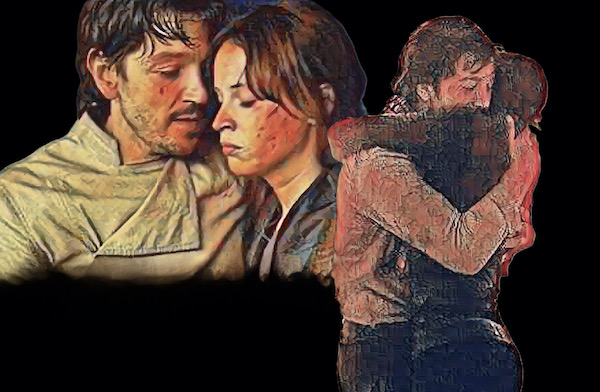

Her heroism does not emerge from destiny or vocation. She was not chosen by the Force. She does not belong to a legendary bloodline. She was not trained by Jedi masters. She does not command an army. She simply decides that her father’s memory deserves something more than resignation.
That humanity makes Jyn a singular character within the franchise. And paradoxically, it may also explain why she never received an expansion comparable to Cassian’s. Her story is not built around the grand mythic themes of Star Wars, but around family trauma, abandonment, guilt, identity, and reconciliation. It is a quieter, less spectacular journey and, for that very reason, one extraordinarily compatible with the kind of mature storytelling that Tony Gilroy demonstrated he could master so brilliantly.
Imagining a series following Jyn’s years of survival would not mean transforming her into a premature hero or contradicting Rogue One. On the contrary. It would mean following someone who does everything possible to remain invisible while the Empire becomes increasingly omnipresent. It would be a drama about loss, fear, anonymity, and survival—much closer to political cinema than to traditional Star Wars adventure.
We will never see that series.
Perhaps there are practical reasons for this. Perhaps Cassian’s arc was simply better suited to the project Tony Gilroy wanted to create. Perhaps a series about Jyn never found a creator willing to defend it with the same conviction. All of that may be true.
But this is where, for me, the discussion changes entirely.
The issue is not how many female protagonists Star Wars has. By that metric, Lucasfilm would fare reasonably well. The real question is another one: which characters are given enough time to mature before the audience? Which writers are willing to explore their ambiguities, failures, and contradictions? In other words, which characters are given the creative trust necessary to sustain the most ambitious work the franchise is capable of producing?
When Lucasfilm decided to create its most sophisticated, most political, and most carefully written series, it chose to develop a male protagonist who, until then, had essentially been an exceptionally well-written supporting character in Rogue One. Cassian received twenty-four episodes to evolve from an efficient operative into one of the richest characters in the entire saga.
Jyn, whose importance to the Rebel victory is beyond dispute, remained confined to just over two hours of screen time.
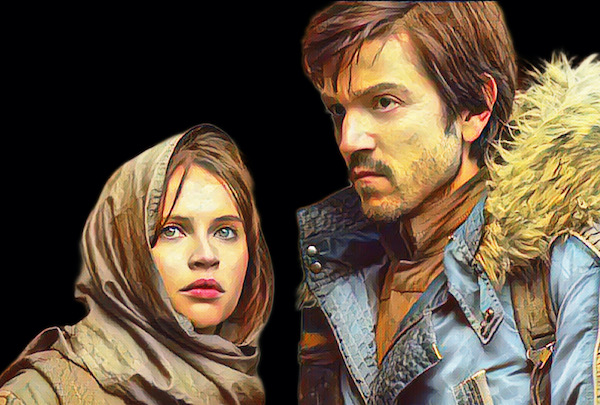
Andor proved that Star Wars can produce mature television without relying on Jedi, lightsabers, or nostalgia. It also proved that seemingly secondary characters can sustain a masterpiece when they are given time, trust, and extraordinary writers.
Perhaps that is precisely why the absence of a Jyn Erso series continues to bother me so much. Not because she needed to appear in Andor. Not because Rogue One requires any additional explanation. But because, among all the franchise’s female protagonists, perhaps none possessed a trajectory so naturally suited to receive exactly this kind of storytelling.
The female Andor of Star Wars may never have existed, but the most curious part is that its protagonist had already been created back in 2016.
Descubra mais sobre
Assine para receber nossas notícias mais recentes por e-mail.

