
Tom Cruise is coming for the 2027 Academy Award for Best Actor. It is obviously still too early to say whether he will win, since we do not even know all the candidates who will be competing against him. But watching the first full trailer for Digger is enough to understand that Alejandro González Iñárritu’s film is not being presented simply as another major release. It is being introduced as the role that could finally give Cruise the competitive Oscar still missing from his career.
And the most curious thing is that, this time, no one is talking about the height of the building he jumped from, how many times he repeated a motorcycle stunt, or whether he really flew the plane himself. For the first time in many years, the conversation surrounding a Tom Cruise film is not about what his body was capable of doing. It is about his acting.
Cruise is virtually unrecognizable as Digger Rockwell. His hair is white and thinning, his body is heavier, and his face has been altered by makeup and prosthetics. There is a thick accent, flamboyant clothing, and a physicality that seems to combine the enthusiasm of a salesman, the self-confidence of a billionaire, and the instability of a man who has completely lost all sense of the limits of his own power.

The most immediate comparison has been to Les Grossman, the vulgar and explosive producer Cruise played in Tropic Thunder. The association is inevitable because, in both cases, he transforms his own image as a movie star into something grotesque and almost unrecognizable. But Digger appears to be considerably more complex. This is not merely a comic cameo or a caricature designed to surprise audiences. He is at the center of an apocalyptic satire about power, ego, and the distinctly contemporary conviction that extremely wealthy men believe they are entitled to destroy the world because they also consider themselves the only people capable of saving it.
Digger Rockwell is introduced as “the most powerful man in the world.” An oil tycoon, he is responsible for a drilling operation that causes an environmental catastrophe of unimaginable proportions. The damage could reach $18 trillion, nuclear waste is involved, and the disaster threatens to trigger a war.
Digger then embarks on a mission to prevent the end of the world. The detail, naturally, is that he created the problem.
That is precisely where the film seems to find its most compelling provocation. Digger is not simply the man who destroys everything and then tries to fix it. He is the man who, even after causing the catastrophe, remains convinced that he must occupy the center of the narrative. Repairing the damage is not enough. He needs to be recognized as the hero of his own destruction.
The trailer constantly plays with this contradiction. Digger seems frightened by the consequences of his actions, but never truly remorseful. He runs, screams, gestures wildly, and tries to convince politicians and authorities, but he continues to behave as though the greatest problem is not that the planet is on the verge of collapse, but that humanity might fail to understand his importance.
He is a character perfectly designed for our time, in which billionaires, businessmen, and celebrities turn economic power into supposed moral authority. Digger seems to belong to that category of men who confuse wealth with intelligence, influence with competence, and public visibility with leadership.
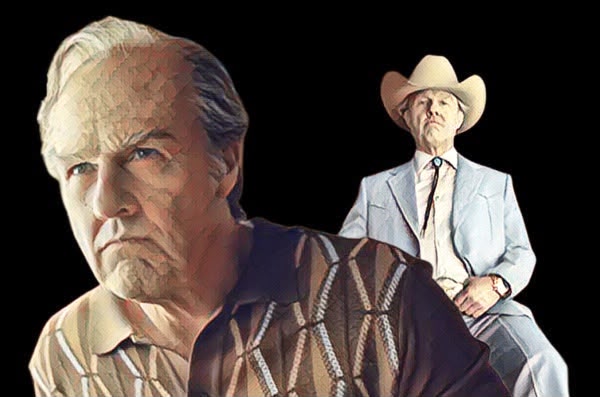
Comparisons with Donald Trump, Elon Musk, and other tycoons who have learned to sell themselves as indispensable geniuses will be inevitable. But the character does not appear to represent one particular individual. Digger is, above all, a composite. He is the man who turns a disaster into a marketing opportunity and transforms guilt into a new public-relations campaign.
One of the strongest lines in the promotional material perfectly summarizes this world: “In Digger We Trust,” an obvious play on “In God We Trust,” the motto printed on American currency. In Digger we trust. Money, religion, power, and the cult of personality are condensed into a single idea.
Another line used in the campaign is “Digg. Or die.” The pun on the character’s name reinforces the way Digger turns everything into advertising, even the risk of extinction.
The official description also promises “a comedy of catastrophic proportions.” And perhaps that is exactly what Iñárritu is trying to create: a comedy about the end of the world in which the true absurdity does not lie in the catastrophe itself, but in the men who believe they can manage it as though they were running a shareholders’ meeting.
Jesse Plemons, who is also in the cast, has compared the spirit of the screenplay to Dr. Strangelove, Stanley Kubrick’s masterpiece about politicians and military leaders guiding the world towards nuclear destruction. The comparison makes sense. In both cases, the humour does not arise because the characters are funny, but because they are terrifyingly serious about their own incompetence.
The cast of Digger also helps explain the scale of the anticipation. In addition to Cruise and Plemons, the film brings together Sandra Hüller, Riz Ahmed, Michael Stuhlbarg, Sophie Wilde, Emma D’Arcy, and John Goodman, who plays the president of the United States. It is one of those casts that already seems designed to move through the entire awards season. But the main event remains Cruise.
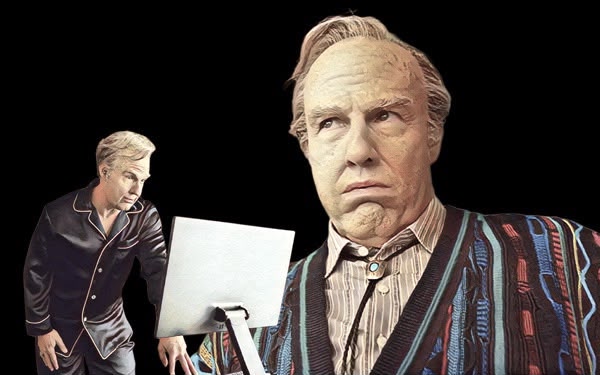
For decades, he has been one of the biggest movie stars in the world, perhaps the last truly global star from a generation that could still bring audiences to cinemas on the strength of a name alone. At the same time, his growing dedication to action films gradually concealed a fundamental part of his career. Tom Cruise has always been a far better actor than the conversation surrounding his stunts usually allows us to remember.
He had already demonstrated that in Born on the Fourth of July, Jerry Maguire, Magnolia, Eyes Wide Shut, Rain Man, Collateral, and even in more commercial roles, in which his intensity frequently revealed men obsessed with control and terrified by the possibility of failure.
It is precisely that energy that appears to have been distorted in Digger. Cruise has spent his career playing men who take action because they believe they can solve any situation. Ethan Hunt saves the world because he refuses to abandon anyone. Maverick gets into the plane because he knows how to do what no one else can. Even when his characters make mistakes, their strength lies in the conviction that a solution exists and that they will find it.
Digger appears to be the corrupted version of that same fantasy.
He also believes he can solve everything. The problem is that this absolute certainty may be what caused the disaster in the first place. The quality that transformed Tom Cruise into a hero for so many decades now appears as a pathology. Digger is a man who cannot imagine a world in which he is not indispensable.
It is an intelligent choice for both Cruise and Iñárritu. The Mexican filmmaker has always been interested in characters confronted by guilt, death, chance, and the need to reconstruct some kind of meaning after everything collapses. In Amores Perros, three stories intersect because of a car accident. In 21 Grams, death connected strangers through an organ transplant. In Babel, a single gunshot travelled across continents, languages, and families.
Those films formed what became known as his “death trilogy,” defined by fragmented narratives and characters trying to understand the consequences of choices they can no longer undo.
In Biutiful, Javier Bardem played a dying man attempting to organize his own guilt and secure a future for his children. In Birdman, Michael Keaton portrayed an actor desperate to prove that he was still relevant, turning the film into a cruel comedy about ego, art, criticism, and celebrity. In The Revenant, Leonardo DiCaprio endured a brutal struggle for survival driven by revenge.
Digger appears to bring several of those obsessions together. There is the guilt of someone who caused a tragedy, the ego of someone who needs to remain at the center of the story, and the desperate struggle to survive the consequences of his own power.
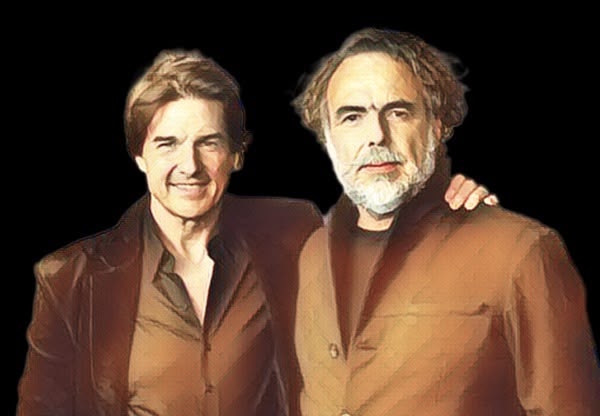
Cruise and Iñárritu met personally years ago, while the actor was working on Top Gun: Maverick, but the admiration began much earlier. Cruise was deeply impressed by Amores Perros, the director’s first feature film, released in 2000. The two began talking about cinema and maintained their friendship until Digger emerged as a concrete possibility for collaboration.
The connection between them became even clearer when Iñárritu presented Cruise with his honorary Oscar in 2025. It represented a kind of consecration of the star’s career, recognizing not only his longevity, but also his efforts to preserve cinema as a collective experience and his commitment to the work of stunt performers.
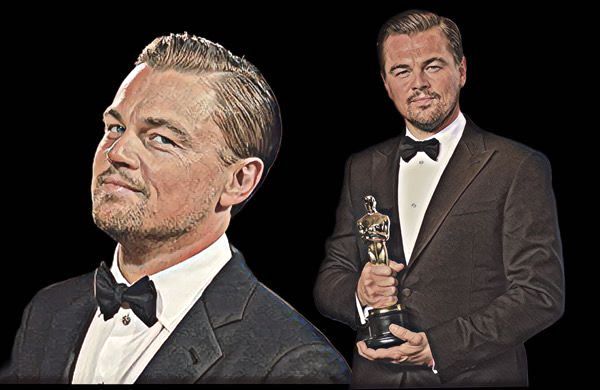
Now there is an almost perfect irony in their relationship. Iñárritu was the director responsible for the performance that finally gave Leonardo DiCaprio his Academy Award for Best Actor, for The Revenant. He could also become the filmmaker who finally gives Tom Cruise his first competitive victory.
Iñárritu’s history with actors helps fuel that expectation. Naomi Watts and Benicio del Toro were nominated for 21 Grams. Adriana Barraza and Rinko Kikuchi competed for Babel. Javier Bardem was nominated for Biutiful. Michael Keaton, Edward Norton, and Emma Stone reached the Oscars with Birdman. Leonardo DiCaprio and Tom Hardy were nominated for The Revenant, with DiCaprio finally winning Best Actor.
Iñárritu knows how to create characters that demand transformation, but he also knows how to reveal the vulnerability hidden inside extremely familiar actors. He did it with Michael Keaton, whose own history as a former Batman began to resonate with the protagonist of Birdman. He did it with DiCaprio, whose movie-star image was subjected to the cold, mud, violence, and physical suffering of The Revenant.
With Cruise, the operation appears even more interesting because it does not stop at a change in appearance. The trailer suggests that Iñárritu is using the actor’s own persona as raw material. All the confidence, energy, and sense of mission we associate with Tom Cruise are present, but transferred to a ridiculous and dangerous man who is incapable of recognizing that he may actually be the villain of the story.

Naturally, there is a risk. The Academy loves physical transformations, prosthetics, accents, and expansive characters, but those tools can also become a trap. Being unrecognizable is not the same thing as delivering a great performance. Makeup, hair, and weight gain may attract attention in a trailer, but they cannot sustain an entire film by themselves.
What will determine Cruise’s strength in the race is what emerges when the caricature begins to crack. What exists behind the laughter, the stomach, the accent, and the speeches? Does Digger truly understand what he has done? Is there guilt inside that man, or only the fear of losing control? Does his attempt to save the world emerge from any kind of moral awareness, or merely from the need to continue being worshipped?
The trailer suggests that something deeper will emerge beneath the surface. The physical composition is striking, but Cruise also seems to have altered his rhythm, posture, and the way he occupies space. There is an almost childish anxiety in his movements, as though Digger constantly needs to confirm that everyone is still looking at him.
Digger arrives in Brazilian cinemas on October 1, 2026, one day before its release in the United States. The date is not accidental. It marks the official beginning of the strongest part of awards season, when studios begin presenting their candidates and constructing the narratives that will be repeated until Oscar night. And Tom Cruise may have the best narrative of all.

He is one of the biggest stars in the history of cinema. He has already been nominated three times as an actor, for Born on the Fourth of July, Jerry Maguire, and Magnolia. He has never won. He received an honorary Oscar, but he has yet to take home a statuette for one particular performance. Now he is returning to drama with an award-winning director, a radical transformation, and a character who appears to reconsider his entire public image.
Perhaps Digger is not simply the film in which Tom Cruise tries to win an Oscar.
Perhaps it is the film in which he finally forces us to remember that, before he became the man who runs, jumps, flies, climbs, and insists on personally performing everything that could possibly kill him, Tom Cruise was always an actor.
And one of the greats.
Descubra mais sobre
Assine para receber nossas notícias mais recentes por e-mail.

