
As published on Blog do Amaury Jr./Splash UOL
Christopher Nolan could have chosen a simpler challenge after Oppenheimer. Instead, he reached back nearly three thousand years to bring to the screen one of the stories that shaped almost every narrative that followed. Homer’s The Odyssey is adventure, fantasy, and the narrative blueprint we continue to revisit today. The hero’s journey is all there. That alone gives a sense of the enormity of the task.
Adapting The Odyssey without turning it into an illustrated lecture, while also making it accessible to audiences who have never read Homer, is an extraordinary undertaking. That may be one of Nolan’s greatest achievements here: he succeeds.
The Odyssey is grand, spectacular, and remarkably accessible. Readers of Homer will recognize its characters, monsters, trials, and archetypes. Those unfamiliar with the epic will still be able to follow Odysseus’ long journey home after the Trojan War. Nolan never demands classical knowledge from his audience. Instead, he transforms one of the foundational works of Western literature into a sweeping blockbuster without stripping away its most meaningful ideas.
That does not mean, however, that he has made a perfect film. Nor, in my view, the finest film of his career.
The film’s most undeniable strength is Matt Damon.
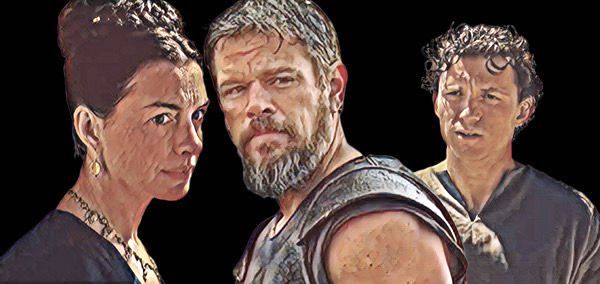
If Damon had missed the tone by even a fraction, the entire film would have collapsed. The Odyssey depends on our believing in this man as a leader, warrior, strategist, survivor, and, at the same time, someone haunted by the weight of his own decisions. Damon carries all of that with remarkable confidence.
It’s wonderful to see him once again in a role that fully showcases the extraordinary actor he has always been. In recent years, he hasn’t always been given characters capable of exploring the full range of his talent. Here, he brings authority, vulnerability, and quiet strength. Odysseus must inspire his men to follow him even when his decisions lead them toward disaster. He must be admired and questioned. He must remain the hero without ever becoming a man free of guilt. Damon understands that contradiction perfectly.
Alongside him, Himesh Patel delivers an excellent performance, bringing warmth and humanity to the journey. Samantha Morton also elevates every scene she appears in. Yet it is within such a massive, star-studded cast that many of my reservations emerge.
Anne Hathaway, an actress I greatly admire, feels uneven as Penelope. At times her performance leans toward theatricality; at others she searches for a delicacy that feels overly calculated, before shifting again toward a more intimate approach. For me, those choices never fully come together. It’s a competent performance, but one that falls short of what I expected from an actress of her caliber in such a pivotal role.
Tom Holland also left me disappointed—and perhaps precisely because I know how gifted an actor he truly is. Telemachus is a difficult character: a young man shaped by the absence of his father, searching not only for him but also for his own identity. Yet more than once, I felt as though I were watching Spider-Man transported into a Greek epic. Holland never entirely disappears into the role the way he has in some of his finest performances, and I suspect he knows it too.
Many critics have praised Robert Pattinson, and he is certainly good. He makes for an effective villain and knows how to create discomfort. But there may now be an interesting consequence of his determination to prove, film after film, that he is far more than the heartthrob who first made him famous. The eccentric character, the transformed appearance, the altered voice, the unsettling stare, the deliberate oddness—these choices have become so common throughout his career that the surprise is beginning to fade. What once demonstrated remarkable versatility now risks becoming another familiar pattern. He works, but I didn’t find anything here that surpassed what we’ve already seen him do elsewhere.
The same can be said, in another way, about the sheer number of famous faces scattered throughout the film. Charlize Theron, Zendaya, Elliot Page, Travis Scott, and several others appear along the way, inevitably creating that moment of recognition: “Oh, there’s another one.” Their appearances never hurt the film, but they don’t always add the dramatic weight one might expect from performers of that stature.
Technically, however, there is very little to argue with.

Hoyte van Hoytema’s cinematography is breathtaking. Filmed across Greece, Morocco, Italy, Iceland, and Scotland, the real-world locations give the journey a scale that would have been nearly impossible to recreate on soundstages alone. Nolan turns landscapes into storytelling. The sea isn’t simply beautiful—it is threatening. Mountains, beaches, ruins, and deserts are not postcards; they are obstacles. The result is especially striking in the moments when The Odyssey edges surprisingly close to horror.
The monsters and dangers exist for more than spectacle. There is a constant sense of oppression and vulnerability. These are men advancing through a world they cannot fully understand, confronting forces they cannot control. Anyone who loves fantasy worlds like Game of Thrones or House of the Dragon will have little reason to complain about a journey filled with monsters, gods, witches, and mythical creatures. It is all here—and magnificently realized.
Ludwig Göransson’s score is another major triumph. The three-time Academy Award winner reunites with Nolan after Tenet and Oppenheimer, creating music that does far more than accompany the images—it carries the emotional weight of the journey itself. The score knows when to swell, when to threaten, when to retreat, and when to underscore the emotional beats without sacrificing the film’s epic scale. It’s far too early to predict Oscars, of course, but it would be surprising if this score were absent from next season’s conversation.
Yet the most fascinating aspect of The Odyssey isn’t the scale of its imagery.
It’s what Homer wrote thousands of years ago—and why it still resonates today.
Odysseus is the hero. But he is also the man who helped destroy Troy. He is the leader whose decisions, however well-intentioned, cost the lives of the men who trusted him. He longs to return home, yet he can no longer return as the man who left. The battle ends. The experience of war does not.
This is where Nolan finds the story’s most contemporary dimension. Some choices may feel a little too direct in light of today’s global conversations, but perhaps that is precisely why The Odyssey has survived for millennia. Its archetypes endure because they speak about power, ambition, guilt, grief, identity, family, desire, and the consequences of our choices. After all, the hero’s journey has never simply been about reaching the destination. It has always been about the journey itself—and about discovering who returns.
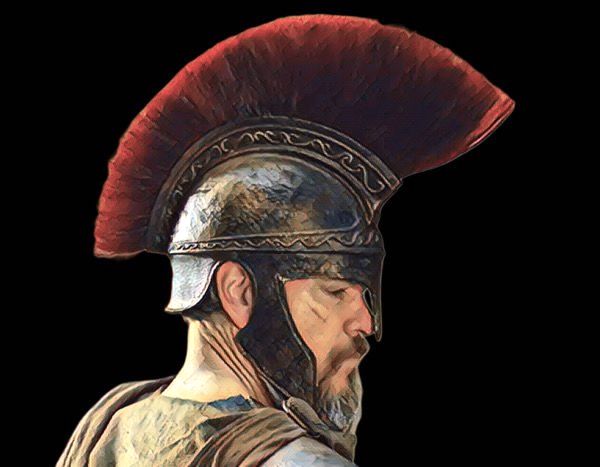
Let me repeat: Christopher Nolan has made a remarkable film. It is beautiful, ambitious, and absolutely meant to be experienced on the biggest screen possible. I don’t believe it is his greatest work, nor am I ready to call it the best film of the year. Contemporary epics—particularly Denis Villeneuve’s Dune saga—still strike me as even more visually overwhelming.
But perhaps The Odyssey achieves something even more valuable.
Nolan has taken one of humanity’s greatest stories and placed it before millions of people once again. He has made monsters, gods, warriors, and a man trying to find his way home after a war fought thousands of years ago feel, once again, like a story about ourselves.
And that is no small achievement.
Descubra mais sobre
Assine para receber nossas notícias mais recentes por e-mail.

