
Every week, the streaming Top 10 seems to promise a snapshot of the present. After all, premieres are what dominate banners, campaigns, and the first thing we see when opening any platform. But look just a little beyond the top positions, and the story becomes more complicated. Streaming may desperately need new releases to catch our attention, but it still depends on memory to keep us around.
This week’s worldwide FlixPatrol rankings make that especially clear. Major new titles are leading almost every platform, from House of the Dragon and Silo to Elle, Dutton Ranch, Project Hail Mary, Scream 7, and F1. Surrounding them, however, are shows that have already ended, movies watched countless times, franchises that have existed for decades, and characters audiences apparently never tire of revisiting.
Perhaps the real streaming business was never only about discovering the next phenomenon. It is also about making sure that, when we have no idea what to watch, something familiar is waiting for us.
Netflix: The Catalog as an Endless Carousel
Netflix remains the hardest platform to summarize because perhaps its greatest identity is precisely not having one. I Will Find You leads the series chart, followed by titles that could hardly be more different from one another, while the list mixes new productions, acquisitions, international dramas, and hits from multiple genres.
Among movies, that logic becomes even clearer. Desire ranks first, but around it are titles such as Death on the Nile, The Creator, Meg 2: The Trench, and even Due Date. There is not exactly one conversation happening inside Netflix. There are dozens of them at the same time.
That has always been part of its strength. With an enormous catalog and an unmatched ability to put almost any title back in front of viewers, Netflix has turned its own homepage into a movie-resurrection machine. Something can have premiered years ago and, through some combination of algorithm, availability, and sudden curiosity, return as though it had just arrived.
Perhaps that is precisely why its rankings feel so unpredictable. On Netflix, the past is never truly archived.
HBO Max: Event Television Meets the Comfort of the Past
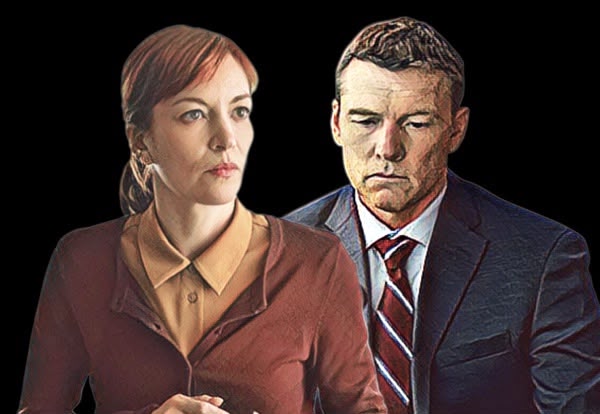
At HBO Max, the situation is almost the opposite. House of the Dragon holds first place among series and reminds us of something HBO still does better than almost anyone else: turning television into an event.
There is a difference between a show that is simply available and one that organizes the weekly conversation. House of the Dragon clearly belongs to the second group. Alongside it are Rick and Morty and other titles that reinforce how the platform combines new releases with shows already embedded in its identity.
Among movies, however, an even more interesting dynamic appears. Lee Cronin’s new The Mummy leads the ranking, while the list also includes Fast Five, Interstellar, Despicable Me, Shrek Forever After, and both The Accountant movies.
It is almost a practical demonstration of how streaming works today: we use a new release as the entry point and end up rewatching something we already know.
Franchises create the same domino effect. A new movie often sends its predecessors back into the charts. A sequel turns older titles into something that feels new again. The catalog stops being an archive and becomes a permanent extension of the release itself.

Disney+: Nostalgia Is Not a Side Effect, It Is the Strategy
Few platforms explain this relationship between past and present as clearly as Disney+.
Bluey Compilations leads the series chart, with X-Men ’97 close behind, while Gravity Falls and Malcolm in the Middle continue to hold space alongside more recent productions. Completely different generations coexist inside the same Top 10.
Among movies, the pattern becomes even more obvious. Avatar: Fire and Ash is number one, but Moana 2, Moana, and another title connected to the character all appear simultaneously among the most watched. Toy Story 4, Avengers: Endgame, and Avengers: Infinity War complete this strange meeting between novelty and repetition.
None of this feels accidental.
Disney built its empire on characters, universes, and stories that can be revisited indefinitely. Perhaps no other platform depends so heavily on the emotional memory of its audience. We log in to watch the new Avatar and may end up back with Moana. A child discovers Toy Story for the first time while someone else watches Endgame for the tenth.
In this case, nostalgia is not simply a consequence of having an old catalog. It is a central part of the product.

Prime Video: Plenty of Hits, but What Is the Identity?
Prime Video is in a curious position because it manages to place many very different titles among the most watched without necessarily making clear what connects them.
Elle leads the series chart, followed by Off Campus and Ride or Die. Further down are productions as different as Clarkson’s Farm and Spider-Noir. The variety is impressive, but it also reflects the difficulty the platform still has in building an immediately recognizable identity.
Among movies, Project Hail Mary dominates the ranking, followed by titles aimed at very different genres and audiences.
Perhaps that is Prime Video’s central question. Having hits is not the same thing as having a personality.
We immediately know what we expect to find on Disney+. We recognize HBO’s prestigious tradition. Paramount+ has become increasingly associated with certain universes and genres. Apple has built a relatively clear reputation for curation.
Prime seems to want to be everything at once.
That may be a huge commercial advantage, especially because its reason for existing is different from services that depend entirely on entertainment. But it creates a curious editorial paradox: we watch many Prime hits without necessarily thinking of them as “a Prime series.”


Paramount+: No One Understands Loyalty Better
Paramount+ may have the most coherent ranking of them all.
Dutton Ranch leads, followed by Yellowstone. Then come South Park, Tulsa King, Criminal Minds, The Agency, Marshals, and Landman.
It does not take much effort to understand which audience the platform wants to keep close.
The strategy seems less focused on offering endless possibilities and more on building ecosystems viewers return to. The Yellowstone universe is the most obvious example, but not the only one. There is crime, action, procedurals, recurring characters, and shows designed to establish long-term relationships with their audiences.
The same happens with movies. Scream 7 leads, followed by Top Gun: Maverick, while World War Z returns to the Top 10.
These are titles with strong brand recognition.
In an industry obsessed with the next big thing, Paramount seems to understand very well the value of a far less glamorous word: loyalty.

Apple TV: Does It Finally Have a Catalog?
Perhaps Apple TV offers the most interesting ranking of the week precisely because, for a long time, its biggest problem was having excellent series without enough volume to feel like a complete platform.
That is beginning to change.
Silo leads, followed by Lucky, Cape Fear, Sugar, and Maximum Pleasure Guaranteed. Then come Ted Lasso, Severance, Widow’s Bay, Your Friends & Neighbors, and Trying.
It is a surprisingly strong list because it does not depend on a single franchise. These are shows with very distinct identities, some already established and others more recent, coexisting without making the platform feel completely different from one title to the next.
Among movies, F1 remains in first place, while The Gorge, The Instigators, Greyhound, Fountain of Youth, Napoleon, and Ghosted show something that was not always possible to say about Apple: its older movies are still circulating.
That matters.
A platform is not built only through premieres. It is built when something released months or years ago continues to have a life after the campaign ends.


The Picture of the Week
The most interesting thing about this week’s rankings may not be finding out who won. It is realizing that, despite billions invested in new content, streaming remains deeply dependent on what we already know.
A new Scream keeps a decades-old franchise relevant. A new chapter can revive previous films. Moana sits next to Moana 2. Avengers is still being rewatched years after its great conclusion. Interstellar simply refuses to disappear. Yellowstone generates an entire universe around itself. Ted Lasso and Severance remain alive even as new releases arrive.
For years, we imagined streaming as a rupture with traditional television, especially because it promised absolute freedom: watch whatever we wanted, whenever we wanted.
Perhaps we discovered something else instead.
Faced with infinite choice, we still look for some form of familiarity.
Platforms need to release new things constantly because novelty creates curiosity, subscriptions, and conversation. But it is the familiar characters, franchises, movies we already love and series we have learned to return to that help turn a service into a habit.
In the end, streaming may live on premieres.
But it survives on reunions.
Descubra mais sobre
Assine para receber nossas notícias mais recentes por e-mail.

