
As published on Blog do Amaury Jr./Splash UOL
For more than a century, the math of a football half-time break was fairly simple: 15 minutes. Time for players to rest, coaches to make adjustments, and fans to catch their breath before the second half. At the 2026 World Cup final, however, that equation became considerably more complicated.
For the first time in the tournament’s history, FIFA decided to turn the final’s half-time break into a musical spectacle inspired by the Super Bowl, importing into football a tradition firmly established by the NFL. The idea is to make the break not simply part of the sporting event, but part of a much larger entertainment product, complete with a stage, international stars, and a global audience that must continue to be engaged even when the ball is not moving.
According to the laws governing the game, however, half-time should not exceed 15 minutes. After speculation that the first World Cup final half-time show could stretch the break to 20, 25, or even 30 minutes, and after concerns were raised by Spain and Argentina, FIFA settled on a total of 17 minutes: six for assembling and dismantling the stage and only 11 for the performance itself.
That is when the math becomes particularly interesting. Madonna, Shakira, Justin Bieber, and BTS are the four headliners, joined by Burna Boy, Gustavo Dudamel, and the PS22 Chorus with Coldplay, as well as appearances by characters from Sesame Street and The Muppets. With so many performers packed into an 11-minute block, what audiences will see is unlikely to resemble a series of proper concerts. It will be a tightly choreographed succession of entrances, choruses, images, and transitions.
And those 17 minutes are only part of a much larger equation.
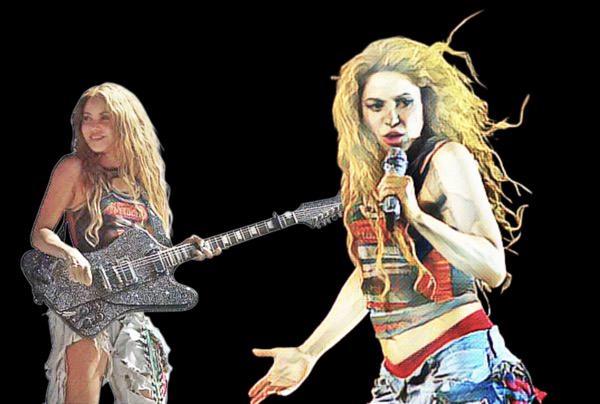
Ninety minutes before kick-off, the closing ceremony begins with Post Malone, Laura Pausini, Nicole Scherzinger, Robbie Williams, and IShowSpeed. Tom Cruise will make a special appearance, bringing Hollywood into the stadium, while Jennifer Hudson will sing the US national anthem before the match. Cinema, music, television, and streaming culture will literally share the same stage as football.
Supporters of this approach see it as the natural evolution of major sporting events, increasingly transformed into experiences designed to bring together different audiences and platforms. Critics argue that a World Cup final is already, by definition, one of the biggest spectacles on the planet and has never needed help keeping billions of people in front of a screen.
Perhaps that is the real experiment of the 2026 World Cup: discovering whether football will remain at the centre of the spectacle or whether it will permanently begin to share the stage with the entire entertainment industry.
Because almost everything surrounding the final has become bigger.
The game itself, curiously enough, still lasts 90 minutes.
Descubra mais sobre
Assine para receber nossas notícias mais recentes por e-mail.

