
With the Crawleys saying goodbye in the final film of the series in 2025, I found myself somewhat shocked by what had happened to one absent character who, at one point, had been the heroine’s beloved, and who had somehow been transformed into someone almost unrecognizable.
All right, Henry Talbot was never exactly the great love of Lady Mary Crawley’s life. That place belongs to Matthew, and probably always will. But when Downton Abbey decided that Mary needed to love again after her husband’s death, Henry was introduced as a rather clever choice.
He was not trying to take Matthew’s place; he did not entirely belong to the aristocratic world of the Crawleys and, above all, he represented something Mary desperately needed at that moment: movement.
Henry loved cars, speed, and risk. He was a man of a world moving forward, while Downton stubbornly tried to survive the twentieth century. There was some logic, therefore, in putting Mary beside him.
She would never abandon the estate, but she was no longer exactly the young aristocrat we met in the first season, either. After wars, deaths, scandals, and social change, Mary also had to learn that preserving Downton did not necessarily mean standing still.
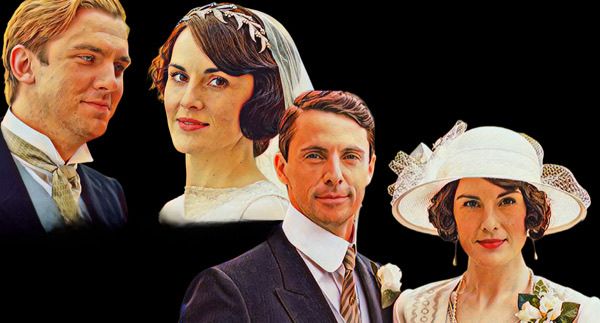
The problem began when Henry disappeared
Matthew Goode virtually disappeared from the franchise, and that was when Henry, unintentionally, began turning into someone else. As Downton Abbey continued without the actor, every new film had to invent an explanation for Mary’s husband’s absence. Henry was travelling. Henry was involved in motor racing. Henry had commitments elsewhere. Henry, apparently, could be anywhere in the world except beside his own wife.
One isolated absence could easily be justified. Two begin to attract attention. But once it becomes a pattern, the story itself starts retrospectively rewriting the marriage.
The man who had been introduced as modern enough to understand an independent woman begins to look simply like an absent husband. Mary runs Downton, raises the children, deals with family crises, and takes part in every major event while Henry remains conveniently off-screen. The more the franchise tries to explain why he is not there, the worse he looks.
It is a kind of villainization by absence.
Matthew Died, but Henry Simply Stopped Showing Up
Perhaps the most interesting thing is to compare Henry’s narrative fate with Matthew Crawley’s.
The two great men of Mary’s adult life disappear from Downton Abbey for essentially the same real-world reason — the actors did not remain part of the series — but the story handles their departures in completely opposite ways. Matthew dies while Henry simply does not show up.
Death turns Matthew into a memory and freezes him at the best possible moment in their relationship, preserved forever as the man who loved Mary, challenged her arrogance, understood her vulnerabilities, and finally built with her what seemed to be a happy life.
Matthew will never have the opportunity to disappoint her because his story ended before that could happen.
Henry suffers the opposite fate because Mary could hardly be widowed twice — that would have been narrative laziness — so his absence has to be constantly explained. And every explanation adds another small layer of abandonment.
It is a cruel difference.
In the end, while Matthew was sanctified, Henry was condemned by continuity.
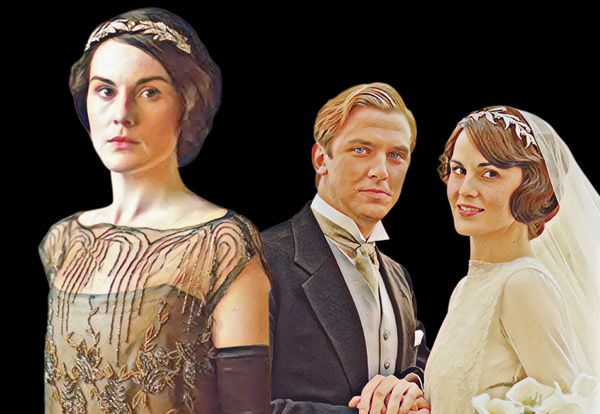
A Marriage Rewritten by the Franchise Itself
The irony is that none of this seems to have been planned when Henry Talbot first appeared in the series. Quite the opposite. His purpose was to give Mary a second chance. After resisting the idea of falling in love again, she finally accepted that moving forward did not mean betraying Matthew.
It was an important emotional conclusion for a character whose life had been shaped as much by the fear of loss as by the need to control everything around her. But Downton Abbey continued — without Matthew Goode — and some stories do not survive their own continuation particularly well.
Little by little, the marriage that was supposed to symbolize Mary’s new beginning began to look like just one more responsibility she was carrying alone.
So when the relationship finally ends in divorce in the final film, it does not exactly come as a surprise. It feels almost as though the franchise is simply making official something it had been telling us for years without ever admitting it directly.
Henry had already left that marriage long before Mary did.
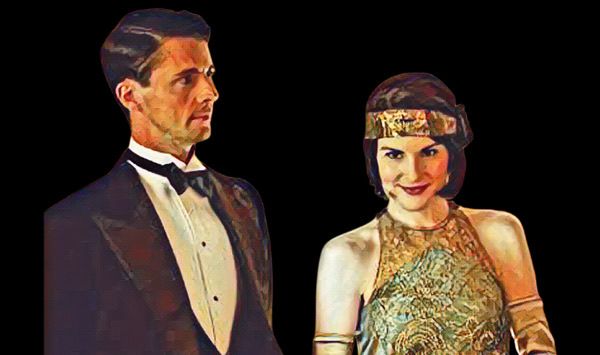
In the End, Mary Was Always the One Who Stayed
Perhaps that is why Henry’s fate also reveals something interesting about Mary’s own journey.
For a long time, we assumed that the great question surrounding Lady Mary was who she would ultimately end up with. But looking at the saga as a whole, it becomes increasingly clear that this was never really the central question. Mary ends up tied to Downton. Men enter her life, transform it, and disappear. Some die. Others leave. But she remains.
In that sense, Mary may be far more of an heir to Violet Crawley than we ever realized. Not only because she takes on her symbolic place as the great guardian of the family, but because she learns the same bitter lesson: feelings can be profound, love can define entire periods of a life, but survival requires carrying on when those loves are gone.
Henry Talbot did not have to become a villain. But then again, who would not want to be with Mary? Apparently, only a man who no longer deserves the affection of Downton Abbey fans.
And in the end, Mary did what she has always done best: she stayed.
Descubra mais sobre
Assine para receber nossas notícias mais recentes por e-mail.

