
Contains spoilers for the Cape Fear season finale.
After ten episodes, countless twists, dismembered bodies, hallucinogenic drugs, paternity secrets, and increasingly absurd decisions, Cape Fear reached what is officially being called its “season finale” by answering almost every question it had accumulated along the way.
Almost.
The series revealed who killed Melissa, explained why Anna helped send Max Cady to prison, uncovered Luke’s true identity, and temporarily brought his revenge against the Bowdens to an end. At the same time, it refused to kill its main character, left Natalie’s paternity unresolved, and ended with Anna still looking over her shoulder.
Apple TV originally presented Cape Fear as a limited series, and a second season has not yet been announced. Still, calling this a season finale rather than a definitive conclusion makes sense. Max Cady is alive. His daughter, Neveah, remains in custody. And neither of them seems like the kind of character a prison could contain forever.
How Cape Fear moved away from the original story
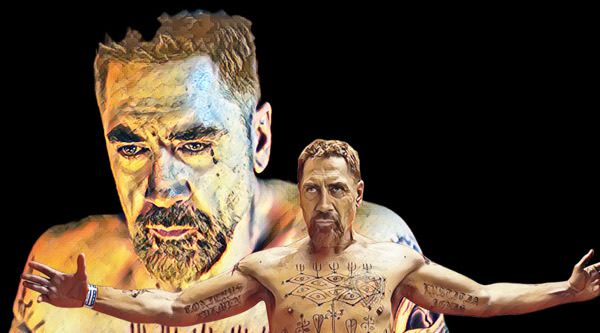
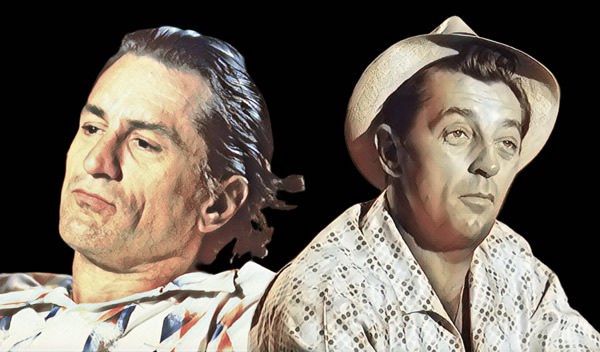
The series moved very far away from the previous versions of Cape Fear. The story originated in John D. MacDonald’s 1957 novel The Executioners, was first adapted for the screen in 1962 with Robert Mitchum and Gregory Peck, and received its most famous film version in 1991, directed by Martin Scorsese and starring Robert De Niro and Nick Nolte.
In the 1962 film, Sam Bowden testified against Cady after interrupting an attack committed by him. Scorsese’s version made the question morally more complicated: Sam was Max’s defense attorney and deliberately concealed evidence that could have helped his client because he believed such a violent criminal should never be released.
The question running through the story was clear: what happens when the legal system cannot punish a monster, but someone decides to correct that failure personally?
The new version expands that dilemma by dividing the case between Anna and Tom Bowden. She defended Max; he was involved in the prosecution. Years later, they are married, wealthy, and protected by a comfortable life built while Cady spent 17 years in prison.
Max’s revenge remains one of the strongest elements of a story created in the 1950s and is still relevant today. A man considered dangerous is betrayed by the person responsible for protecting his rights and kept in prison through legal manipulation. Who is truly wrong?
The answer would be simpler if Max were merely a victim. But he leaves prison fully aware of what was done to him and turns a genuine injustice into permission to destroy anyone who crosses his path.
The series makes the question even more disturbing by revealing that Max was, in fact, innocent of the crime that led to his conviction.
Who killed Melissa?
Max did not kill Melissa, his pregnant wife.
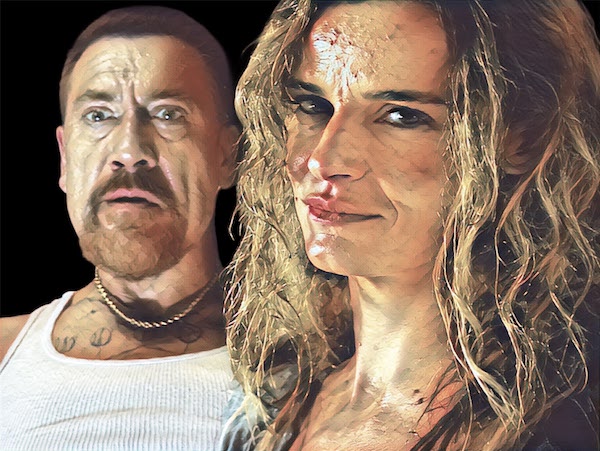
The real killer was Crystal, his half-sister, played by Juliette Lewis. Obsessed with Max and shaped by a deeply abusive family dynamic, Crystal murdered Melissa out of jealousy.
But she did not kill the baby.
After the murder, Crystal removed the child from Melissa’s womb and raised him as her own son. The baby grew up under the name Luke, inside the same violent family that had created Max.
The long scar on Luke’s body, which Anna noticed in the previous episode, was not the result of an ordinary operation. It was the mark of his brutal birth.
Luke was therefore not the product of an incestuous relationship between Crystal and Max, as the series briefly encouraged us to suspect. He was Max and Melissa’s son.
Why does Max kill Crystal, Luke, and his own father?
The final episode begins with Max arriving at the boat where Crystal, Luke, and Robert are gathered.
He is not looking for answers. He wants to eliminate the family he holds responsible for everything he suffered as a child.
Max shoots Crystal and Luke, throws them into the lower compartment of the boat, and locks Robert, his father, inside one of the cages used for dogs. He then covers his father in fuel, sets him on fire, and burns the entire boat.
At that moment, Max still does not know Luke’s true identity. He believes the young man is Crystal’s son and simply another member of the family that tortured him.
Only later does he discover that he has killed his own child.
The revelation turns Max’s revenge into a perfectly cruel tragedy. For 17 years, he believed Melissa and their unborn baby had died together. Everything he did was, in his own narrative, an attempt to avenge that loss. When he finally destroys the Cady family, he also destroys the son he believed he was avenging.
Max kills the only part of Melissa that had survived.
How does Anna expose Max at the restaurant?
After escaping from the boat and crossing the river, Anna returns to Savannah just as Max is opening his restaurant, Melissa and Adam’s.
Cady is surrounded by supporters, reporters, and admirers who see him as the symbol of a wrongful conviction. Journalist Tabitha has helped turn his case into a media spectacle, while his followers, the “Cadyhawks,” publicly defend his innocence.
Anna decides to defeat him using the same weapon he has used against the Bowdens: public exposure.
During the opening, she plays the recording Natalie made at the detention center. In it, Neveah admits that her father ordered her to enter the Bowden home, manipulate Zack, seduce him, and participate in his plan to destroy the family.
Noa also plays the conversation in which Max convinces Amy Brancato to confess to Melissa’s death and take her own life. That false confession was what allowed him to be released in the first episode.
Max tries to claim the material was created using artificial intelligence, but loses control when Anna provokes him. In front of the cameras, he grabs her by the throat, publicly confirming the violence she has just accused him of.
For the first time, the man who had so successfully manipulated the media loses control of his own image.
How does Max escape again?
Max is arrested after attacking Anna, but manages to escape police custody just as a hurricane approaches Savannah.
Tom, who has been released, reunites with Anna, Natalie, and Zack at the family home. The police search the property, fail to find Cady, and leave without realizing that he is hiding on the roof.
The sequence is deliberately exaggerated. Max appears in the middle of the storm, enters through a window, and quickly takes control of the house.
He ties up Anna, Tom, and Natalie and injects Zack once again with the drug used to distort his perception, weaken his will, and make him obedient.
Cady then turns the Bowden living room into his own private courtroom.

Why did Anna send Max to prison?
Max places Anna and Tom “on trial” for the conspiracy that kept him imprisoned for 17 years. Natalie symbolically becomes the jury, while Zack is used as an instrument of torture.
Anna finally admits the truth.
During Cady’s trial, information had leaked from the jury room. The jurors were divided, and Max might have been acquitted. Instead of using that information to help defend him, Anna persuaded him to accept a deal that guaranteed his imprisonment.
She had been involved with him during a period marked by alcoholism and memory blackouts. She did not know exactly what had happened between them and feared that she might be pregnant with Max’s child.
Anna did not want Natalie to grow up connected to a man she considered a monster. She therefore allowed her personal fear to interfere with her professional duty.
Max was right about one thing: his right to a proper defense had been betrayed.
That does not justify what he became, but it prevents Anna and Tom from occupying the comfortable position of completely innocent victims. The Bowdens’ life was built on a secret and on a legally indefensible decision.
Does Zack lose his tongue?
No.
Under the influence of the drug, Zack begins obeying Max’s commands. Cady orders him to bite his own tongue, threatening to make him tear it off if Anna refuses to confess.
Zack bites down hard and begins to bleed, but Max stops him. The main purpose is to torture Anna and Tom by showing that he can force their son to mutilate his own body.
Zack is injured, but he does not lose his tongue. In the final scene, he is eating and talking at the family barbecue, suggesting that he has physically recovered from the wound.
How does Max discover that Luke was his son?
During the improvised trial, Anna shows Max Luke’s birth certificate.
The document claims that Crystal gave birth at home on the same day Melissa disappeared. Max, however, knows that Crystal could not become pregnant because of an accident.
The pieces finally fall into place.
Crystal killed Melissa, removed the baby from her body, and falsely claimed to be the baby’s mother. Luke was Max and Melissa’s son.
Anna then delivers the truth capable of destroying Cady: the son he believed had been dead for 17 years was alive until only a few hours earlier. Max himself had killed him and burned his body inside the boat.
He spent the entire series trying to force the Bowdens to experience his loss, only to discover that he had caused the greatest loss of his own life.
How does the family defeat Max?
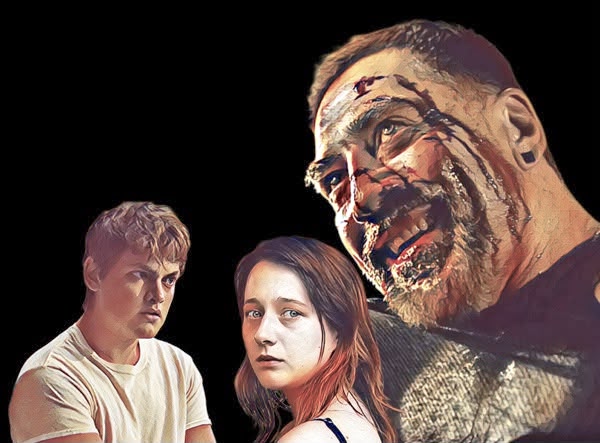
While Max processes the revelation, Natalie uses a lighter to burn through the plastic restraint binding her wrists.
She escapes and attacks Cady with a nail gun, striking him in the head and exposing part of the metal plate implanted after the injuries he suffered in prison.
Zack, still under the influence of the drug, briefly regains control after remembering a fishing trip with Tom. The memory allows him to recognize the man he considers his real father, regardless of biology.
He attacks Max and helps free the family.
Anna stabs Cady, Tom knocks him into the swimming pool, and the two begin to drown him. Natalie shouts for her parents to kill him.
They could do it. After a home invasion, kidnapping, torture, and attempted execution, they could plausibly claim self-defense. Even so, Anna tells Tom to release him.
“Let him die in a cage.”
The decision closes a moral circle. In the past, Anna manipulated the legal system to ensure that Max remained in prison. Now, when she has the opportunity to execute him with her own hands, she chooses to keep him alive and return him to the system.
Max Cady does not die at the end of Cape Fear.
Who is Natalie’s father?
The series does not answer the question.
Natalie receives the result of a DNA test, but does not open the envelope in front of the audience.
Paul was always presented as her likely biological father. Tom is the man who helped raise her and emotionally occupied the role of father. Max could also be her biological parent, considering the unclear relationship between him and Anna during the period in which she became pregnant.
During the final barbecue, Natalie watches Tom for several moments and then joins the family without opening the result.
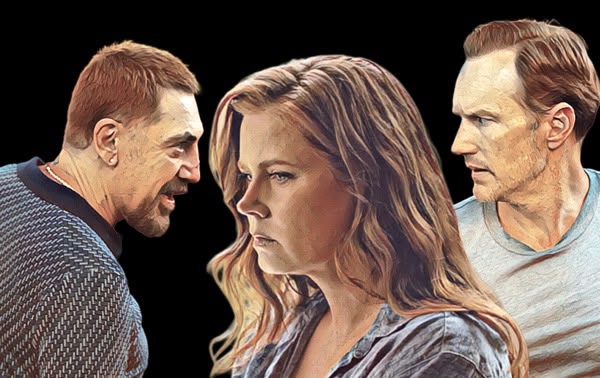
This does not necessarily mean she discovered that Tom is her biological father. It means that, at that moment, she chooses not to allow genetics to reorganize her life once again.
The envelope contains an answer. The series decides that we do not need to know it.
Tom may not be the biological father, but he is the father Zack recognizes during the final confrontation, and the man Natalie returns to in the end.
What does the documentary about Max mean?
In the epilogue, the case has already been transformed into entertainment.
Natalie watches a production called The Cady Case: Victim or Villain?, presented by journalist Tabitha, who even declares her love for Max.
It is one of the series’s most effective contemporary updates. A man who manipulated women, caused suicides, committed murder, tortured teenagers, and nearly destroyed a family can still be sold as an ambiguous true-crime character.
The title preserves the central question: is Max a victim or a villain?
He is both.
He was a victim of a monstrous family, childhood abuse, a defense attorney who violated his rights, and a conviction for a crime he did not commit. But he also became a murderer, manipulator, and torturer.
The injustice helps explain part of his transformation. It does not absolve his choices.
What does the final barbecue and the red effect on Anna mean?
The final scene deliberately recreates the beginning of the series.
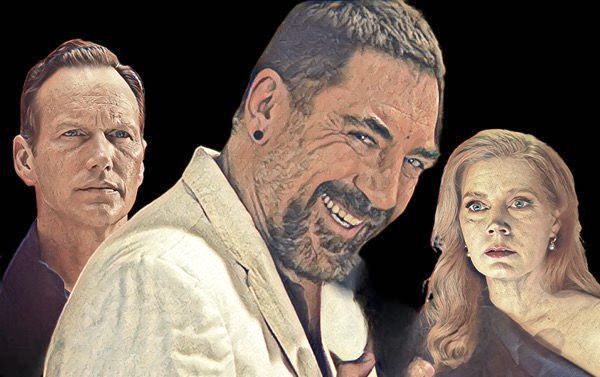
Tom cooks hamburgers beside the pool, Zack talks, Natalie joins the family, and Anna watches an almost advertisement-perfect image of domestic normality. On the surface, the Bowdens have rebuilt their home.
First, Tom looks into the distance as though he has noticed someone or something. Anna then turns around as well. The image takes on the red appearance of a photographic negative or X-ray.
There is no confirmation that Max is hiding in the garden, has escaped again, or is watching the family.
The effect is primarily symbolic, inherited from the expressionistic visual style of Scorsese’s film. It reveals the reverse side of the image: beneath the happy meal, the fear, guilt, and violence remain.
Anna knows their old life cannot be recovered. The family is together, but it is no longer innocent.
The external threat has been contained. The fear has been internalized.
What is left open for a second season?
Although Cape Fear was announced as a limited series and has not yet been renewed, the ending preserves enough material for the story to continue.
Max is alive and will presumably return to prison, but we do not see his new conviction, the length of his sentence, or the legal consequences of all the crimes he committed after his release.
Neveah is alive as well. The series does not show her leaving juvenile detention, making that her last known situation. She helped expose her father, but remains emotionally connected to him and was raised to see the Bowdens as enemies.
The result of Natalie’s DNA test remains unopened. The murder of Faith, Neveah’s mother, is not fully resolved. The legal impact of the recordings manipulated by Max is also left without a conclusion.
Most importantly, Max still controls his own narrative. Even in prison, he has become the subject of documentaries, gained admirers, and preserved his public image as a wronged man.
He would not necessarily need to simply escape. He could be released because of another legal failure, manipulate followers from inside prison, or use Neveah to restart his revenge.
Javier Bardem is the heart of Cape Fear
The new elements — the Cady family, Neveah, the true-crime journalist, Max’s unclear relationship with Anna, the drugs, the restaurant, and even his genuine innocence in the original murder — were inserted into a story that inherits the bloody and violent signature of Scorsese’s film. Scorsese serves as an executive producer on the series alongside Steven Spielberg.
Some of those ideas worked. Others made the narrative heavy and unnecessarily prolonged.
The torture Max suffered, the cruelty of his family, and the quieter violence within the Bowden household allow us, at certain moments, to see Cady through another lens. The series shows how a monster can be created: from childhood abuse to morally ambiguous decisions made by a justice system that believes it can decide who does and does not deserve legal rights.
Even so, Cape Fear relies too heavily on “shocking” twists and graphic violence. Almost every episode needs to add another drug, a hidden relative, mutilation, or increasingly grotesque crime. At times, the series seems to confuse intensity with excess.
It was not an easy series to follow. Even its strongest ideas were frequently buried beneath subplots, additional characters, and unnecessary revelations.
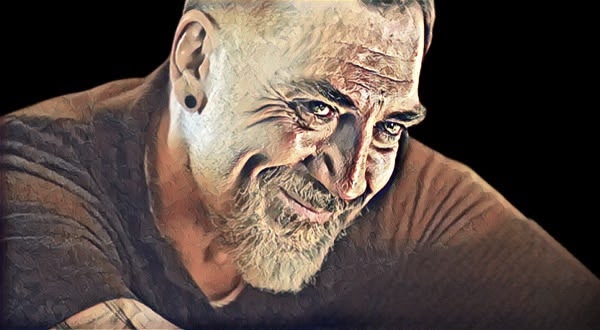
Javier Bardem, however, clearly relishes the role of the violent, seductive, and malevolent Max Cady. Even during the deliberately exaggerated sequences — particularly the improvised courtroom in the final confrontation — he keeps the story alive.
Bardem is the heart of the series because he understands Max’s essential contradiction. He does not play him simply as a monster, nor does he try to turn him into a misunderstood victim. His Cady takes pleasure in violence while also believing completely in the justice of his own cause.
Max was innocent of the crime for which he was imprisoned.
But he was never an innocent man.
The Bowdens survived. That does not mean they won.
Max returned to a cage, but he still achieved what he wanted most: he forced them all to admit that the perfect family they presented to the world had never truly existed.
Descubra mais sobre
Assine para receber nossas notícias mais recentes por e-mail.

