
As published on Caderno B+
I thought I knew Robin Hood. In truth, perhaps what I really knew was mostly the Disney fox.
I am hardly alone. After more than a century of cinema, Robin Hood has become one of those characters who seem to need no introduction: the athletic, charming outlaw, an extraordinary archer, surrounded by his companions in Sherwood Forest, in love with Lady Marian and committed to stealing from the rich to give to the poor. Douglas Fairbanks, Errol Flynn, Sean Connery, Kevin Costner, Russell Crowe and so many other versions helped build that image. Disney’s animated film, released 53 years ago, may have done it even more effectively for certain generations.
The Death of Robin Hood, which finally arrived in Brazilian theaters this Thursday, August 13, begins by destroying that image.
Directed by Michael Sarnoski, the A24 film starts from a far less comfortable premise: what if Robin Hood was not the benevolent hero we learned to love? What if he was, instead, an extremely violent man, responsible for death and suffering in countless lives, who reaches the end of his own life finally forced to answer for what he has done?
Hugh Jackman knows how to play bitter, tense, wounded men filled with regret. Logan is the obvious reference, but I also think of The Fountain, Darren Aronofsky’s film with Rachel Weisz. Jackman is especially good when an apparently powerful body conceals a man who is emotionally shattered.
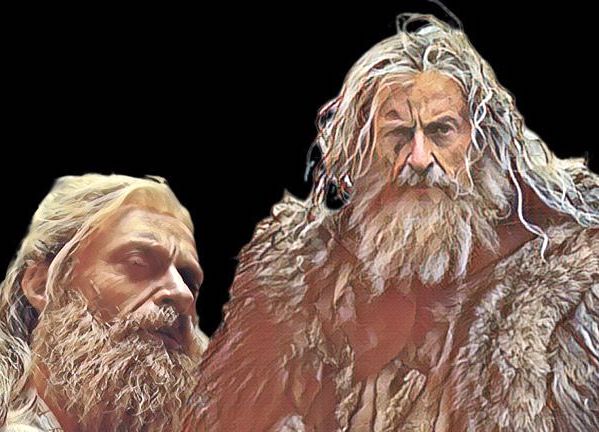
Here, he takes that quality to an extreme. His Robin is old, with white hair and beard, his face scarred and his body no longer capable of sustaining the image of the invincible hero. The great archer now bleeds, hurts, drags himself across the ground, and needs other people to care for him. But the most important transformation is not physical. This is a man who spent decades justifying his violence. Now he has to look at its consequences.
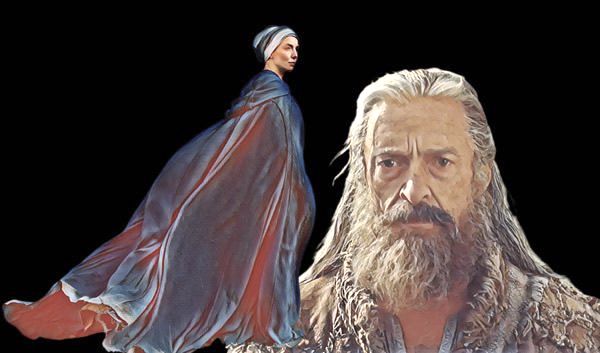
There is something of Logan in the starting point, but The Death of Robin Hood is less interested in recovering lost heroism than in asking whether there is still any possibility of repair for a man who finally recognizes the suffering he caused.
That is where the film becomes most interesting. The medieval version of Robin Hood is morally far less clean than the figure cinema eventually crystallized. The earliest ballads present an outlaw capable of generosity and loyalty, but also tremendous violence. In those old texts, men are killed without the elegant choreography that would later turn Robin into an adventure hero.
Sarnoski, then, is not simply inventing an “evil Robin Hood” in the name of modern revisionism. In a way, he is traveling in the opposite direction from popular culture. Over the centuries, we made Robin nobler, more romantic, funnier, more chivalrous, and morally simpler. The Death of Robin Hood strips those layers away in an attempt to find again the violent man who may have existed beneath the legend.
Perhaps that is why the film feels so strange. Even recent versions that have tried to make Robin more historical or realistic have preserved the need to justify the hero. The current MGM+ series also tries to dismantle some certainties surrounding the myth, but remains much closer to the traditional heroic construction. Sarnoski goes further: he asks whether there was ever a hero there in the first place.
Visually, The Death of Robin Hood takes that proposition to its limits. It is a beautiful film, shot on film, but it is also very dark. And when I say dark, I mean literally dark. At certain moments it is difficult to distinguish faces, recognize characters or even make out details within a scene.
Bill Skarsgård, as Little John, is almost unrecognizable. Murray Bartlett is even harder to identify. The Australian actor we know from Looking, The White Lotus, Physical and, more recently, Maximum Pleasure Guaranteed appears covered in bandages as a mysterious leper living in the priory.
Bartlett is especially interesting because of the versatility with which he moves between charming, unpleasant, fragile or morally complicated characters. Here, hidden for much of the film, he creates one of the most important figures for understanding what Sarnoski wants to say about guilt.
Because that man is Guy of Gisborne. Guy is traditionally one of Robin Hood’s great antagonists. In the old ballad bearing both of their names, Robin kills him. The film radically changes that fate and places victim and aggressor face to face decades later. It is a huge liberty, but it works because Guy becomes a kind of mirror for Robin, a man whose own body carries the consequences of an earlier life.
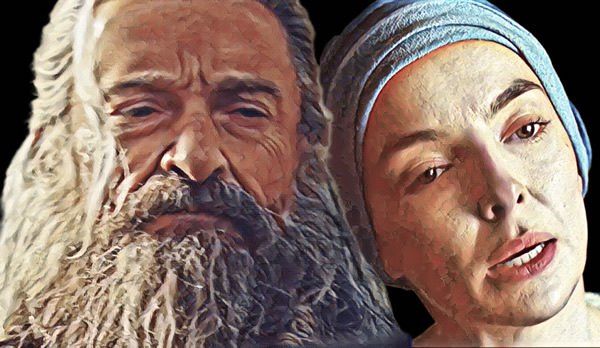
Jodie Comer also appears very different from what we are used to seeing from her. With short, almost severe hair, she plays Brigid without reaching for grand displays. Much of her performance is in her eyes, in the pauses and in the way she watches Robin. It is a surprisingly restrained performance from an actress who is often given much more explosive characters.
In the traditional story of Robin Hood’s death, he goes to a priory to be treated through bloodletting and eventually dies after being betrayed by the prioress. The story remained associated for centuries with Kirklees and even with Robin’s supposed grave, although there is no historical evidence that it is actually his burial place.
In the film, Brigid stops being simply the cruel woman who kills the hero. She was also one of his victims, and that changes the meaning of his death.
This is not exactly murder or betrayal, but an agreement between two people who finally recognize who they truly are to one another. There is something close to euthanasia in the final gesture, but above all there is Robin’s decision to surrender control over his own death to a woman who would have every reason to hate him.
Redemption does not come because she decides that he was always a good man. It comes because he finally admits that he was not.
Margaret, however, is what makes this arc truly emotional. Little John’s daughter is orphaned and could easily become yet another indirect victim of the life Robin and his companion chose. Robin grows attached to the girl and begins to see in her what he never noticed while he was busy building his own story: the survivors.
It is also through her that Noah Jupe enters the story as Arthur, a young man whose life was marked by the violence of Robin and Little John and who arrives carrying an ancient obligation: revenge. Jupe understands the boy’s pain perfectly. He is not simply an antagonist who must be defeated. He is someone who inherited a violence that did not begin with him.
And that is precisely where Robin finally manages to do something different. He could kill again and protect Margaret by repeating exactly what he has always done. Instead, he tries to break the cycle. Perhaps that is the film’s real heroic act: not an impossible arrow, a victory in battle or a final display of strength, but the decision not to pass violence on to the next generation.
It is a beautiful idea. The problem is that the film takes a long time to get there. Its contemplative nature suits the material, but the narrative does not always sustain the pace it has chosen. Some silences work, while others merely prolong what we have already understood. There is a difference between asking the audience to be patient enough to enter this world and repeatedly making them wait for the film to start moving again.
The visual darkness also goes too far at times. I completely understand the choice. This is a world of mud, illness, violence, and men living on the margins. It would make no sense to turn 13th-century England into a sunlit adventure forest, but when the cinematography begins to prevent us from recognizing who is actually in the scene, aesthetic coherence starts exacting a price. I know that may not be a popular opinion, sorry.
The score is beautiful and does an enormous amount to build this dark atmosphere. The folk songs, even though they make sense within the film’s search for cultural authenticity, create a curious distance for an international audience. They work more as a texture of the place than as an immediately accessible emotional element.
None of this ruins the film, but it keeps a very good idea from becoming a great film all the way through. And then Sarnoski returns to the legend.
After taking so many liberties, The Death of Robin Hood ends by recovering one of the most beautiful images associated with the character: Robin asks for his bow, fires one final arrow, and determines that he will be buried wherever it lands. Traditionally, Little John participates in that moment. The film transfers that function to Margaret, which makes perfect sense within the story it has just told.
Because it no longer matters only where Robin will be buried. What matters is who will remain to tell the story. For more than a century of cinema, we have repeatedly watched the beginning or the height of the legend. We have seen Robin pick up his bow, gather his men, defy the sheriff, fall in love and become a hero. We have rarely asked how it ended. Much less what that man might have to confront if he lived long enough to understand the cost of everything he had done.
The Death of Robin Hood is brutal, dark, violent, and slower than it needs to be. It also requires the audience to be willing to abandon a beloved image of the character. Perhaps that is why it will not work for everyone.
But that discomfort is precisely what makes it relevant. Sarnoski does not want to give us back the Robin Hood we loved. He wants to know whether anything of value remains when the legend ends, the body grows old, enemies acquire faces, and the victims finally get stories of their own.
The answer he finds is surprisingly tender. Robin cannot change what he did, but he can acknowledge it and answer for it. He can try to prevent someone else from repeating his mistakes. And then he can finally die. Not necessarily as the hero we thought we knew, but perhaps, for the first time, as a man who managed to do something good.
Descubra mais sobre
Assine para receber nossas notícias mais recentes por e-mail.

