
Gloria Steinem died on Wednesday, September 2, at the age of 92, at her home in New York City, surrounded by people who loved her. No cause of death was disclosed. The news brings to an end a life that spanned almost a century, but not the struggle to which she devoted more than six decades. Few women have exerted such a profound influence on how other women came to understand their rights, their bodies, their choices, and the place they could occupy in the world.
Gloria did not invent feminism, obviously, nor did she ever claim ownership of a revolution she always made a point of describing as collective. But she knew how to do something absolutely decisive: she translated feminist demands into a language capable of leaving universities, small political groups, and activist meetings to reach magazines, television, public platforms, homes, and the daily lives of millions of women.
She understood very early that telling a story is also a way of contesting power. A journalist before becoming the most recognizable face of second-wave feminism in the United States, Gloria transformed reporting, essays, and interviews into instruments of social change. She did not simply speak about women. She listened to women and created spaces where experiences previously treated as individual failures could be recognized as the consequences of a collective structure.
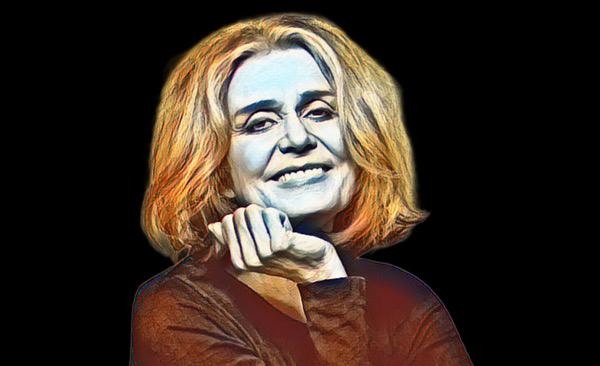
The Journalist Who Entered Playboy to Expose Playboy
Born on March 25, 1934, in Toledo, Ohio, Gloria grew up in an unstable family, spent part of her childhood traveling with her father and, while still very young, had to care for her mother, who struggled with serious mental health problems. She would later connect that experience to the way women of her generation were denied economic independence, adequate treatment, and, very often, the possibility of choosing a different life.
After graduating from Smith College and spending time in India, she began working as a freelance journalist. The story that brought her national attention was published in 1963, after she went undercover at a Playboy Club in New York and spent 11 days working as one of its famous Bunnies. In A Bunny’s Tale, she exposed the low wages, control over the women’s appearance, medical examinations, harassment, and exploitation hidden beneath the fantasy of glamour sold by the company.
The piece was a milestone in investigative journalism, although it produced a cruelly predictable consequence: for a time, editors saw her as the journalist who had worn a Bunny costume, rather than as the professional who had exposed a machinery of exploitation. Gloria knew from personal experience the trap of being heard while simultaneously being reduced to her appearance.
With her long hair parted down the middle, enormous aviator glasses, and a beauty the press never allowed anyone to forget, she became a political celebrity. This was an advantage because it increased her reach, but it was also a problem. The movement brought together intellectuals, workers, Black activists, lesbians, union organizers and women from many different backgrounds. The media still needed to choose a single face — and it chose Gloria’s.
She spent the rest of her life trying to use that visibility without pretending that she spoke alone or on behalf of everyone.
The Magazine That Taught Women to Say “We”
In 1971, Gloria was among the founders of Ms., initially launched as an insert in New York magazine before becoming an independent publication the following year. The choice of name was already a small revolution: “Ms.” made it possible to identify a woman without revealing whether she was single or married, just as “Mr.” never required a man to present his marital status before presenting himself.
The magazine treated abortion, equal pay, domestic violence, racism, sexuality, political representation, and the division of labor inside the home as public issues. This may seem obvious today, but it was not. Publications aimed at women taught them how to please their husbands, lose weight, care for their children, and decorate their homes. Ms. argued that female dissatisfaction was not ingratitude, inadequacy, or hysteria. There were political reasons behind that unease.
Gloria also helped found the National Women’s Political Caucus, the Ms. Foundation for Women and, later, the Women’s Media Center. She fought for abortion rights, the passage of the Equal Rights Amendment, women’s political participation, freedom from violence, and equality both inside and outside the home. In 2013, Barack Obama awarded her the Presidential Medal of Freedom, the highest civilian honor in the United States.
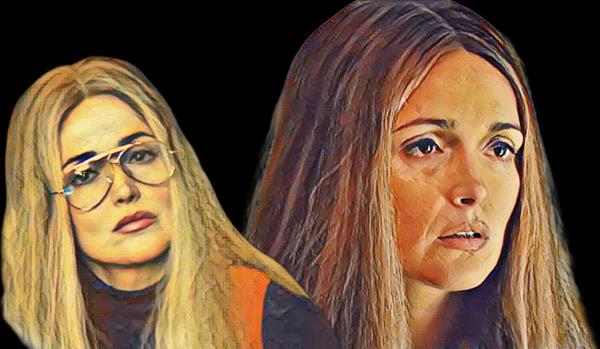
Rose Byrne Does Not Play Gloria: She Becomes Her
A life so intimately connected to image, the media and popular culture was inevitably destined for the screen. In 1985, the story about Playboy was adapted into the television movie A Bunny’s Tale, with Kirstie Alley playing Gloria. In 2020, however, two very different productions managed to convey both her biography and her political significance.
In The Glorias, Julie Taymor divided the character among four actresses. Ryan Kiera Armstrong, Lulu Wilson, Alicia Vikander and Julianne Moore played Gloria at different stages of her life, as though no woman could be explained by a single version of herself. Inspired by the memoir My Life on the Road, the film uses journeys, encounters and memories to show the making of both the journalist and the activist. It is not merely the construction of an icon, but the story of the many women who helped build that icon.
It was in Mrs. America, however, that Gloria received her most remarkable dramatic portrayal. Rose Byrne looks absolutely identical to her. The hair, glasses, body, clothes, and delicacy of her gestures create an almost unsettling resemblance. But it would be little more than an excellent impersonation had Byrne not also understood the character’s central contradiction: the woman who became the spokesperson for a collective movement without ever feeling entirely comfortable in that position.
Cate Blanchett plays Phyllis Schlafly, the conservative who mobilized women against the Equal Rights Amendment during the 1970s. Although Blanchett was the production’s biggest name and Schlafly drives a significant part of the narrative, Mrs. America belongs just as much to her as it does to Rose Byrne’s Gloria. One does not work without the other. The series is not simply about the rise of an enemy of feminism, but about the confrontation between two extremely intelligent women who understood, before many others did, that politics is also made of images, emotions, fears, and narratives.
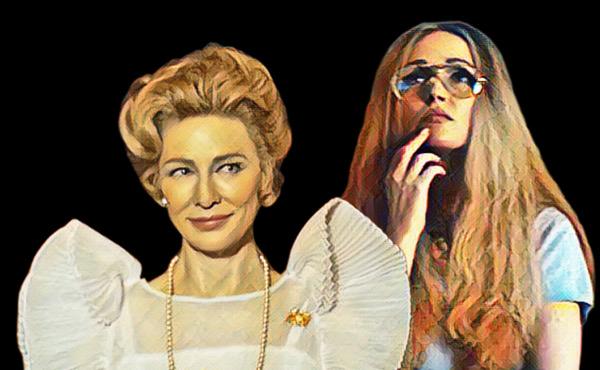
Schlafly offered women frightened by social transformation the promise that nothing would need to change. Gloria said everything needed to change — including what happened inside homes, marriages, and families. The first turned the preservation of male power into a female mobilization. The second had to persuade women that freedom would not destroy their lives, although it might force them to rebuild those lives.
Rose Byrne also captures the price Gloria paid for her appearance. She was sexualized by her opponents, underestimated by men and, at times, regarded with suspicion even by women within the movement. The series never reduces her to a saint or presents her as someone with all the answers. It shows her intelligence, humor, ability to listen, and hesitation amid feminism’s internal disputes. That is precisely why the character feels so alive.
The miniseries follows the battle to ratify the Equal Rights Amendment and makes room for other essential women, including Bella Abzug, Shirley Chisholm and Betty Friedan. Its emotional axis, however, remains the confrontation between Schlafly and Steinem: two opposing ways of understanding female power and two visions of the world whose consequences we are still living with.
A Struggle She Never Considered Over
Gloria continued working well into her final years. She supported younger movements, defended reproductive rights after the overturning of Roe v. Wade, and insisted that feminism, racism, economic inequality, and violence could not be treated as separate battles. She also acknowledged that she had learned much of her understanding of feminism from Black women, even as her position as a famous white woman prompted legitimate criticism and debate over the decades.
At 66, she married businessman and environmental activist David Bale, the father of actor Christian Bale. For a woman who had spent so long criticizing the restrictions imposed by traditional marriage, the decision was treated by some as a contradiction. Gloria responded as she always had: feminism had never been about preventing women from marrying, but about allowing them to choose whether, when, and whom they wished to marry. David died in 2003.
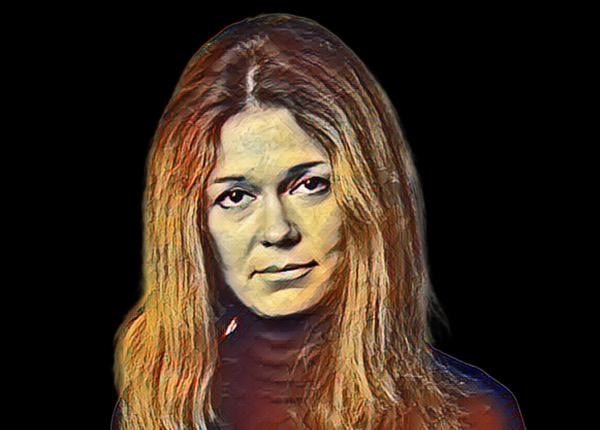
Her final book, An Unexpected Life, will be published posthumously on September 22. In it, Gloria returns to her childhood, the people she met and the events that transformed a girl from Ohio into one of the most influential women of the 20th century. Until the end, she continued writing, listening, and trying to understand how personal experiences are connected to structures of power.
Her death comes at a time when many victories that once seemed secure are under threat again. Perhaps that is why it is impossible to treat her merely as a historical figure belonging to the 1960s and 1970s. Gloria Steinem did not become a legend because she participated in a completed revolution. She became a legend because she understood that no right remains guaranteed when the generations that follow stop defending it.
She did not finish the fight. No single woman ever could. But she permanently changed the vocabulary, the images, and the possibilities with which we will continue fighting.
Descubra mais sobre
Assine para receber nossas notícias mais recentes por e-mail.

