
Over the years, we’ve followed many changes in the entertainment industry here. In the past six years, with the expansion of streaming, channels have added a “Plus,” others have changed their names, and several have even changed hands. But few companies have changed their names and structures so much, in such a short time, as the Warner Bros. group, home to one of television’s most recognizable brands: HBO.
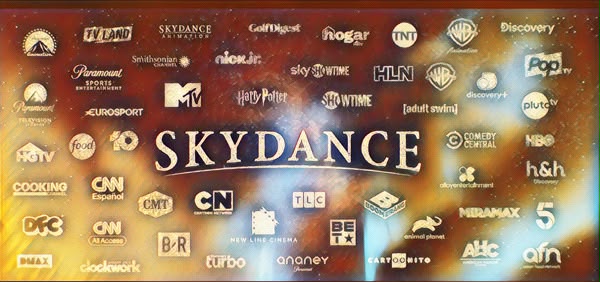
Now another round begins. The company bringing together Paramount and Warner Bros. Discovery will be called Skydance, the name of the production company founded by David Ellison. The announcement came on Friday, October 2, ahead of the merger’s expected completion on Tuesday, October 6. Paramount and Warner Bros. will remain the studios’ brands, but neither will appear in the new parent company’s name.
It’s a choice that stands out. If the deal brings together two companies with more than a century of history, why not Paramount Warner or Warner Paramount? Ellison says the intention is to preserve both identities without making one appear to take precedence over the other. The solution, however, places both under the brand he brought to the negotiating table.
“What once was the peak is now just the beginning,” he wrote. The line could even be read as a playful reference to Paramount’s mountain. For anyone who has followed these reorganizations for some time, it also carries a familiar promise: that the next change will finally give these historic brands the structure they need.
Is HBO Disappearing? That’s Not What Was Announced
It’s easy to mix things up because the companies themselves seem determined to make them harder to understand. HBO, HBO Max, and Max are not successive stages of a single brand gradually disappearing. HBO remained HBO. It was the streaming platform that went through an identity crisis.
Launched in the United States in 2020, HBO Max became Max in 2023, a change that reached Latin America in 2024. The idea was to present a broader service, bringing together HBO’s prestige, Warner’s catalog, and Discovery’s content. Those three letters apparently no longer represented everything the company wanted to put in that shop window.
In 2025, they did again. Max was renamed HBO Max, and the official explanation reclaimed precisely the quality and identity the HBO name conveyed. It was a curious reversal: first, a recognizable brand was discarded; then, its value was rediscovered.
For those who experienced the heyday of subscription television, this is particularly strange. HBO wasn’t just any combination of letters. It set an expectation. The Sopranos, Sex and the City, The Wire, and Six Feet Under helped turn television into a place for narrative ambition that no longer needed cinema’s permission. Later, Game of Thrones expanded that sense of television as an event. The name had built a relationship with audiences that no corporate restructuring announcement could produce overnight.
Skydance has not announced HBO’s disappearance or another change to the streaming service’s name. The change concerns the parent company. But the question makes sense because viewers have already learned that a brand can be central to one business presentation and expendable in the next.
How Many Times Has Warner Changed?
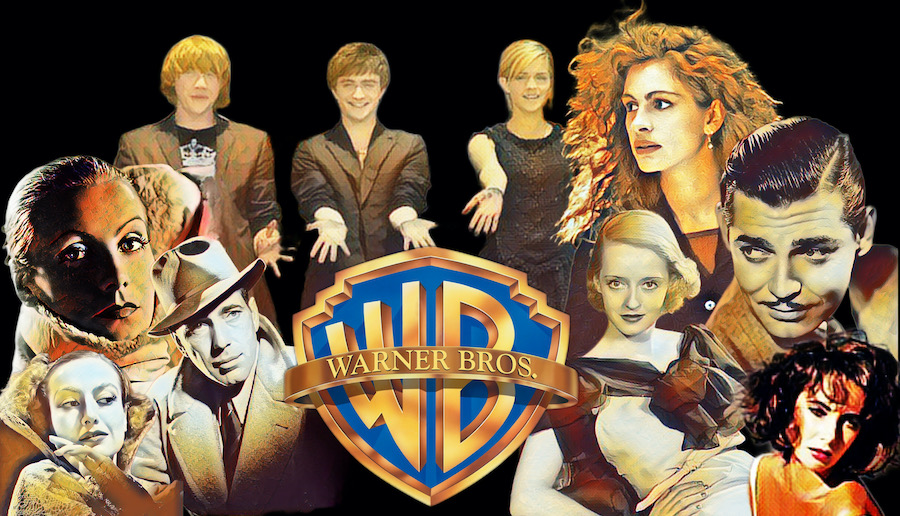
Warner’s shield has survived a century of cinema, but the companies above it have been less stable. Warner Communications gave way to Time Warner in 1990. The merger with AOL produced AOL Time Warner in 2001. AOL was dropped from the name in 2003. The AT&T acquisition brought WarnerMedia in 2018. The merger with Discovery created Warner Bros. Discovery in 2022.
Each name came with an explanation about the future. The marriage of content and technology, the ability to reach new audiences, the scale needed to compete. Now, once again, the promise is to expand the possibilities of these historic brands.
Paramount has its own sequence. After the reorganizations involving Viacom and CBS, ViacomCBS adopted the name Paramount Global in 2022. With Skydance’s arrival in August 2025 came “Paramount, a Skydance Corporation,” later simplified to Paramount Skydance Corporation. That combination didn’t last long as the definitive identity.
In this new chapter, Discovery disappears from the parent company’s name. That doesn’t mean its channel is disappearing, but it is a symbolic change for a brand that seemed essential to the group’s identity in the previous merger. Four years later, it will no longer be on the sign.
Where Did Skydance Come From?
Skydance wasn’t invented in a meeting to name the merger. It is the name of the business created by David Ellison, son of Larry Ellison, the co-founder of Oracle. Its origins date back to 2006, with Flyboys, although the company itself identifies 2010 as its founding year.
The company grew by producing and financing films, often in partnership with Paramount. True Grit, Mission: Impossible — Ghost Protocol, Jack Reacher, Star Trek Into Darkness, World War Z, and Top Gun: Maverick are among the titles associated with its history. Audiences might not have remembered the name, but they were already watching the results of its work.
Then came television, animation, games, and sports. Series such as Grace and Frankie, Altered Carbon, Reacher, and Foundation show that its reach extended beyond major action movies. Skydance kept expanding its operations until it went from being a studio partner to controlling one — and now an even larger group.
There is a difference between recognizing a brand in the credits and seeing it above Paramount and Warner. That shift in position is what the announcement establishes.

Why Not Paramount Warner?
It would be an obvious solution. Paramount Warner or Warner Paramount would keep the two identities audiences immediately recognize in the group’s name. They would also open up a discussion about who comes first, who bought whom, and which studio appears more important.
Ellison says he wanted to avoid that. In his statement, he says the new identity should not diminish, alter, or overshadow either studio. Paramount and Warner Bros. have their own histories, and the idea is to keep them in the spotlight while Skydance provides the infrastructure, scale, and ability to reach larger audiences.
The agreement that cleared the merger’s legal obstacles also requires some operations to remain separate. Preserving the studios’ identities is therefore part of a discussion that goes beyond logo design. That doesn’t mean Paramount Warner was a prohibited name, but it helps explain the appeal of a parent company with a distinct identity.
The point is that Skydance is not a name without a history or a connection to one side. It is Ellison’s brand. By avoiding a hierarchy between Paramount and Warner, the choice establishes another: both sit beneath the name he brought to the negotiating table.
There is not necessarily a contradiction between preserving the studios and adopting a different corporate brand. There is, however, a gap between the stated intention and what will have to be demonstrated. Keeping a mountain or a shield in the credits is simpler than preserving teams, production cultures, and room for creative decisions.
HBO has already shown that audiences recognize a brand’s value even when its executives seem uncertain. Paramount and Warner carry a history that wasn’t built by a single management team and doesn’t belong solely to whoever completed the acquisition.
Ellison promises to give that history a more powerful engine. Audiences, who have already witnessed so many announced departures, will want to know where he intends to take it.
Descubra mais sobre
Assine para receber nossas notícias mais recentes por e-mail.

