
The third season of The Gilded Age ended with one of Julian Fellowes’ cruelest ironies: Bertha Russell finally achieved everything she had wanted, turned her daughter into a duchess, consolidated her position in New York society, and even managed to change the rules of a world she had spent years trying to conquer, only to discover that she might lose the one person who had stood beside her from the beginning. Unlike the previous two seasons, in which social battles frequently ended in spectacular victories, the eight episodes released in 2025 demonstrated that ambition can have consequences far more intimate and painful than simply losing a struggle for prestige.
The series also found a more compelling balance among its numerous characters, allowing the stories of the Russells, the van Rhijns, and Peggy Scott to evolve in unexpected directions. There was an aristocratic wedding, a romantic marriage proposal, another carefully calculated one, a broken engagement and a reconciliation, a devastating death, an attempted murder, and the financial rise of a former servant. At the same time, the social transformations of 1880s New York continued to unfold, revealing how wealth, birth, gender, and race determined opportunities and limitations, even for those who believed they had achieved a certain degree of freedom.
The season finale, which aired on August 10, 2025, left virtually every character facing a new chapter. To understand what might happen in Season 4, it is worth revisiting the decisions that brought them to this point, especially because some of their apparent victories conceal conflicts that are far from resolved.

Bertha Russell Gets Her Duke but Loses Control of Her Family
From the beginning of the series, Bertha Russell has pursued one clearly defined objective: transforming the enormous fortune accumulated by her husband into a permanent passport to American high society. After establishing herself as a central figure in New York society and challenging Mrs. Astor’s authority, she sees her daughter Gladys’s marriage as an opportunity to achieve something even more extraordinary by connecting the family to the British aristocracy.
Her chosen candidate is Hector, the Duke of Buckingham, a young aristocrat whose historic title and impressive estates conceal a precarious financial situation. The marriage interests both families for very different reasons. The Russells possess more than enough money but no title, while the duke has a title and an estate that require extraordinary financial resources to maintain. Bertha immediately recognizes the potential of such an alliance, but encounters resistance in the one place where she least expects it: her own home.
Gladys is in love with Billy Carlton, a young American whose relationship with her mother is considered incompatible with her ambitions. The couple secretly become engaged, and Gladys attempts to resist Bertha’s pressure. Bertha, however, demonstrates that she is willing to use every weapon at her disposal to prevent the marriage. Her interference, accompanied by threats to Billy’s professional future, eventually causes him to withdraw, revealing that he lacks the determination necessary to stand against the powerful Russell family.

George, meanwhile, does not share his wife’s enthusiasm for the aristocratic marriage. Although he understands its social advantages and has himself invested considerably in the family’s rise, he believes Gladys should have the right to choose her husband. Their disagreement exposes a fundamental difference between a couple who, until now, had been accustomed to confronting the outside world as a united front. For Bertha, her daughter’s happiness will follow naturally from an extraordinary social position; for George, that position does not justify sacrificing her feelings.
Gladys eventually marries Hector and moves to England, where she discovers that becoming a duchess does not necessarily guarantee respect or independence. At Sidmouth Castle, her husband’s sister, Lady Sarah, continues to exercise an authority that makes the young American’s adjustment particularly difficult. The servants are reluctant to acknowledge their new mistress, and Gladys feels that she has merely exchanged her mother’s influence for another form of submission.
When Bertha learns about her daughter’s difficulties, she travels to England to intervene. It is a particularly revealing moment for the character, because the same woman who imposed the marriage is genuinely concerned about Gladys’s unhappiness. She helps her daughter confront Lady Sarah, claim her position in the household, and gain her husband’s support. Gradually, Gladys begins to establish a more affectionate relationship with Hector, who proves less insensitive than the initial circumstances might have suggested.
The reconciliation between mother and daughter seems to confirm, at least in Bertha’s eyes, that her strategy has succeeded. Gladys finally finds a measure of happiness within her marriage, while her title represents a social triumph beyond anything Bertha had previously accomplished. George, however, remains unable to forgive the way the marriage was arranged, especially because he ultimately participated in a ceremony that he knew went against his daughter’s wishes.
The conflict between the Russells intensifies throughout the season and takes on an entirely different meaning when George nearly dies. His survival prompts a reassessment of his life that drives him further away from his wife, even as Bertha hopes that their shared ordeal might bring them closer together. In the final episode, after attending the magnificent ball she organizes in Newport, George announces that he intends to remain apart from her and is uncertain whether he wishes to continue their marriage as before.
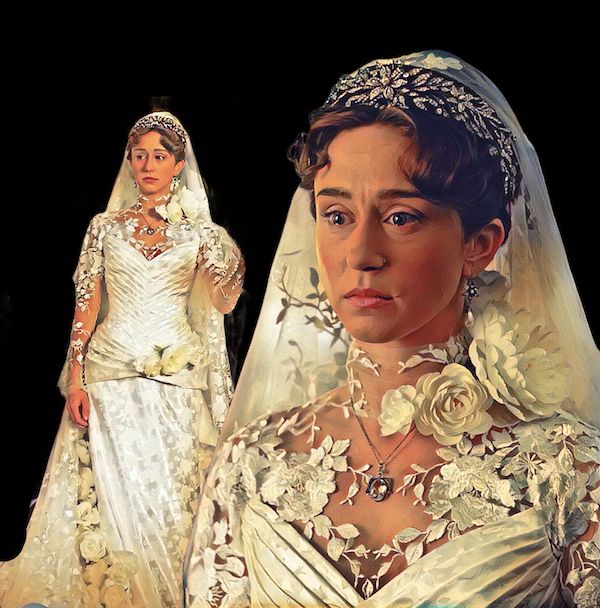
Bertha argues that everything she has done has been for the family and that their social achievements also represent protection and opportunities for their children. George, however, believes she has crossed boundaries that should never have been negotiable. The businessman who always admired his wife’s determination begins to question whether that same determination has become a form of cruelty toward the people she loves most.
Then comes the final irony. Gladys arrives to announce that she is pregnant, bringing news that Bertha would probably consider the ultimate confirmation of her aristocratic project. Her daughter will become the mother of a child connected to the British nobility, but the woman who achieved this extraordinary position may be about to lose her own husband.
George Russell Faces a Financial War and Nearly Gets Murdered
While Bertha attempts to reshape the family’s social destiny, George faces one of the greatest threats to the fortune he has built. His railroad investments require extraordinary resources, and his plans for expansion bring him into conflict with investors, competitors, and former allies determined to weaken his control over the business.
The dispute involves the Illinois Central and negotiations with powerful businessmen, including J. P. Morgan, who attempts to find a solution to the deadlock between major shareholders. The possibility of George losing influence over his own investments increases when Clay, a former associate now working against him, becomes involved in maneuvers intended to undermine his financial reputation.
The situation worsens when damaging information about the condition of his businesses reaches the press, directly interfering with negotiations that could secure his position. George refuses to accept agreements he considers unfavorable, even as the pressure mounts. His determination reflects the same stubbornness that allowed him to build the Russell fortune, but it also reveals his difficulty acknowledging that not every battle can be won by imposing his will.

Larry plays an important role in this storyline when information emerges about copper reserves in Arizona, potentially representing a valuable new financial opportunity. The discovery strengthens George’s negotiating position and demonstrates that his son is beginning to find a more meaningful place in the family business, even while maintaining his own interests and a less aggressive outlook on the corporate world.
The conflict reaches its most dramatic moment when an armed man enters George’s office and shoots him after first shooting an employee. Gravely wounded, George is taken home, where Bertha must confront the possibility of losing her husband before they have resolved the disagreements dividing them.
The intervention of Dr. William Kirkland, who happens to be treating Peggy Scott nearby, proves decisive. With Marian Brook’s assistance, the doctor performs an improvised operation to remove the bullet, managing to save George under extremely difficult circumstances. His recovery is not immediate, and the risk of complications remains, but the family finally receives the news that he is expected to survive.
The identity of the person responsible for the attack is not definitively established by the end of the season, leaving room for further developments connected to George’s business rivalries. More important, however, is George’s psychological transformation, as he begins to reconsider the life he has built and the people who have been hurt by his decisions.
Until then, he and Bertha had shared a similar understanding of ambition, although they applied it to different worlds. George used his fortune to acquire economic power, while Bertha sought to transform that power into social influence. After the shooting, he begins to believe there is a fundamental difference between being ruthless in business and behaving that way toward the people one loves. It is a distinction Bertha cannot yet fully accept, because she has always considered her decisions a way of protecting and strengthening the family.
Marian and Larry: Love Is There, but Trust Still Needs to Be Built
After two seasons of tentative approaches, hesitations, and disappointing relationships, Marian Brook and Larry Russell finally begin Season 3 enjoying the romance that has been developing since the beginning of the series. Their relationship also symbolizes a connection between the old aristocracy and America’s new fortunes, although that conflict has become considerably less important to the characters themselves.
Larry is clearly in love and ready to build a future with Marian, who sees in him the possibility of a happiness very different from her previous experiences. Her relationship with Tom Raikes, in particular, left emotional scars that continue to influence how she interprets men’s behavior. Marian wants to trust, but remains especially sensitive to the possibility of being deceived.


The two become engaged, but the relationship enters a crisis when Marian discovers that Larry has visited the Haymarket, an establishment with a questionable reputation, and has not been entirely forthcoming about the outing. The information awakens her insecurities, and she interprets the episode as evidence that her fiancé may be concealing a life incompatible with the commitments he has made.
Larry attempts to explain that he was accompanied by friends and Jack Trotter, but Marian reacts before fully understanding what happened. Her decision to break off the engagement by letter shocks Larry, who feels deeply insulted by how readily she assumed the worst about him.
When Jack confirms Larry’s account, Marian realizes she acted hastily. The discovery does not immediately resolve the situation, however, because Larry must also come to terms with the feeling that his word was not enough to deserve her trust. The conflict turns the couple into something more interesting than a simple romantic promise, raising questions about the difficulty of establishing a mature relationship after painful experiences.
The attempted murder of George changes the dynamic between them. Marian actively participates in the efforts to save Larry’s father, demonstrating courage and an ability to act under extreme pressure. Larry recognizes the importance of her contribution, and Bertha also begins to regard her with an admiration she had not previously shown.
Their reconciliation takes place during the Newport ball, when Marian and Larry finally discuss what drove them apart. She admits that she allowed previous experiences to influence her judgment, while he recognizes that they will need to learn how to confront disagreements without destroying their relationship whenever difficulties arise.
The season ends with the two once again committed to the possibility of a future together, but without eliminating the need to rebuild trust. It is a romantic conclusion, although less definitive than the marriage that had seemed so close at the beginning of the season.

Oscar van Rhijn Loses the Man He Loves and Considers an Unexpected Marriage
Oscar begins the third season still facing the consequences of the financial scam that left him virtually ruined. The loss of his investments compromised the family fortune and profoundly altered his relationship with Agnes, whose wealth had been destroyed by decisions he believed would multiply it.
The need to recover his financial position leads Oscar to seek new professional opportunities and attempt to rebuild the confidence of those around him. John Adams, his former lover, remains an important presence in this process, offering support, contacts, and the possibility of a relationship that, although it cannot be lived openly, continues to represent one of the most sincere emotional connections in his life.
The season also brings an unexpected reunion between Oscar and Maud Beaton, the woman involved in the scam responsible for his downfall. When he discovers that Maud also lost control of the situation and was abandoned by her accomplices, Oscar demonstrates an unexpected capacity for understanding. Rather than seeking revenge alone, he tries to help her rebuild her life.


This willingness reveals a more mature character than the man who, in the earlier seasons, seemed primarily interested in finding a wealthy heiress capable of solving his problems without compromising his freedom. Oscar remains pragmatic, but his feelings can no longer be entirely concealed behind irony and social convenience.
His story takes a devastating turn when John Adams dies after being struck by a carriage, shortly after a meeting between the two men. The death is sudden and leaves Oscar facing a grief he cannot publicly express as he would wish.
In a society where homosexuality had to remain hidden, Oscar loses someone he loves without being able to acknowledge the true extent of that loss. The situation provokes one of the most significant confrontations between him and Agnes, who begins to understand aspects of her son’s emotional life that had remained unspoken for years.
John leaves Oscar a summer house and a letter, gestures that demonstrate the depth of a relationship society would never have recognized. The inheritance has material importance, but its emotional significance is even greater because it represents the persistence of a love that could never be publicly formalized.
At the end of the season, Oscar reconnects with Enid Winterton, Bertha Russell’s former maid, who rose socially through marriage to a wealthy man and is now a widow. The two recognize the possibility of a mutually advantageous alliance, since Enid possesses money and desires greater social legitimacy, while Oscar has a respected name, valuable connections, and an obvious need for financial stability.

Oscar’s marriage proposal is not born of romantic passion but of a pragmatic assessment of the advantages such a union could offer them both. Enid does not accept immediately, although she shows interest in discussing the possibility.
The prospective marriage creates an intriguing opening for Season 4, particularly because Oscar understands the consequences of living while concealing part of his identity, while Enid also knows that social survival often depends on carefully maintained appearances.
Agnes and Ada Discover That Money and Authority Are Not the Same Thing
The change in the van Rhijns’ financial circumstances produces one of the third season’s most entertaining and meaningful transformations. After losing her fortune, Agnes must accept that the home in which she has always exercised absolute authority now depends on the money Ada inherited from her late husband, Reverend Luke Forte.
For Agnes, the situation is particularly difficult because her identity is deeply connected to the place she has always occupied within the family and New York society. She believes that experience, lineage, and traditional customs grant her authority regardless of who pays the bills. Ada, however, begins to realize that she no longer wishes to live as the younger sister obliged to accept every decision made by the elder.
The conflict emerges through small domestic situations that acquire much greater symbolic significance, from decisions concerning the servants to the organization of meals and the question of who should occupy the head of the table. The household becomes a kind of portrait of the social transformations unfolding throughout the series, portraying an old order forced to negotiate with new forms of power.

Ada also seeks a sense of purpose after Luke’s death and becomes involved with the temperance movement, advocating restrictions on alcohol consumption. Her campaign causes discomfort within the household and irritates Agnes, but it demonstrates her desire to build a life no longer limited by her sister’s expectations.
Her longing for her husband leads Ada to consult a medium, Madame Dashkova, hoping to establish some form of spiritual contact with Luke. When she realizes she has been deceived, her disappointment reveals the depth of a grief she has not yet fully processed. Agnes, despite her frequently authoritarian behavior, demonstrates a genuine capacity to comfort her sister when she recognizes her suffering.
Their relationship begins to change more visibly in the final episode, when Ada manages to provide Agnes with an unexpected opportunity. At the invitation of the New York Heritage Society, Agnes is offered the position of vice president, recovering some of the social relevance she feared she had lost.
The gesture allows Agnes to acknowledge her sister’s importance without feeling that she must disappear in order for Ada to find her own place. By formally recognizing Ada as the person responsible for the household and granting her the seat at the head of the table, Agnes accepts a new family arrangement that would have seemed impossible at the beginning of the season.

The transformation is particularly well constructed because neither woman entirely abandons her personality. Agnes remains conservative, proud, and frequently impatient, while Ada continues to be gentle and sensitive, but both begin to understand that living together requires a different balance from the one that sustained their relationship for so many years.
Peggy Scott Finds Love but Must Confront New Prejudices
Peggy Scott begins the third season determined to advance her literary career after working as a journalist and enduring personal experiences that profoundly transformed her understanding of the world. Her desire to publish fiction reflects an intellectual ambition that does not depend on the approval of white society, although the limitations imposed on Black women remain present in nearly every aspect of her life.
An unexpected illness introduces William Kirkland into her story. After a white doctor refuses to treat her, her family obtains the assistance of William, a young Black physician from a prosperous and socially respected family.
The two grow closer and eventually fall in love, but their relationship faces opposition from his mother, Elizabeth Kirkland, who considers Peggy unsuitable for her son. Her objections reveal that prejudice is not confined to relations between white and Black communities, but also involves differences in class, family background, and skin tone within the Black community itself.
Elizabeth believes her son should marry someone who meets the expectations associated with his social position and begins investigating Peggy’s past. When she discovers that Peggy had previously been married and had a child, she uses the information in an attempt to destroy the relationship.
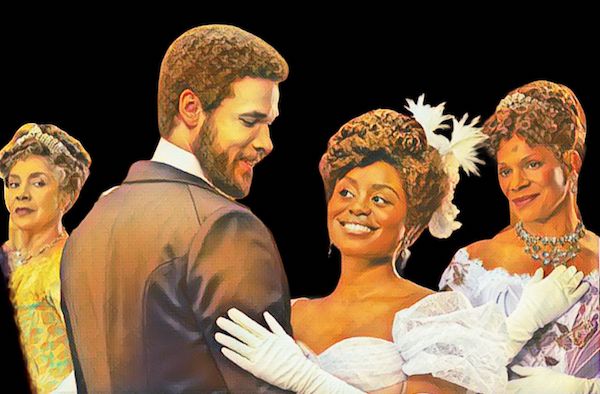
Peggy’s past is marked by traumatic experiences that she is still trying to process. The loss of her child and the circumstances surrounding the end of her marriage remain painful wounds, making the possibility of being judged for events beyond her control particularly distressing.
William is initially shaken by learning information Peggy had not yet shared with him, but eventually understands that the past of the woman he loves does not diminish her worth. His decision also provokes a confrontation with his mother, whose behavior draws criticism from her husband and Peggy’s family.
The tension reaches its peak in the final episode, when William decides to attend the ball organized by his family despite his mother’s attempts to keep him away from Peggy. Before the guests, he proposes marriage to the young woman, making it clear that he will not allow Elizabeth’s prejudices to determine his future.
Peggy accepts, ending the season with the prospect of a happiness that once seemed difficult to attain. Her future mother-in-law’s opposition, however, remains an important unresolved issue, particularly because the series has demonstrated that wealth and education do not necessarily erase the deeply rooted social hierarchies shaping the lives of Black families during that period.
Jack Trotter Leaves Domestic Service and Becomes a Wealthy Man
Jack Trotter’s journey offers an important counterpoint to the aristocratic rivalries that dominate much of the series. While Bertha attempts to transform money into social recognition and Agnes struggles to preserve the authority inherited from her family, Jack acquires a fortune through an invention developed while he was still working as a domestic servant.
His project to improve an alarm clock, developed with limited resources and considerable determination, receives support from Larry Russell, who recognizes the mechanism’s commercial potential. Their partnership allows them to negotiate the patent for an extraordinary sum, close to $600,000, radically transforming Jack’s financial circumstances.
The young man, however, discovers that becoming wealthy means he can no longer live exactly as he did before. Ada realizes that his new position makes his continued employment as a servant inappropriate and encourages him to begin an independent life, even though it means losing an employee everyone genuinely likes.
Jack leaves the van Rhijn residence and distributes monetary gifts to his former colleagues, demonstrating that he has not forgotten the people who were part of his journey. The purchase of a house and the hiring of servants symbolize a social reversal that would have been unimaginable at the beginning of the series.

The transformation also affects his romantic life. While his earlier connection with Adelheid fades, Bridget begins to reveal feelings that go beyond their former friendship as fellow servants. In the final episode, her visit to Jack’s new home, bringing food she has prepared especially for him, suggests the possibility of a relationship that has yet to find its direction.
Jack’s story is significant because it represents a different form of social mobility, grounded in invention, work, and the opportunities created by American industrial expansion. His journey does not eliminate the inequalities of the period, but demonstrates that the world was changing in ways the old aristocracy could no longer entirely control.
Aurora Fane, Mrs. Astor, and the End of Some Rules of Old Society
The third season also explores the consequences of divorce in a society that judged women far more harshly than men. Aurora Fane faces a devastating crisis when her husband, Charles, decides to end their marriage to live with another woman, leaving her confronted not only with the loss of personal stability but also with the possibility of exclusion from the social circles she has always inhabited.
For a woman in Aurora’s position, divorce represented a genuine risk of social ostracism, regardless of who had been responsible for the separation. Agnes, despite her attachment to convention, stands by her friend and expresses outrage at Charles’s behavior.
The issue also reaches Mrs. Astor when her daughter Charlotte faces similar marital difficulties, forcing the great guardian of traditional society to reconsider rules that previously seemed unquestionable. The conflict becomes even more complicated when Ward McAllister, for years an influential figure within aristocratic circles, publishes an indiscreet book exposing the customs and secrets of the families who welcomed him into their homes.
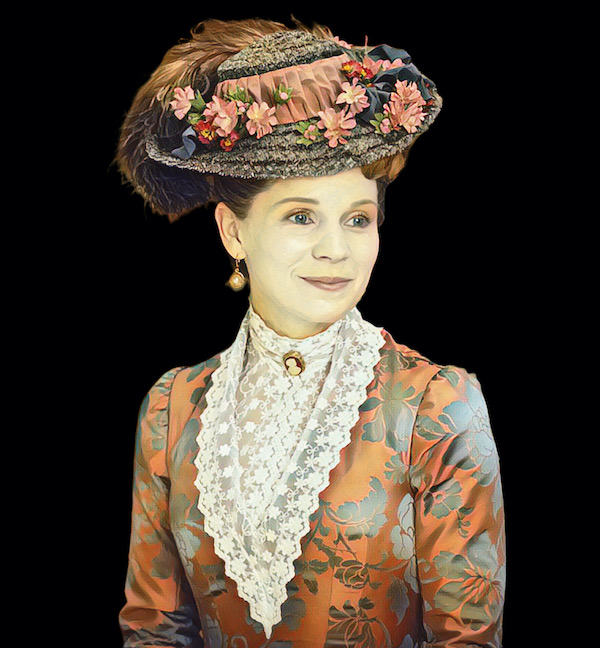
Bertha immediately recognizes the opportunity to transform a personal issue into a demonstration of social authority. When organizing the great Newport ball, she decides to invite divorced women who previously might have been excluded from events of such importance, including Aurora and Charlotte.
The decision provokes resistance, but Mrs. Astor eventually attends, effectively acknowledging that the old conventions can no longer be preserved without exception. Bertha thus achieves a victory different from those of the previous seasons, because she is no longer merely fighting for the right to participate in society; she is beginning to determine which rules that society will follow.
The gesture demonstrates that her rise has finally been consolidated, but it also makes the contrast with the season’s ending even more painful. Bertha succeeds in transforming the social conventions that kept her outside for years, yet cannot prevent her husband from questioning the future of their marriage.
The Newport Ball and the Irony of an Apparently Happy Ending
The eighth episode, titled My Mind Is Made Up, brings together virtually every conflict developed throughout the season. George survives the shooting and begins recovering, while Bertha insists on holding the Newport ball to prevent rumors that might damage the family’s business interests.
The celebration also allows several stories to reach some form of resolution. Marian and Larry talk and renew their commitment to a future together, Oscar takes the opportunity to discuss the possibility of marriage with Enid, and divorced women are welcomed at one of the most important events of the social season.
At another ball, William Kirkland surprises Peggy with a marriage proposal, demonstrating that he is prepared to confront his mother’s opposition. In the van Rhijn household, Agnes acknowledges Ada’s authority, while Jack begins building an independent life beyond the profession he practiced for so many years.

George makes an appearance at the ball organized by Bertha despite still recovering, and his presence is interpreted by his wife as a sign that their disagreements may finally be overcome. She believes that her husband’s survival has reaffirmed the importance of family and hopes everything will return to its previous balance.
But George has also attended because he needs to protect his business interests and prevent his absence from generating speculation. The following morning, when he announces that he will return to New York without resuming their married life, Bertha realizes that she has misunderstood his intentions.
Their argument reveals a disagreement that cannot be resolved through a simple romantic reconciliation. George believes his wife crossed a line by using Gladys’s future as part of her social strategy, while Bertha remains convinced that she secured opportunities for their daughter that very few American women could ever hope to achieve.
Bertha’s argument is not entirely without merit, especially at a time when women’s choices were extremely limited. The problem lies in the way she confuses the future she considers ideal for her daughter with what Gladys actually wanted. George is not entirely free from this contradiction either, since his business decisions have frequently shaped the family’s destiny, but the shooting seems to have forced him to acknowledge questions he previously preferred to ignore.
When Gladys arrives with the news of her pregnancy, Bertha must conceal her own sadness to share her daughter’s happiness. The sequence captures the ambiguity of her journey: she has accomplished the project she considered most important, but no longer knows whether her husband will be beside her to enjoy the results.
Where We Left Every Character Ahead of Season 4
The future of the Russells represents the greatest conflict left unresolved by the third-season finale. Bertha remains socially powerful, with a daughter who is now a duchess and enough prestige to challenge conventions that once seemed untouchable, but her marriage is in jeopardy. George survived the assassination attempt, yet remains involved in financial disputes and has decided to distance himself from his wife while reconsidering their relationship. Gladys, meanwhile, appears to have found some measure of balance in England, where she has gained greater authority and developed a closer relationship with Hector, although her pregnancy may bring new responsibilities and conflicts.
Marian and Larry ended the season reconciled, although they still need to rebuild trust following their broken engagement. Their relationship may also acquire a different significance if the Russell marriage remains in crisis, especially because Marian demonstrated unexpected courage during the attempt on George’s life and earned Bertha’s admiration.
Oscar van Rhijn faces a future marked by grief and the need to reorganize his life. John Adams’s death has left an emotional wound unlikely to disappear, while the possibility of marriage to Enid Winterton offers a socially convenient solution that could also represent another way of concealing his identity. Agnes, by contrast, has recovered a sense of purpose through her invitation to join the leadership of the New York Heritage Society, while Ada has consolidated her position as head of the household and demonstrated that she is capable of making decisions without permanently depending on her sister’s approval.

Peggy Scott begins a new chapter as Dr. William Kirkland’s fiancée, although their relationship remains threatened by Elizabeth Kirkland’s behavior. Her literary career is also still developing, allowing the series to explore the difficulties of reconciling professional ambition, independence, and marriage in a society that remains profoundly unequal.
Jack Trotter, now a wealthy man, must learn to live in a social environment entirely different from the one in which he spent his youth, while his growing connection with Bridget suggests a romantic future that may prove just as interesting as the challenges of adapting to his new financial position. Aurora Fane faces the challenge of rebuilding her life after divorce in a society whose rules are beginning to change, but which is still far from fully recognizing women’s freedom.
What Season 3 Revealed About The Gilded Age
The third season was important because it allowed The Gilded Age to move beyond some of the limitations that characterized its earlier years. Julian Fellowes has always demonstrated an extraordinary talent for portraying small social battles, codes of behavior, and rivalries capable of turning a dinner, a reception, or an invitation to the opera into an event of enormous significance. Yet the series often seemed to protect its characters from the most serious consequences of their choices, resolving complicated conflicts through convenient reconciliations.
This time, that protection began to disappear. Bertha obtained the aristocratic title she wanted for her daughter, but had to face the possibility of losing George. Oscar rediscovered a meaningful relationship, only to suffer a loss he could not openly mourn. Peggy found love but realized that the success and respectability of a Black family did not eliminate deeply rooted prejudices. Marian and Larry learned that being in love does not necessarily mean knowing how to build a relationship based on trust.
It was also interesting to observe how the great economic and social transformations of the period began to affect the characters more directly. Jack’s rise, the expansion of the railroad business, the debate surrounding divorce, female independence, and tensions within the Black elite demonstrated that the world of the 1880s was changing rapidly, even when its inhabitants insisted on preserving traditions that no longer entirely corresponded to reality.
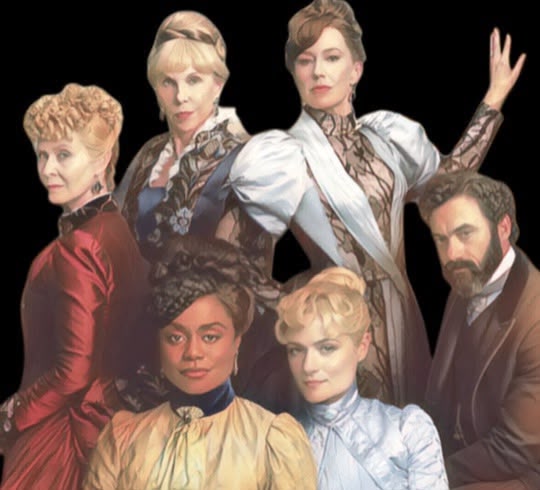
Season 4 will therefore find characters less protected by the certainties that once guided their lives. Agnes will need to accept that her power no longer depends exclusively on birth, Oscar must find a way to survive emotionally after John’s death, Marian and Larry will need to learn to trust each other, and George will discover whether his new outlook is compatible with the life he built alongside Bertha.
But it is Bertha’s situation that promises to offer the most fascinating conflict. For three seasons, we have watched a woman turn social rejection into fuel for her ambition, refusing to accept the limitations imposed by people who considered her background inferior. Her determination was often admirable, particularly because the society she wanted to enter had been structured to prevent women like her from achieving positions of genuine influence.
The problem is that Bertha came to believe that the same determination could be applied to every aspect of life, including the feelings of her children and husband. When George decides to distance himself, she encounters an obstacle that cannot be overcome through money, invitations, alliances, or carefully calculated strategies.
The third season therefore ended with a question far more interesting than the identity of the man who attempted to kill George or the future of the Russells’ railroad investments. After spending years trying to conquer a world that refused to accept her, Bertha has finally reached its center, surrounded by prestige, recognition, and power, but may have lost the very relationship that made her victories emotionally meaningful.
And it is within this contradiction that Season 4 of The Gilded Age may find its most important story: that of a woman who learned how to conquer everything, but still needs to discover that loving someone does not necessarily mean controlling their destiny.
Descubra mais sobre
Assine para receber nossas notícias mais recentes por e-mail.

