
We are just over a month away from seeing some of the heroes we had already said goodbye to. Opening in the United States on December 18, with its Brazilian release announced for December 17, Avengers: Doomsday brings Chris Evans back as Steve Rogers and sets the stage for a meeting between the Avengers, the Fantastic Four and the X-Men. Scarlet Witch has also just reappeared in the VisionQuest finale, in a scene connecting her directly to the new adversary. The promise of a reunion, however, comes with a question: how many will survive it?
Steve’s journey ended in Avengers: Endgame, without an on-screen death. Wanda, meanwhile, was presumed dead after Wundagore collapsed in Doctor Strange in the Multiverse of Madness. These are different kinds of returns, now brought together under the threat of a man who has the face of another character we said goodbye to: Tony Stark.
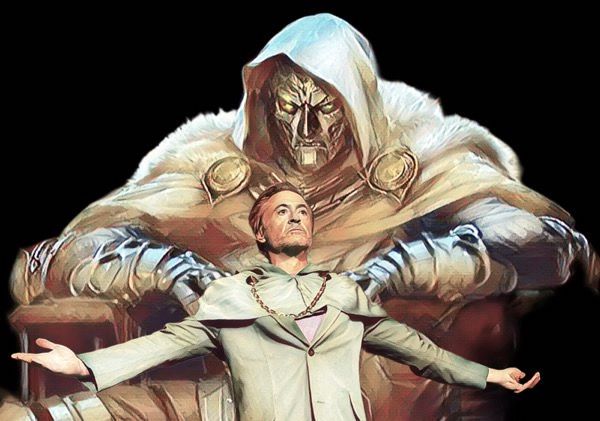
After years of following Stones, variants, timelines and universes threatening to collide, it is understandable to look at Robert Downey Jr. in a mask and green cloak and ask: who exactly is this man, and why should we be so afraid of him? The answer begins with a detail that casting the actor forever associated with Iron Man makes confusing: Doctor Doom has his own name, history and ambitions. He is Victor von Doom, one of Marvel’s great antagonists, whose importance extends far beyond fighting the Fantastic Four.
To understand the character, it helps to consider the combination of three kinds of power that usually appear separately: scientific knowledge, mastery of magic and political authority. Victor possesses all three, adding a dangerous conviction: if he can understand and solve problems that others cannot, why should he allow those people to make any decisions?
Who Is Victor von Doom?
Created by Stan Lee and Jack Kirby, Doctor Doom debuted in Fantastic Four #5 in 1962. His comic-book origins are rooted in Latveria, a fictional Eastern European country. Victor is born into a Romani community, loses his parents and grows up marked by persecution and violence. His mother, Cynthia, was a sorceress whose soul became trapped by Mephisto, helping explain why science and the occult become intertwined so early in his story.
His talent takes him to the United States to study, where he meets Reed Richards, the future Mister Fantastic. A defining rivalry begins there: Victor encounters someone capable of challenging his image of himself. While building a machine to reach the realm of the dead, he ignores Reed’s warning about a flaw in the experiment. The resulting explosion scars his face; Victor blames Richards.
This is the classic outline of his origin, which has undergone variations over the decades. What matters is recognising how tragedy becomes entangled with his inability to accept limits. Victor can acknowledge that a problem exists; acknowledging that the mistake is his requires considerably more.
Why Does He Wear a Mask?
The metal mask, armour and green cloak make Victor look like a combination of medieval knight, scientist and sovereign. His injured face is part of that construction, although the extent of his disfigurement and the circumstances that worsen it vary depending on the version. The symbolism remains: he chooses to present the world with an image over which he exercises absolute control.
The more interesting reading is that this invulnerable appearance also protects a deeply wounded pride. For someone who needs to consider himself exceptional, an imperfection can become unbearable. The mask allows the injured man to transform himself into an authority who demands to be feared.
What Are His Powers?
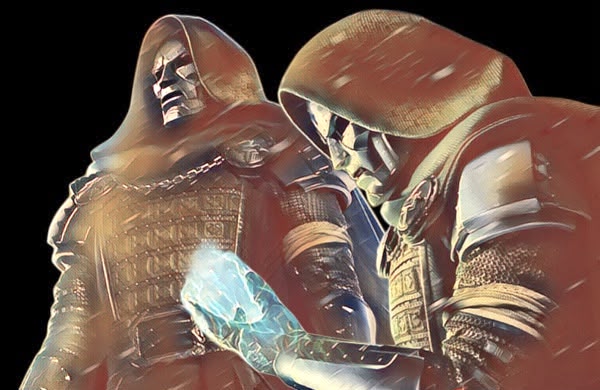
Victor combines advanced technology and sorcery. His armour provides protection and combat capabilities, while his scientific knowledge allows him to build extraordinary machines and weapons. His famous Doombots are robotic duplicates that can act in his place, making even identifying the opponent a problem.
Magic extends that threat into dimensions armour alone could never reach. Reducing him to a kind of evil Iron Man therefore leaves out an essential part of the character. He can approach a problem as an inventor and turn to the supernatural when science is insufficient. That combination also helps explain why his conflicts extend beyond the Fantastic Four.
Does He Rule a Country?
Yes. In the comics, Victor seizes power in Latveria and establishes himself as its ruler. This adds a political dimension to his stories: his decisions are backed by the resources and institutions of a state, affecting people who live under his authority.
There are stories in which the population admires him and in which he delivers tangible results. That ambiguity feeds his favourite justification: his competence supposedly proves that he deserves to rule. The problem lies in the price of that promise. Protection depends on submission to the protector’s will.
This is also what makes him such a rich character. Victor can identify a real threat, offer a solution and, in the same move, turn everyone who benefits into his subjects. His intelligence does not eliminate tyranny; it can make it more efficient.
Why Does He Hate Reed Richards So Much?
Reed represents a limit Victor cannot tolerate. The leader of the Fantastic Four possesses an intelligence capable of rivalling his own, while also standing at the centre of a family and relationships that do not depend simply on obedience.
Their rivalry involves scientific disputes, resentment and actual acts of aggression. As an interpretation, however, the conflict becomes especially interesting when we recognise that defeating Reed never seems sufficient. Victor needs to prove that he deserved to be recognised as superior from the beginning. Every confrontation can become an attempt to heal that wound.
Why Does He Have Tony Stark’s Face?
Robert Downey Jr. plays both characters, but Kevin Feige has rejected the theory that this Doctor Doom is a Tony Stark variant. His announced identity is Victor von Doom. What remains unexplained is whether the physical resemblance will have an explanation within the story or simply be a casting convention, with the same actor playing different people.
That choice creates a particularly cruel dramatic possibility. If the heroes recognise Tony’s face, they will have to confront a threat who looks like the man who sacrificed himself to save them. Trust, hesitation and suffering could enter the equation, especially for those who were close to Stark. For now, this is a possibility suggested by the casting, rather than a reaction confirmed by the film.
Victor’s description in an official guide also emphasises his rule over Latveria, his combination of magic and technology, and his history with the Fantastic Four. For newcomers, that connection is more useful than memorising universe numbers: Reed and his family have a history with the man the other heroes will have to face.

Why Is He “Collecting” Heroes?
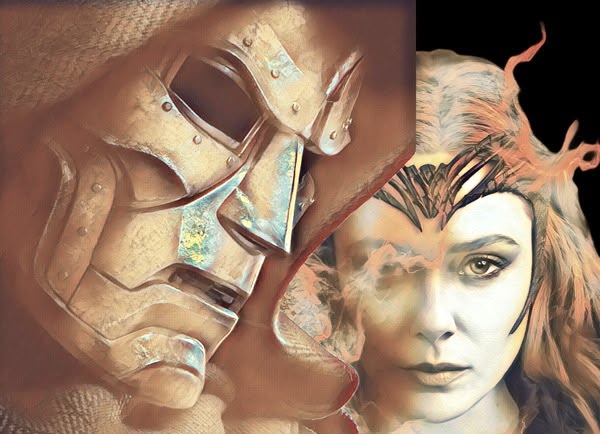
This is where the character stops being an introduction to a future threat and starts interfering in stories we are already following. In the new Avengers: Endgame — Encore scene, Victor finds Bruce Banner in isolation and announces that he has come to “collect” him. At the end of VisionQuest, he approaches Wanda beneath Wundagore’s rubble, awakens Scarlet Witch and declares that he wants her power.
The choice of word is revealing. A collection belongs to someone; its pieces do not decide where they want to be. That fits a man accustomed to treating extraordinary abilities as resources he could manage better than their owners. We still need to discover whether he intends to steal powers, force their wielders to work for him or offer deals concealing some form of control. The scenes establish his interest; the full mechanism remains unclear.
Banner offers two obvious possibilities: Bruce’s scientific intelligence and the Hulk’s strength. Wanda adds the ability to alter reality. As a hypothesis, this combination goes far beyond assembling powerful fighters. Victor may be seeking specific capabilities for an operation none of them could carry out alone.
The two also share a vulnerability. Banner fears what he might do when he loses control; Wanda has suffered devastating losses and turned her attempt to repair them into a catastrophe. A man promising a solution could exploit those wounds before ever needing to threaten them. This is a possible interpretation, rather than confirmation that they have agreed to help him.
What Does Scarlet Witch’s Return Mean?
Wanda’s return is one of the most significant developments in the buildup to Doomsday. The VisionQuest scene revisits her apparent death at Wundagore and adds Doom’s arrival as he removes the rubble and awakens her. Questions remain about the circumstances of her survival and what he will do next, but his stated intention prevents the moment from being read simply as a generous rescue.
Wanda returns in the presence of someone interested in appropriating her abilities. For a character whose story has been shaped by loss, manipulation and attempts to control her own life, that circumstance carries particular weight. Her return could represent an opportunity to make amends, but also exposure to another form of exploitation.
There is also an important comic-book reference: The Children’s Crusade, a story involving the Young Avengers, Billy and Tommy’s search for their mother, and a relationship between Wanda and Doom that reaches the point of an engagement. Their history involves magic, manipulation and disputes over responsibility. His appearance at the end of VisionQuest makes that association relevant, although it does not confirm an adaptation of the romance.
The question, then, is no longer simply whether Wanda is alive. We need to discover the circumstances of her return and how much say she will have over the use of her own powers.
How Is He Connected to the Other Heroes?
Reed Richards is his historic rival, and the Fantastic Four represent a personal connection predating his encounter with the Avengers. Victor’s approach to Franklin, Reed and Sue’s son, in the credits scene of The Fantastic Four: First Steps makes the threat particularly intimate. In the comics, Franklin possesses extraordinary reality-related powers. That helps explain readers’ interest in the scene, but it does not establish that the films will give him exactly the same function.
Doctor Strange is another character associated with Victor in the comics, sometimes as an adversary and sometimes as an ally against greater threats. That relationship fuels theories about the film, but a partnership on the page does not amount to confirmed membership in his “collection”.
For the Avengers and the X-Men, the connection may initially be less personal and more urgent: their worlds are threatened. The announced premise of Doomsday brings heroes from three universes into a collision. It is in this situation that someone capable of offering a way out can gain ground before everyone understands his conditions.
Seeing Steve Rogers again adds an emotional dimension to that gathering. We said goodbye to him after he decided to live with Peggy and pass the shield to Sam Wilson. He returns to a universe that has moved forward, with another Captain America and new relationships between its heroes. Chris Evans’ presence therefore raises questions extending beyond nostalgia.
What Is His Plan, Exactly?
The film’s complete plot has not yet been revealed. What we have is a character connected to magic and technology, interested in people with exceptional powers, facing a crisis involving different realities. The hypothesis that he intends to use those abilities to “fix” the multiverse fits his history, but the stages and cost of that operation have yet to be shown.
In the 2015 Secret Wars comics, Doom obtains extraordinary powers and assembles fragments of destroyed realities into a world called Battleworld. He preserves something of what would otherwise be lost and rules the result as a god. The act of salvation and the appropriation of power occur together.
That is why the word “save”, when applied to Victor, requires attention. The question is not simply whether he can prevent destruction, but who will be free to exist afterward. The comics provide that interpretive framework; they do not reveal the films’ scripts in advance.
Will We Lose Other Heroes?
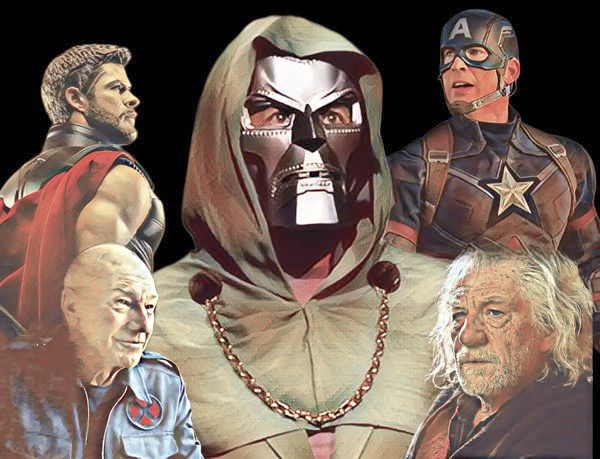
That possibility hangs over the anticipation for the film, but there is no official list of characters Doom will kill. Rumours about specific victims should not be confused with confirmed events. In the comics, Victor is capable of killing powerful opponents; which of those stories, if any, will be used in the films remains unknown.
The return of beloved faces does not guarantee a peaceful reunion, either. Wanda awakens before someone who declares that he wants her power, while Banner is sought out for a “collection”. Before we even know who might die, another threat already exists: will these heroes be able to decide what to do, or will their abilities be used against everyone else?
Is He Worse Than Thanos?
In terms of victims or destructive capacity in the films, it is too early to say. Thanos eliminated half of all life in the universe, and Doomsday has yet to demonstrate the extent of Victor’s actions. Announcing a “bigger” adversary is not enough to make him more frightening.
But Doom may be more disturbing in the way he approaches the heroes. Thanos imposed a genocidal logic based on the idea of balance; Victor has a long history of confusing his intellectual superiority with the right to rule. Both can justify atrocities as necessary. In Doom’s case, the need to demonstrate that he is indispensable contaminates the solution itself.
The “collection” makes that difference especially interesting. Before confronting the assembled heroes, he is already seeking some of the most powerful individuals in their universe. If he can use their abilities, or convince some of them that his project is the only way out, the others will also have to confront people they know and may want to save.
The dramatic potential lies there: an enemy who understands a real threat, offers an answer, and turns other people’s desperation to his advantage. Victor may even save the world. The problem begins when he decides that, as a result, the world now belongs to him.
Descubra mais sobre
Assine para receber nossas notícias mais recentes por e-mail.

