
When a work of art moves us, we want to know who created it. But if we discover that its creator was diagnosed with schizophrenia, something about our gaze may change. Colors begin to look like symptoms, repetitions become clues, and invention turns into evidence of a supposed break with reality. An interest in the artist risks becoming an investigation of the illness.
Arthur Bispo do Rosário confronts us with this problem. Diagnosed with what was then called “paranoid schizophrenia,” he experienced long periods of hospitalization and created a body of work that would gain recognition in the art world. His story requires us to consider psychological suffering, but also authorship, exclusion, and the conditions under which someone can create and gain recognition.
Bispo do Rosário: who has the right to name a creation?
Bispo was sent to the Hospital Nacional dos Alienados in late 1938 and transferred to the Colônia Juliano Moreira in January 1939. His life included periods outside institutions; he returned permanently to the Colônia in 1964. Along the way, he developed an extensive body of objects and embroidery, connected to the mission he understood himself to have received: to represent the things of the world.
For an outside observer, it is possible to discuss the relationship between this mission and his experience of psychosis. But a clinical description does not exhaust what he produced. Recognizing a delusional dimension does not erase his choices of materials, his work, his creative process or his individuality. A work can be profoundly connected to its creator’s experience without fitting entirely within the explanation we give that experience.
Artistic recognition also requires us to look at the place from which this work emerged. Its circulation in exhibitions and its presence at the Venice Biennale in 1995 contrast with the long years of institutionalized life. Celebrating what reached museums should deepen our interest in the person who created it, including the conditions in which he lived.
Nijinsky: when we listen to the artist himself
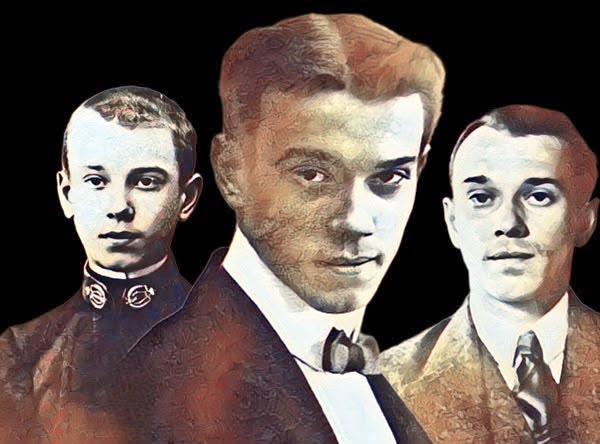
Vaslav Nijinsky offers a different trajectory. Before his diagnosis of schizophrenia in 1919, he was already a central figure in dance. His story encompasses an enormously important career and a long experience of illness and hospitalization. The diaries written around the time of his diagnosis preserve a rare account by an artist undergoing profound psychological changes.
These writings can be studied clinically, but they also need to be read as someone’s voice. There is a difference between looking for manifestations of psychosis in a document and believing that, once we have identified them, we understand everything its author was trying to communicate.
The same caution applies to his choreography. Breaking with artistic conventions should not be treated as advance proof of illness. Innovation, unsettling an audience and challenging the language of an era are possibilities within artistic creation. A later diagnosis does not automatically turn every earlier gesture into a symptom.
Aloïse and Wölfli: creating during hospitalization
The Swiss artist Aloïse Corbaz began writing and drawing shortly after she was hospitalized in 1918. For years she worked in secret, using whatever materials were available, including repurposed paper. She developed a visual universe of her own, populated by historical figures, princely characters and romantic scenes, becoming a leading figure in what is known as art brut.
Adolf Wölfli, also Swiss, created an extensive body of drawings, writing and musical notation in a psychiatric hospital. Diagnosed with schizophrenia, he became another important figure in art brut. His work shows how creation can continue to exist within a life marked by suffering and confinement
Recognition of these works raises questions about access to materials, freedom, relationships and opportunities for expression. But it does not demonstrate that illness is a prerequisite for talent or that hospitalization was necessary for creation. Nor does it justify imagining that treatment would inevitably erase artistic ability. Such conclusions would require evidence that a biography, by itself, cannot provide.
Louis Wain and the danger of diagnosing through images
The English artist Louis Wain is known for his cats and for a sequence of images frequently presented as a visual demonstration of the progression of schizophrenia. More figurative animals supposedly give way to increasingly elaborate and abstract forms, as though the viewer could follow the illness advancing across the paper.
The problem is that the best-known sequence was arranged by psychiatrist Walter Maclay in an assumed chronological order. The history of this arrangement, documented by the Wellcome Collection, undermines the idea that we are looking at a clinical progression proved by the paintings.
The example is particularly useful because it reveals our willingness to see a narrative once someone supplies a caption. An abstract image is not a diagnosis. Changes in style need to be examined in the context of the work, without assuming that a more unusual piece corresponds to a more troubled mind.
Louise Avedon: being seen through someone else’s eyes
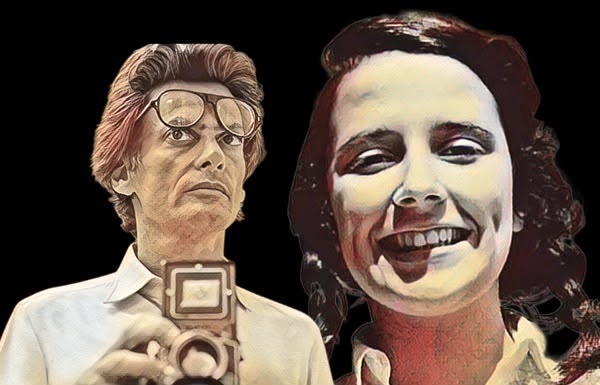
Louise Avedon enters this conversation from a different position. Richard Avedon’s sister and one of his earliest muses, her life was marked by schizophrenia. Here, the connection with art is established through portraiture and her relationship with the photographer, rather than through a body of work of her own comparable to those of the preceding artists.
That difference matters. In a photograph, we see a person and also the gaze of the person who photographed them. The portrait does not give us direct access to their inner life. However much we know about their biography, we cannot locate a diagnosis in an expression or conclude, from a face, everything someone experienced.
Louise also reminds us of an inequality frequently found in cultural narratives: some people leave behind works and words of their own; others reach us primarily through what relatives, doctors and artists said about them. Acknowledging this limit is a way of preserving something of their individuality.
The person remains more than the diagnosis
Art can offer avenues for expression, communication and the construction of meaning. This does not automatically make it sufficient treatment, nor does it make every work by someone with schizophrenia a direct manifestation of the illness. The relationship needs to be considered case by case, leaving room for what we do not know.
Bispo, Nijinsky, Aloïse, Wölfli, Wain and Louise do not make up a single story about “art and madness.” Their trajectories are distinct, with different relationships between creation, suffering, care and recognition. Bringing them together can broaden our perspective, provided we do not use the diagnosis to erase precisely those differences.
Perhaps the question their stories ask of us is simple: can we look at a work, or a face, without demanding that illness explain everything? A diagnosis may be necessary for care. To know someone, we still need to listen to their story.
Descubra mais sobre
Assine para receber nossas notícias mais recentes por e-mail.

