
Robert Pattinson has spent much of his career trying to convince audiences that there was an actor behind Edward Cullen’s face. Now, confirmed as the new James Bond, he faces almost the opposite challenge: making the world forget Robert Pattinson long enough to see 007. The distinction may seem small, but it captures a career in which artistic recognition has had to compete with good looks, a teenage phenomenon and a private life turned into entertainment.
Bond usually makes stars. Pattinson arrives as one. He has already passed through Harry Potter, headlined Twilight, taken on Batman and entered the world of Dune. He brings worldwide recognition, experience with intense fandoms and a filmography built with directors who would hardly be the obvious choices for someone interested only in protecting his heartthrob image. At 40, James Bond is not giving him a professional identity. He is bringing his own into one of cinema’s most closely scrutinized characters.
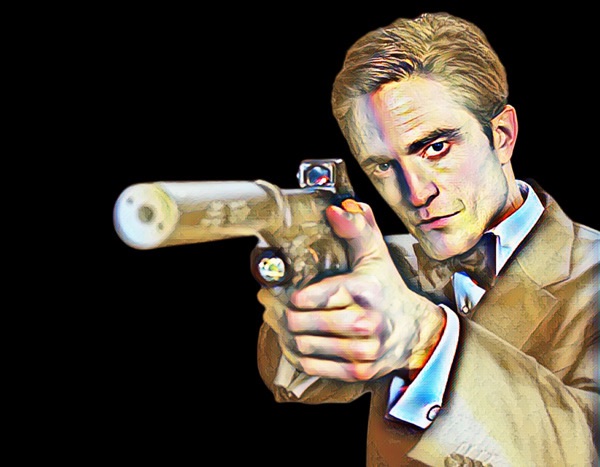
Even the British royal family joined the welcome for the new 007. Its official Instagram account welcomed Pattinson to His Majesty’s Secret Service, adding an institutional nod to an introduction that already had the scale of a major campaign. The publicity photograph looks terrific and immediately sells the idea: I can see him as Bond. For me, he is a good choice, arriving amid considerable enthusiasm and with an introduction worthy of the size of the bet.
The price of being Edward Cullen
Harry Potter and the Goblet of Fire introduced Pattinson to a huge audience as Cedric Diggory in 2005. But Twilight, beginning in 2008, changed the scale of everything. Edward Cullen became more than a role: he was a collective fantasy sustained by films, books, magazine covers and attention that did not stop when Pattinson left the set.
Success brought money, opportunities and an association that proved difficult to shake. For some viewers, particularly those who dismissed teenage girls’ enthusiasm for the saga, Pattinson was a handsome face inside a phenomenon that did not deserve to be taken seriously. As though popularity among young women were, in itself, evidence against an actor’s ability.
His relationship with Kristen Stewart and the public exposure of their troubles also fed coverage in which work frequently came second to his love life. There was the vampire, the boyfriend, the betrayed man, the heartthrob. Finding room for the actor amid all that noise required more than announcing that he wanted to do something different.
Pattinson went to work. And he chose paths that showed little interest in reassuring anyone hoping to find Edward again.
Good looks as something to disrupt
With David Cronenberg’s Cosmopolis, he began dismantling the idea that his screen presence was suited only to romance. Then came projects such as The Rover, Good Time, High Life and The Lighthouse, a succession of characters exploring alienation, violence, exhaustion and isolation. This was hardly a collection of auditions to become the next Prince Charming.
What interests me is that he did not simply try to prove that he could play a handsome man with problems. He often sought to change the way he occupied the screen: voice, hair, posture, rhythm, expression. In Good Time, his energy is driven by urgency and manipulation; in The Lighthouse, his body seems as trapped as his character. His appearance stops offering viewers the familiar reassurance of recognizing a star and knowing what to expect from him.
It is possible to feel that, in some performances, the construction is too visible. There are moments when a chosen voice or physical characterization seems to demand as much attention as the character. But I prefer an actor willing to take that risk to someone who spends decades protecting the same flattering angle. Pattinson could have managed his looks and repeated his success. He chose to put both in less comfortable situations.
It would also be unfair to treat this career as a campaign to apologize for Twilight. The franchise was decisive for him, and it does not need to be erased for the rest of his work to have value. What he rejected was the idea that its success defined the limits of what he could do.

Batman did not end the search
Taking on Batman showed that his years in auteur cinema had not been a period of purification before a predictable return to big budgets. His Bruce Wayne, in Matt Reeves’s film, was withdrawn, uncomfortable and struggling to exist outside his own obsession. Even within such a recognizable character, Pattinson found room for the strangeness he had been developing.
Christopher Nolan’s Tenet also helps explain why Bond makes sense. There is an ease there that his more tormented filmography sometimes conceals: charm, lightness and the ability to suggest that he knows more than he is saying. It is not a retrospective audition for 007, but it is a reminder that he does not need to distort his appearance or voice to create a presence.
Dune: Part Three adds another important connection: Denis Villeneuve, who directs him in Frank Herbert’s universe, will also direct the new Bond. Their working relationship therefore predates the casting. For a project surrounded by commercial expectations, that understanding between director and leading man could prove valuable.
The Bond who follows Daniel Craig
Pattinson inherits a franchise that Daniel Craig undeniably revitalized, although his interpretation was never universally embraced. Craig gave Bond physical weight, wounds and a brutality that seemed to precede any attempt at seduction. His agent could wear an excellent suit, but he rarely let viewers forget that this man could kill someone with his bare hands.
For those who associate 007 with elegance, irony and an apparent ease in moving through the world, there was something excessively rough about that interpretation. I understand the resistance. For me, Skyfall remains among the best films in the entire franchise, perhaps the most fully realized from beginning to end. But I attribute much of its strength to the direction, the screenplay and the way the story confronts Bond with his past and his own obsolescence. Craig is fundamental to the result, without being its only explanation.
Timothy Dalton had already tried to take the character into harder, less playful territory. Craig managed to consolidate that change in a different era and with a different reception. Between them, Pierce Brosnan preserved the charm very well, while the franchise faced an increasingly difficult question: how do you update a hero whose relationships with women, violence and power so clearly carry the marks of the period in which he was created?
Pattinson could bring those legacies together differently. He has the potential elegance, the experience with disturbed characters and a sense of humor that would be interesting to see used. Freshness does not depend on turning him into a teenage Bond, but on finding another combination of elements we already know. After Craig’s intensity, there is room for a less overtly brutal presence without making the agent harmless.

Who is in charge of the new 007?
The change in leading man coincides with an even bigger transformation behind the scenes. This will be the first Bond film under Amazon MGM’s creative control, following its agreement with Barbara Broccoli and Michael G. Wilson. The family that supervised the character for decades will no longer have the final say over his direction.
That makes Pattinson’s casting especially significant. He will be the face of a new administration, with everything that entails in terms of expectations, commercial interests and the desire to expand a brand. You do not have to assume interference in every scene to recognize the scale of the pressure.
Amy Pascal gives me confidence. Her experience with the Spider-Man films shows familiarity with characters who belong emotionally to millions of people and still need to work as cinema. Alongside David Heyman, she has the task of guiding this transition; Villeneuve directs, and Steven Knight is writing the screenplay. There are very capable people on this team. The challenge will be to preserve a cinematic vision within a project that so many people will have an interest in controlling.
According to reports about the negotiations, Pattinson managed to reduce the proposed commitment to three films, while other candidates were reportedly asked to sign on for four. The terms have not been officially detailed. If confirmed, that difference says a great deal about his position: he arrives with bargaining power, including the ability to preserve some freedom.
Three films could occupy many years, but no announced schedule allows us to turn that into an exact decade-long commitment. The artistic question, however, already exists: how much room will remain for the smaller projects, the bizarre characters and the experiments that brought him here?
One star facing another
Roger Moore was known for The Saint; Pierce Brosnan for Remington Steele. Timothy Dalton had film and theater. Daniel Craig had already worked in major productions, from Road to Perdition to Munich, but he was not a worldwide star comparable to the character he was about to inherit. Sean Connery did not arrive at 007 with the recognition he would later achieve, either.
Pattinson is a different case. It is difficult to find anyone among his predecessors in the official series who took on the role with such global film stardom. Edward Cullen and Batman already belong to the memories of enormous audiences. Bond will not be finding a relatively unclaimed face to inhabit.

That offers a commercial advantage and creates an acting challenge. Some viewers will see Pattinson before they see the agent. Others will examine the hair, the voice, the suit, the gestures, the way he orders a drink and any departure from their own particular Bond. Experience with other franchises helps, but 007 admirers have decades of comparisons ready to deploy.
He spent years disrupting his own image to gain freedom as an actor. Now he is stepping into a character whose image is managed down to the last detail. I want to see how he negotiates that tension. Because the most interesting thing about Robert Pattinson as James Bond is not simply discovering whether he can wear the tuxedo. It is finding out how much of that restless actor will continue to exist inside it.
Descubra mais sobre
Assine para receber nossas notícias mais recentes por e-mail.

