
Robert Pattinson is the new James Bond, bringing an end to a casting race that put several British actors under intense public scrutiny. But while the winner prepares to inherit 007’s licence to kill, the contenders who missed out face a different question: what can being an almost-Bond do for a career?
For Jack Lowden, one of the names linked to the role, the announcement also provided an irresistible joke. In Slow Horses, he plays River Cartwright, an ambitious intelligence officer desperate to escape Slough House, the dumping ground for disgraced MI5 agents run by Gary Oldman’s Jackson Lamb. Missing out on cinema’s most famous spy makes it look as though River has failed to secure his transfer yet again.
For Lowden himself, however, the outcome could be considerably more promising. He has a series with loyal fans, Oldman’s public endorsement and exposure beyond the audience already familiar with his work. He did not get Bond, but the casting race put his name before people who might never have considered him a potential franchise leading man.
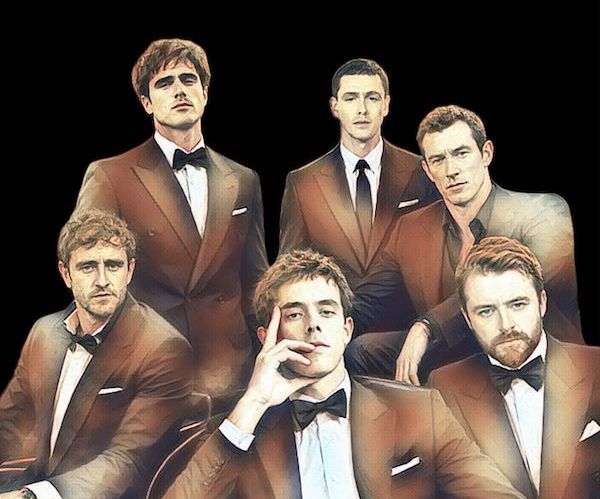
There is a difference between missing out on a role and emerging from the race diminished. Lowden could be the biggest beneficiary among the almost-007s. For Josh O’Connor, Nicholas Hoult and Callum Turner, too, the announcement ends the speculation about who got the job. Now comes the question of what each will do with the attention.

Josh O’Connor: Did He Lose or Walk Away?
Josh O’Connor’s case is particularly curious because the competing accounts circulated before Pattinson was even confirmed. First came a report that a fellow Golden Boy actor had told someone in a pub that O’Connor had received the offer. The story referred to celebrations after the play’s closing performance on Halloween and suggested the news was already circulating among the cast. Then an anonymous source told the Daily Mail that O’Connor had turned Bond down. The actor himself remained evasive and spoke about taking some time off in 2027.
It is a sequence that invites a raised eyebrow. The shift from “he was chosen” to “he didn’t want it” sounds convenient for anyone managing an expectation that has become public. Could it be image management? Yes. There could also have been negotiations that went nowhere, a genuine refusal, or simply an inaccurate initial report. None of this has been publicly clarified.
What is interesting is how the withdrawal story changes the actor’s position. He stops being the person who was not chosen and becomes the person who chose something else. In an industry that sells prestige, availability and desirability, controlling that narrative has its uses. That is an interpretation of the story’s effect, not proof that his publicists manufactured it.
Did Gary Oldman Help or Hinder Lowden?
In September, when Oldman publicly backed Lowden and said the next Bond had already been chosen, I raised a question here: could he be doing more harm than good? His remarks invited an interpretation he later had to correct. Oldman was not announcing his co-star. He was rooting for him.
My concern was the awkwardness of turning a candidate into a presumed choice during negotiations surrounded by secrecy. An affectionate endorsement can create expectations that demand explanations from someone who has nothing to announce yet. We do not know whether this had any bearing on the decision, and the outcome does not establish that connection.
For Lowden’s career, however, the endorsement remains. Having Oldman champion his name is a form of recognition that does not disappear because another actor got the role. Anyone who watches the two in Slow Horses knows that admiration is grounded in their work: Lowden holds his own as River opposite a leading man who could easily swallow everything around him.
That is why the Slough House joke also contains an advantage. Audiences have somewhere to go to watch him. They do not need to wait for a future production to find out whether the candidate deserved their support. They can watch the series, follow his work and remain interested in him after the Bond conversation cools.
The increased visibility still needs to translate into opportunities before we can call it a professional victory. But among those who missed out, Lowden seems especially well placed to benefit from the attention.
Nicholas Hoult and Life as the Eternal Contender
With Nicholas Hoult, the feeling is different. Losing Batman to Pattinson and then watching him land Bond as well makes an irresistible story for the internet. The risk is reducing an excellent career to a succession of roles that went to someone else.
Hoult himself has spoken about the difficulty of publicly competing for Batman. In an interview with Happy Sad Confused, he recalled hearing on the radio that Pattinson would be cast while he was still preparing for his screen test. There is an emotional investment in that waiting period that a list of candidates never reveals. An actor studies, prepares and imagines possibilities; then he has to keep working while the public compares his face with the winner’s.
There is something of Henry Cavill in that position: the name who seems suitable for every major franchise, summoned by fans whenever a vacancy appears. Cavill did compete for Bond during the casting process that ended with Daniel Craig. The internet kept that possibility alive for years, as though collective approval might eventually turn into a contract.
But the comparison needs some proportion. Cavill played Superman and Geralt; Hoult played Beast and is Lex Luthor. Both have landed enormous characters. What keeps recurring is how easily audiences place them in an imaginary waiting room, perpetually facing the next big opportunity.
Hoult does not need Bond to prove he is an excellent actor. What he perhaps needs is for his choices to attract as much interest as the auditions that did not end in a contract.

The Winner Still Has to Be Bond
Callum Turner also emerges from a race in which his name circulated as a favourite. For him, as for the others, the challenge will be to let his next performance occupy the space currently filled by the character he will not play. Being considered for Bond brings attention; what comes next can make it last.
Meanwhile, Pattinson inherits a level of scrutiny the others leave behind. Every gesture, costume and decision in the film will be measured against an idea of 007 that millions of people believe they understand better than the producers.
The almost-Bonds can head in other directions. Lowden, for one, can return to Slough House with more people interested in following him. River would probably endure a humiliating put-down from Lamb for failing to get the job. Jack has good reasons to emerge from this story with his head held high.
Descubra mais sobre
Assine para receber nossas notícias mais recentes por e-mail.

